

Out of the Stone
Most waterfalls go over the edge of a cliff. This one comes out of a hole halfway up the wall, falls twice and runs on into the gorge. People came to it long before anyone measured it, and they still come with empty bottles.
Watch the film · 43 sNot over the edge
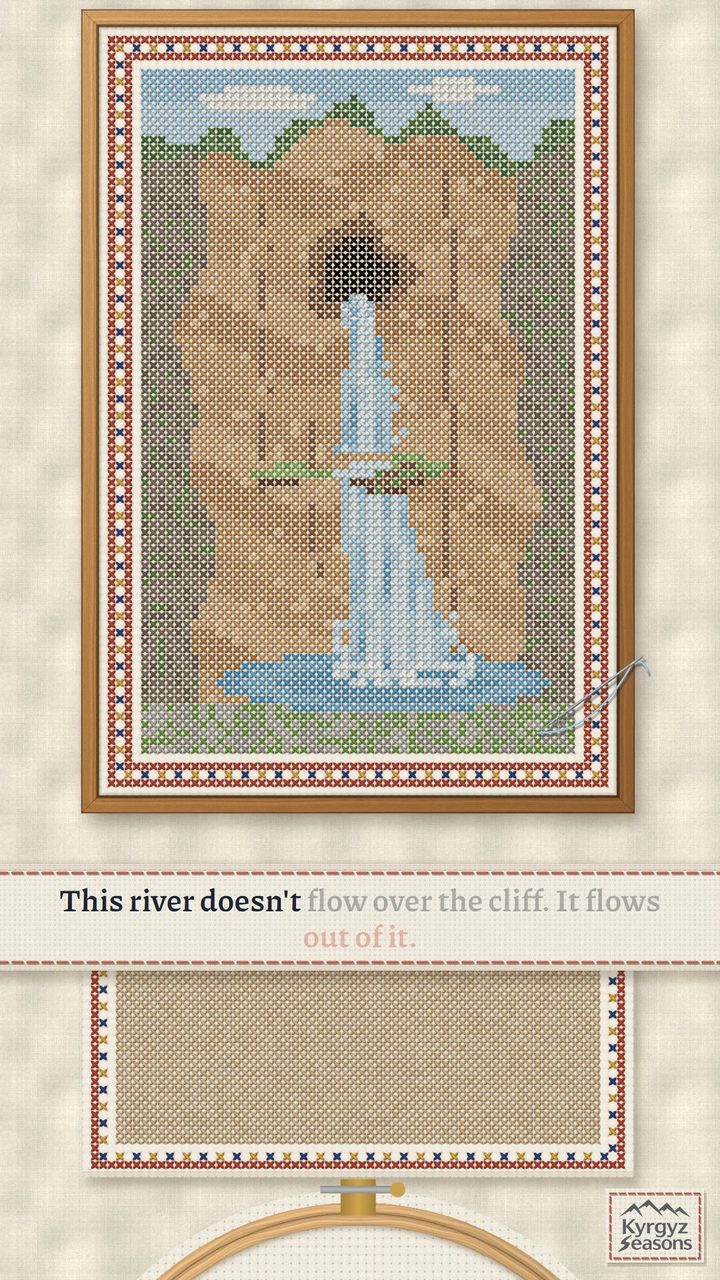
“This river doesn’t flow over the cliff. It flows out of it.”From the film
Draw a waterfall and you will draw it the usual way: a river reaches the lip of a cliff and tips over. At Abshir-Ata there is no lip. The water comes out of a dark hole in the middle of a rock wall, and the wall goes on rising far above it.
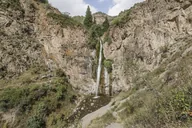
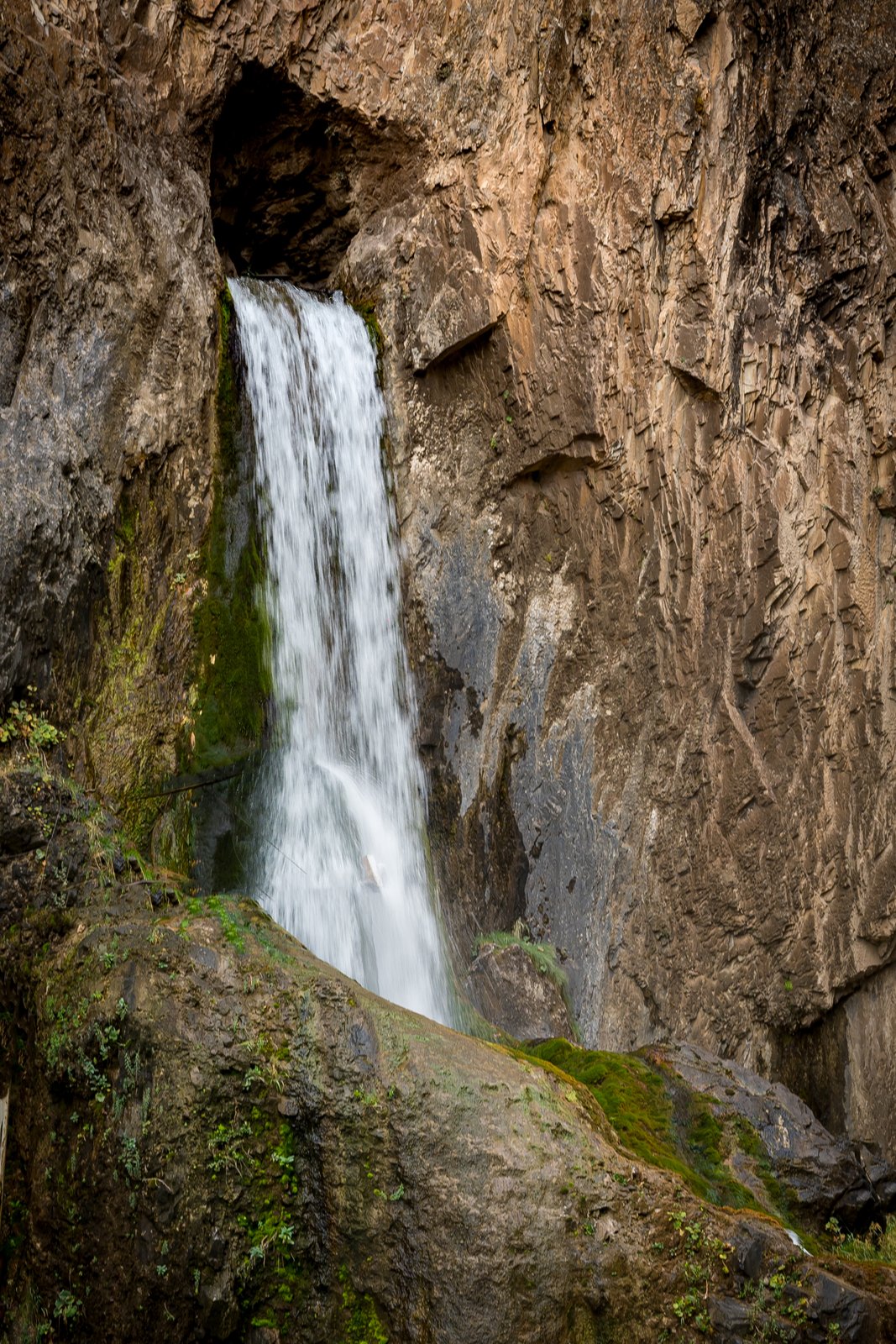
The place is a narrow gorge of the Abshir-Sai river in Nookat District, in the south of Kyrgyzstan, south-west of the city of Osh. The rock around the hole is rough and rust-brown, streaked with grey. Below it a white jet falls straight down, and moss grows bright green wherever the spray reaches.
It looks like a trick of the eye the first time: you search the top of the cliff for the river and find only sky and juniper. The river is not up there. It is inside the rock.
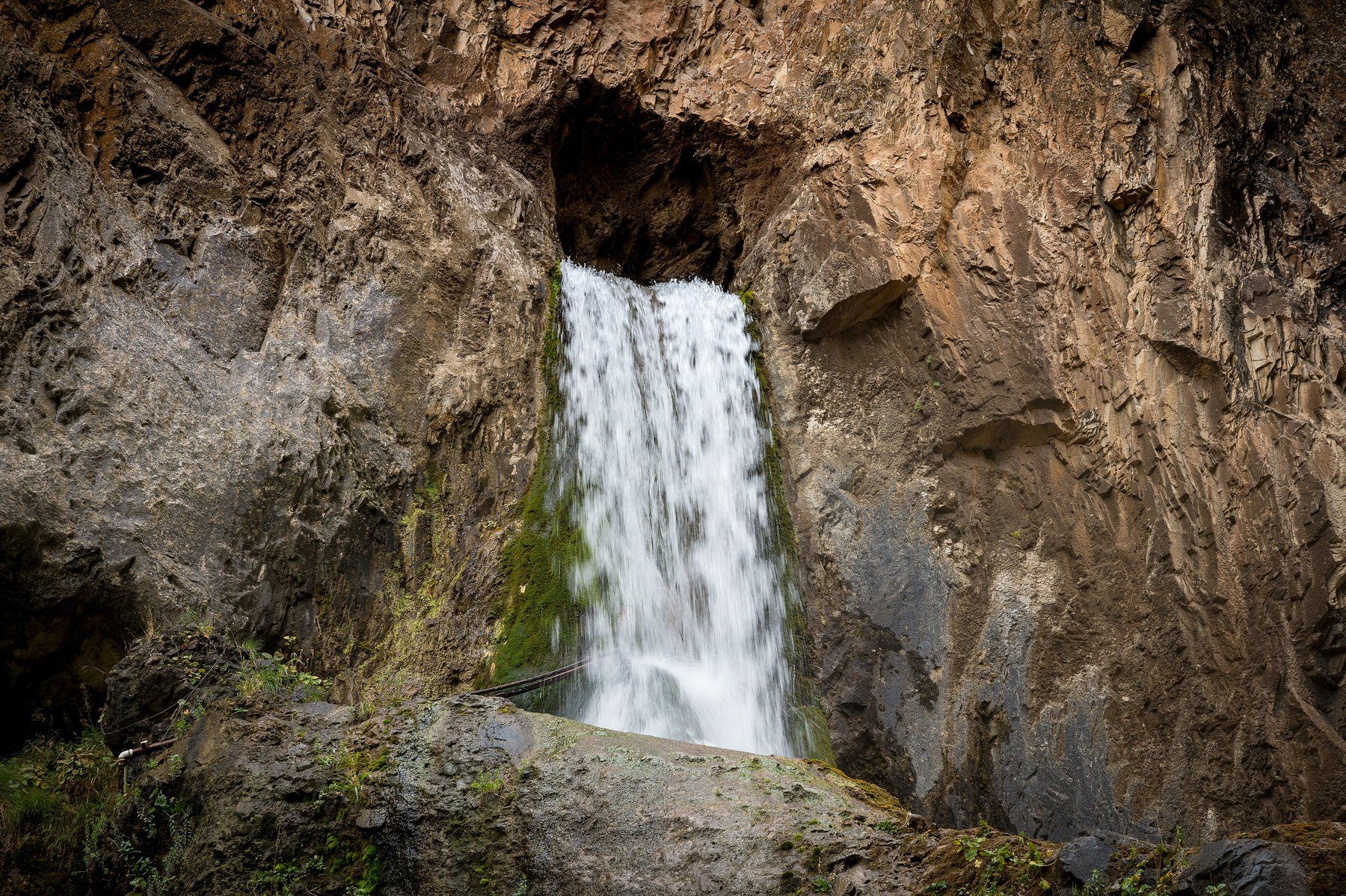
Out of a cave in a sheer wall
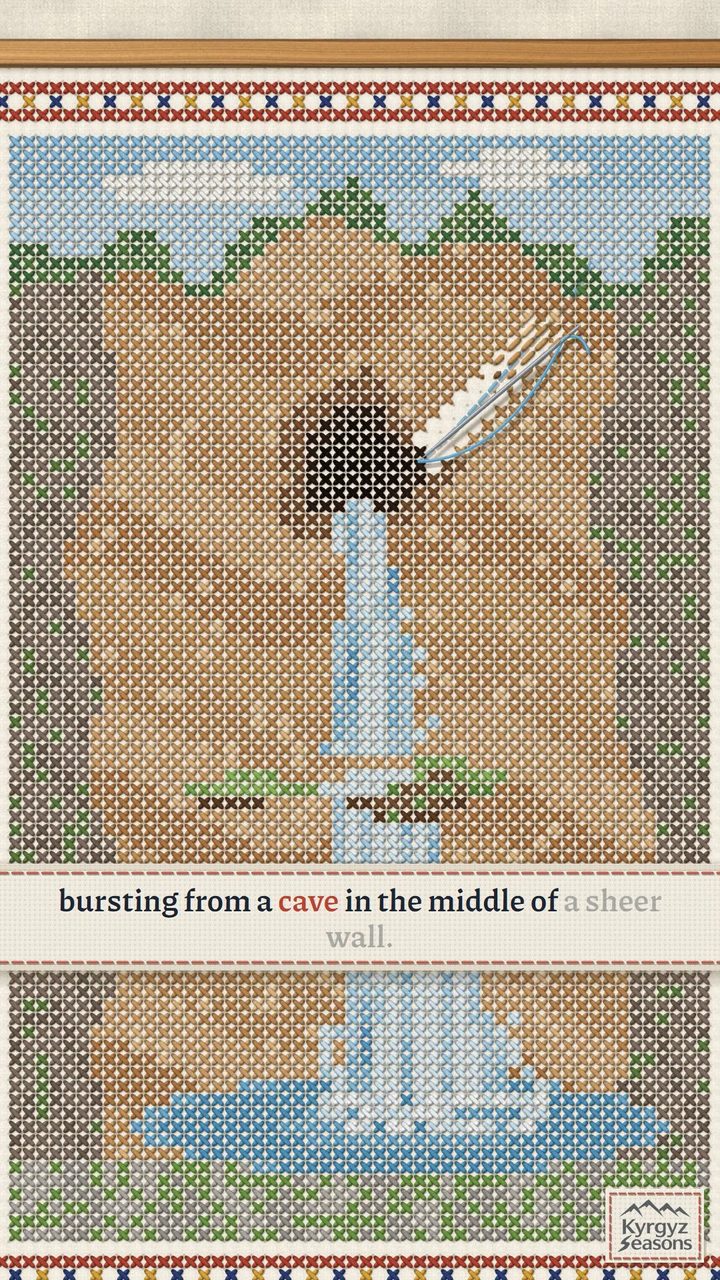
“It’s an underground river, bursting from a cave in the middle of a sheer wall.”From the film
The regional encyclopaedia of 1994 puts it in one line: the waterfall is the mouth of an underground river. The water comes out through a cave of about one and a half metres in a sheer cliff.
Travel guides call the opening a small karst cave, the kind that water dissolves in soluble rock, and the gorge itself begins with gates of layered limestone. The river of the gorge, the Abshir-Sai, comes down from the northern spurs of the Kichik-Alay range. Where exactly the water goes into the mountain before it comes out of this hole, we could not find: no published study traces it, measures how much water flows, or analyses what is in it.
Since 1975 the waterfall has been a protected natural monument, a geological one. We found no copy of the decision that made it one, and no figure for the size of the protected area. What is protected is plain to see: a wall that leaks a river.
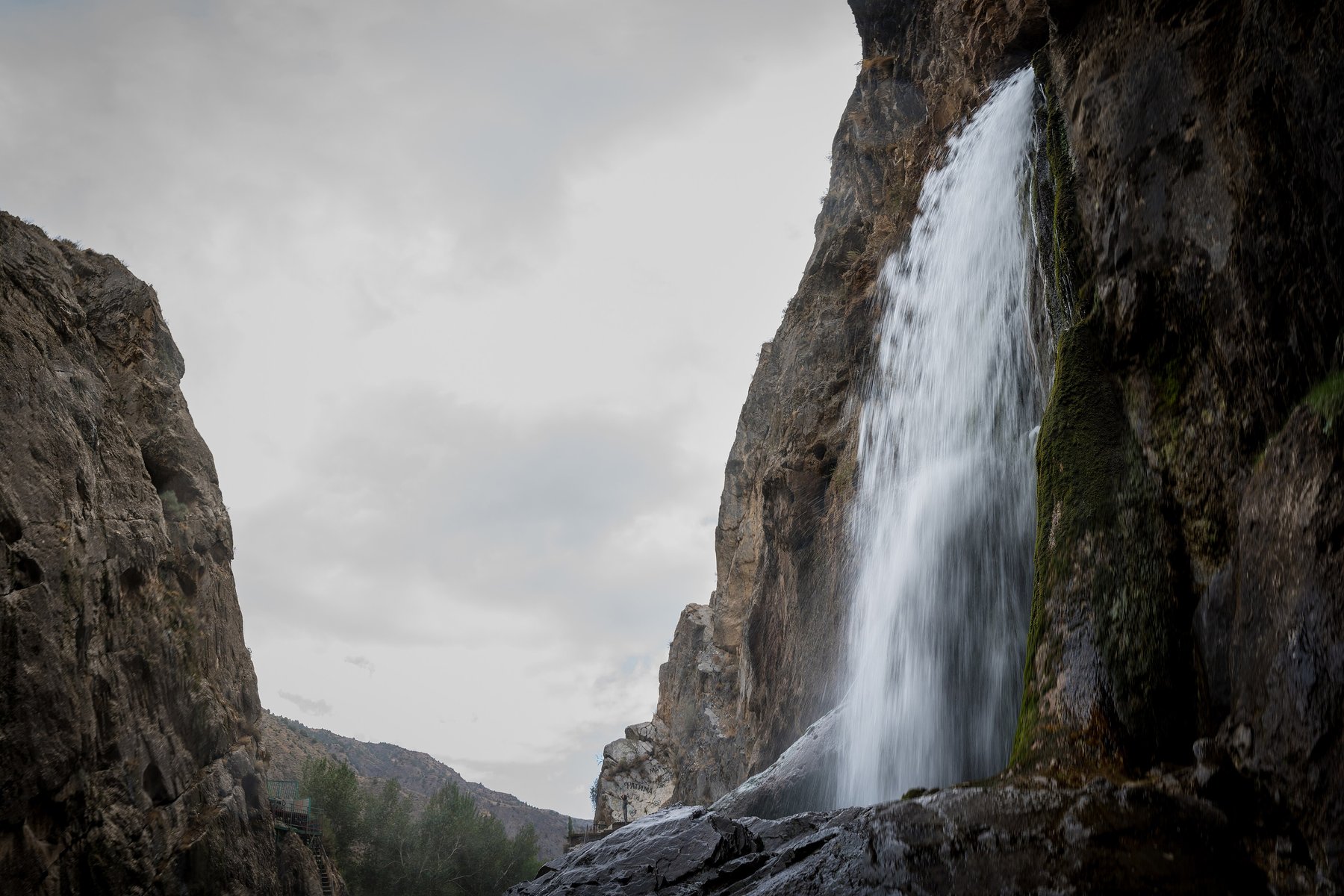
A mossy ledge, then down again
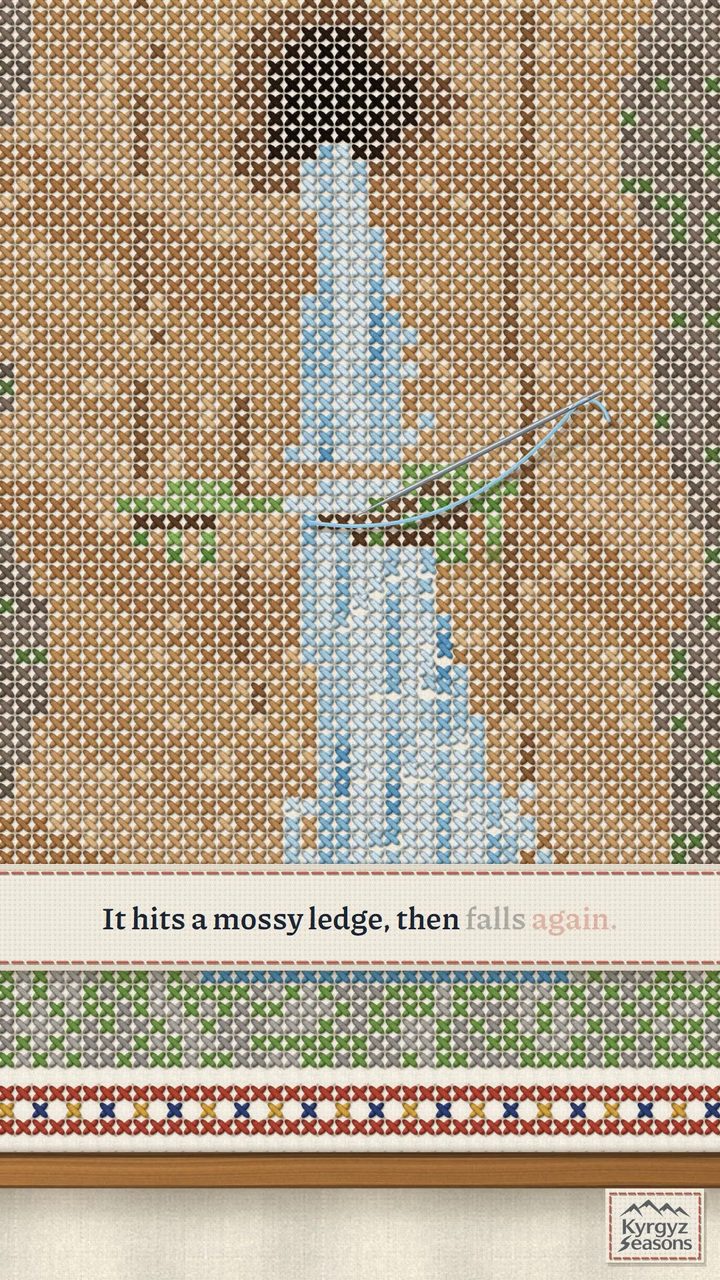
“It hits a mossy ledge, then falls again.”From the film
The water does not reach the floor of the gorge in one drop. The jet from the cave hits a rounded ledge of rock, thick with moss, and a second, more slanted stream falls on from its edge.
The encyclopaedia gives the two steps as 15 m and 12 m. Other figures go around: 12 to 15 m in some guides, 30 m in another. They measure different things, the hole above the ground or the whole fall, and none of them says how it was measured. We keep to the two steps.
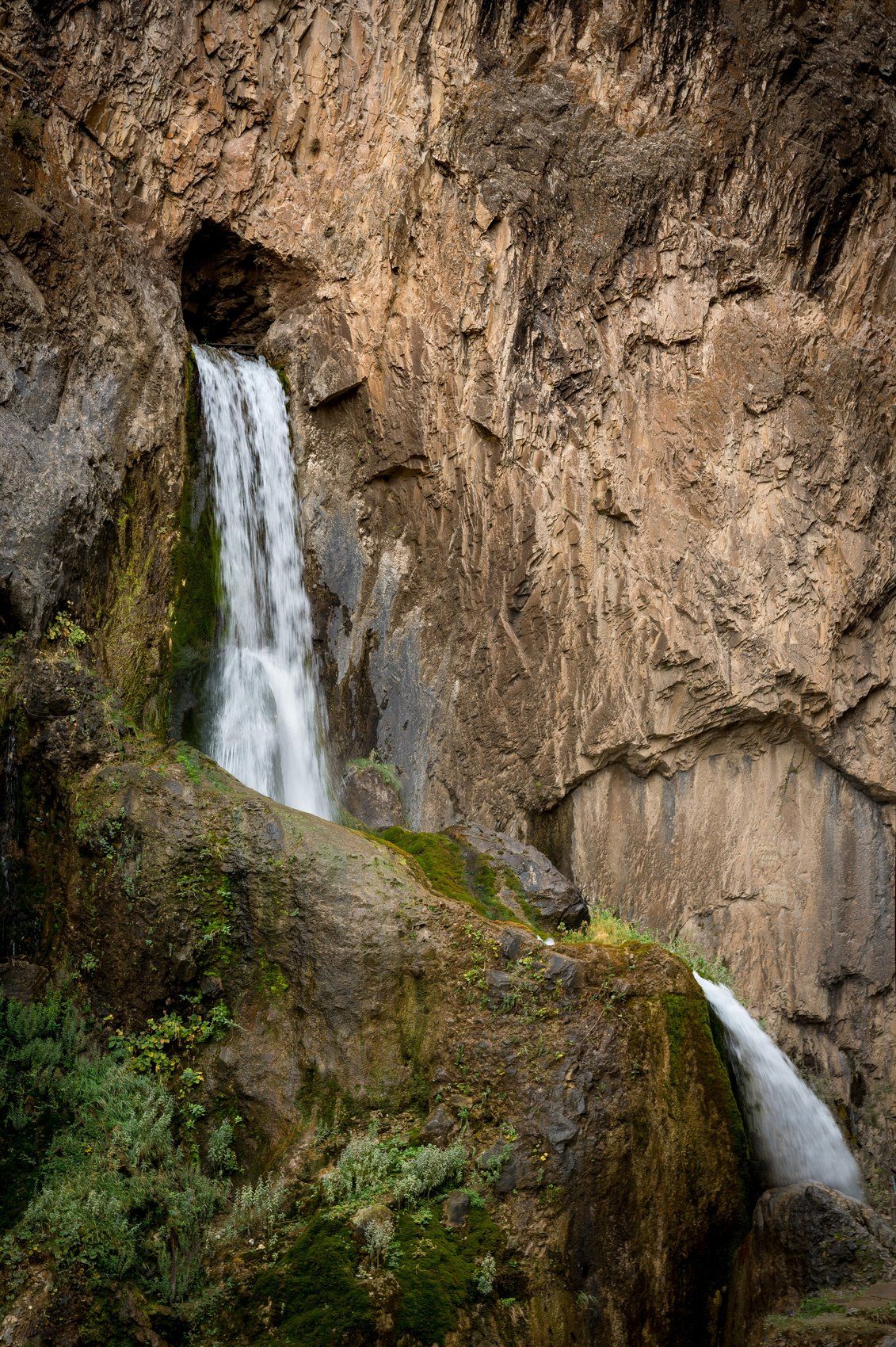
The stranger with a staff
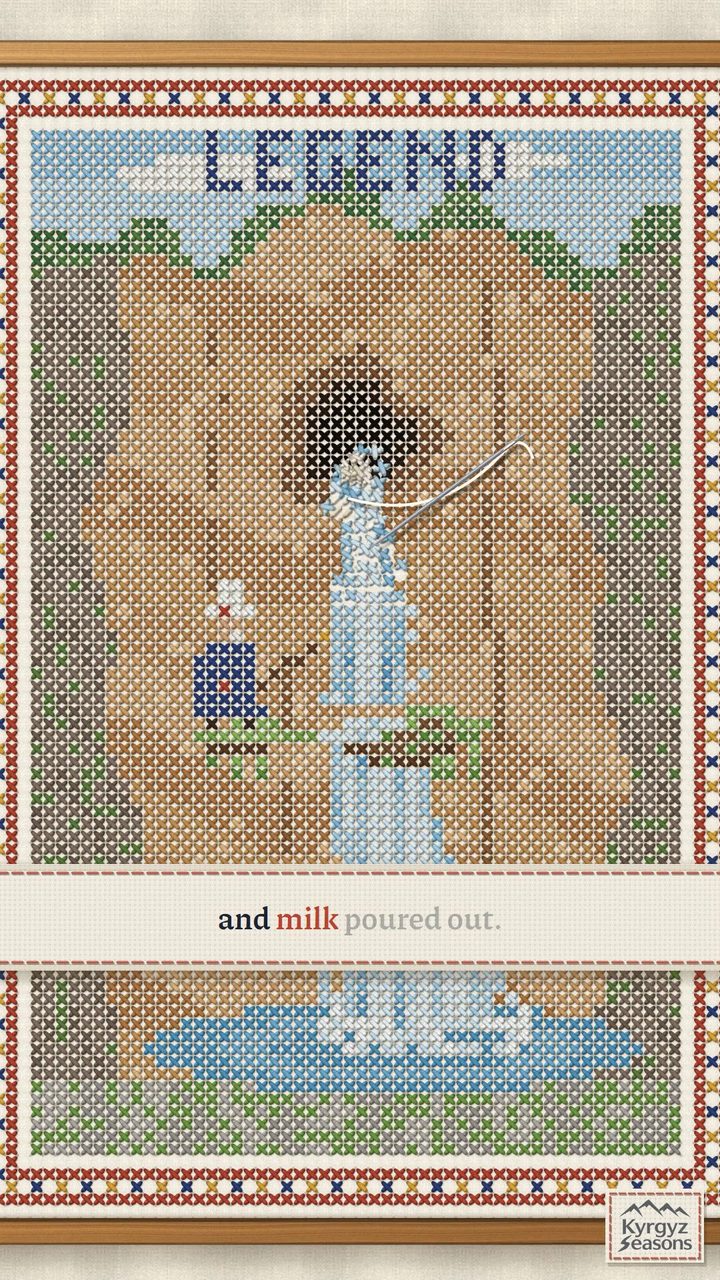
“Legend says a wanderer struck this rock with his staff, and milk poured out.”From the film
Everything in this chapter is legend, told by people who live in the gorge and repeated, with small changes, in every guide.
In the version told most fully, poor people lived in the gorge long ago. A pilgrim came to them and said he was a messenger of God. They doubted him and asked for a miracle. The stranger struck the rock with his staff, and milk poured out of the stone. Other tellings keep only the core: a mysterious stranger, a staff, the rock, the milk.
After the miracle, the story goes on, the place became holy and believers came from far away to see the spring that gave milk.
When the milk turned to water
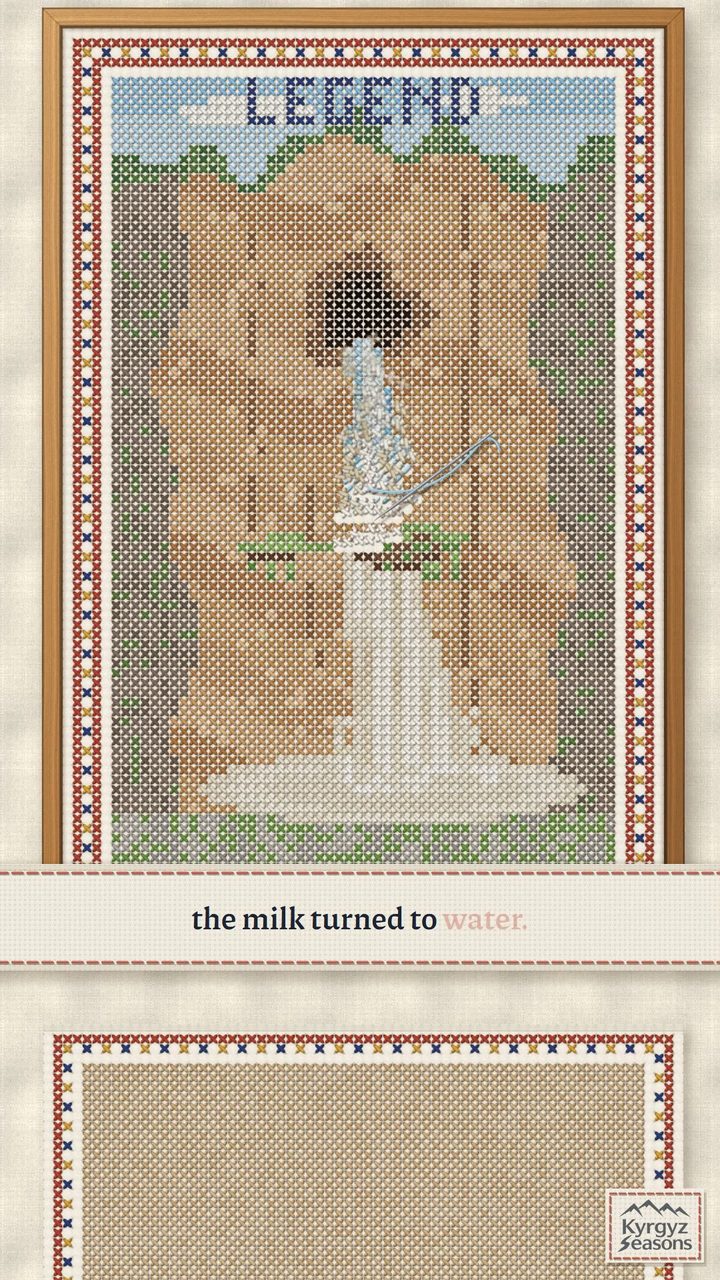
“When people stopped honouring it, the milk turned to water.”From the film
Miracles wear out. In time, the legend says, people got so used to the milk that they stopped cherishing it; women began to wash things in the holy spring.
The higher powers were angered, and one day the pilgrims found that ordinary whitish water was pouring from the rock instead of milk. That is the water you see today: white only with foam where it falls. Nobody has shown that it is anything more than water, so we will not claim it is.
Change the thread
In the film the legend is a change of thread. Unpick the water and stitch it in milk, or back again.
A name that remembers milk
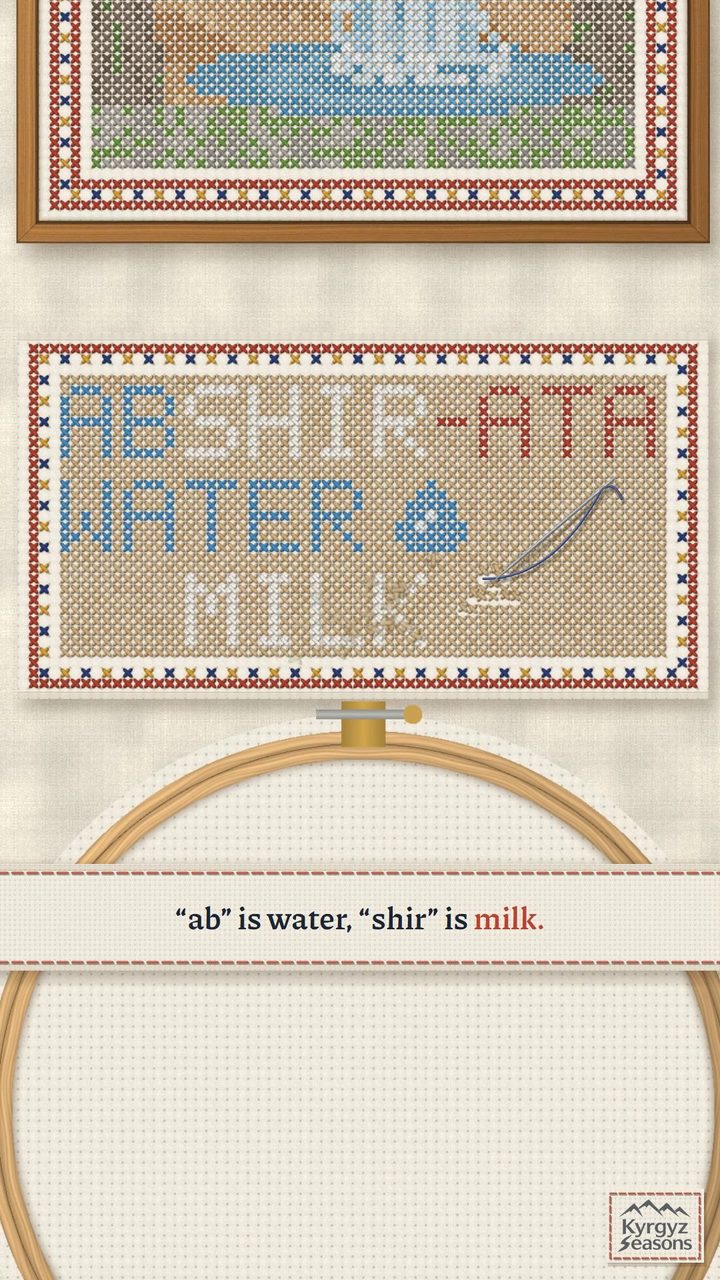
“Yet the name Abshir-Ata seems to remember: ‘ab’ is water, ‘shir’ is milk.”From the film
Here is the turn. The legend may be only a story, but the name of the place seems to keep it.
In Persian, and in Tajik, which is a form of Persian, āb means water and shir means milk. One guide says the name goes back to the first Tajik settlers in the area and translates it as a source of water and milk. Ata, father, is a Turkic word of respect often given to holy places.
This reading is an interpretation, not a record: it fits the words, but no document tells us who named the place or why. Another telling makes Abshir-Ata a holy man who struck the rock himself. We found no historical person of that name, and no grave by the waterfall in any source, so we do not say there is one.
Water and milk, in one word, over a hole in a rock. Whichever came first, the name and the legend tell the same story.
A day out of Osh, with an empty bottle
“Pilgrims still fill bottles here, a day trip from Osh in southern Kyrgyzstan.”From the film
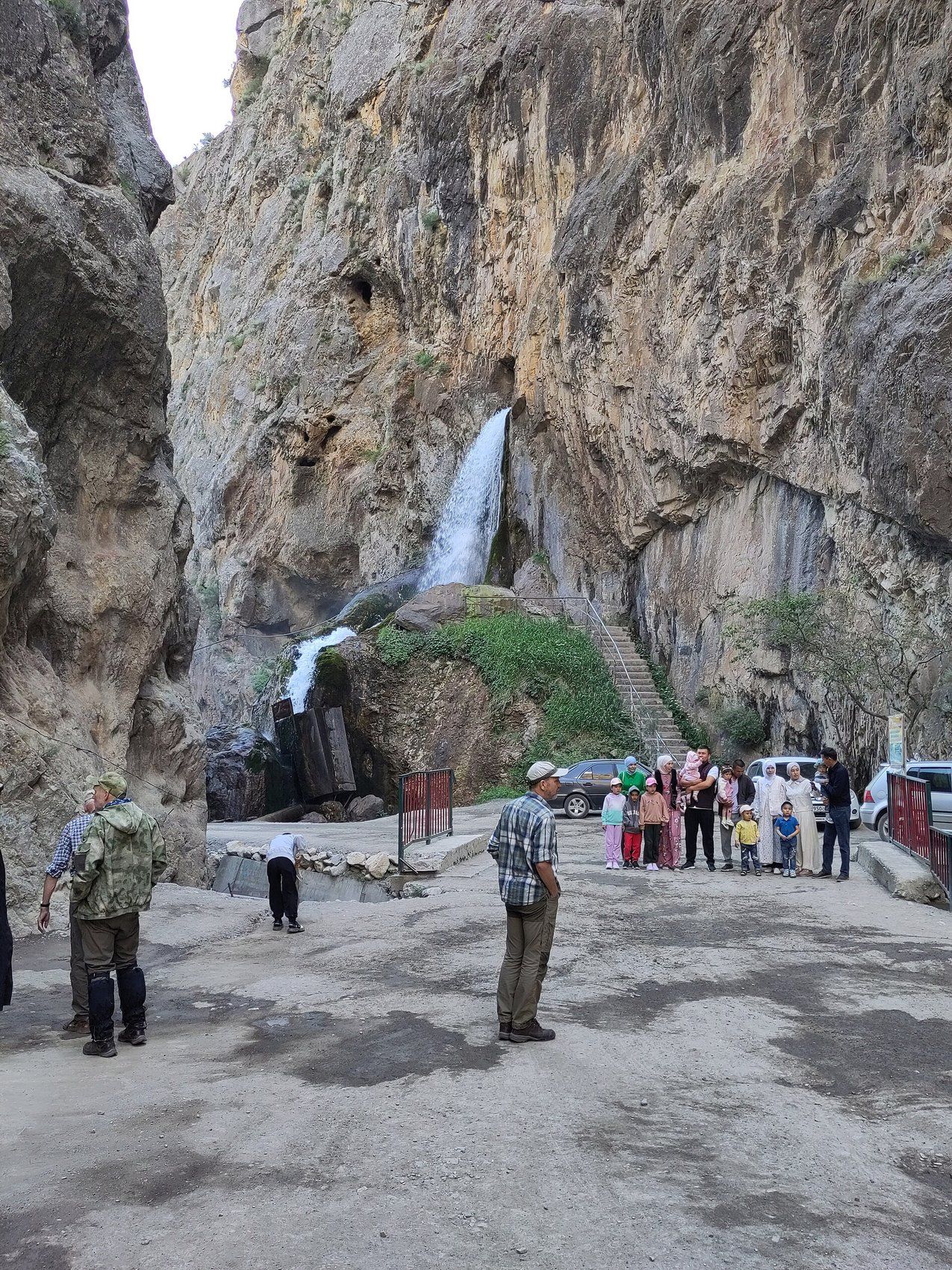

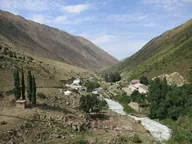
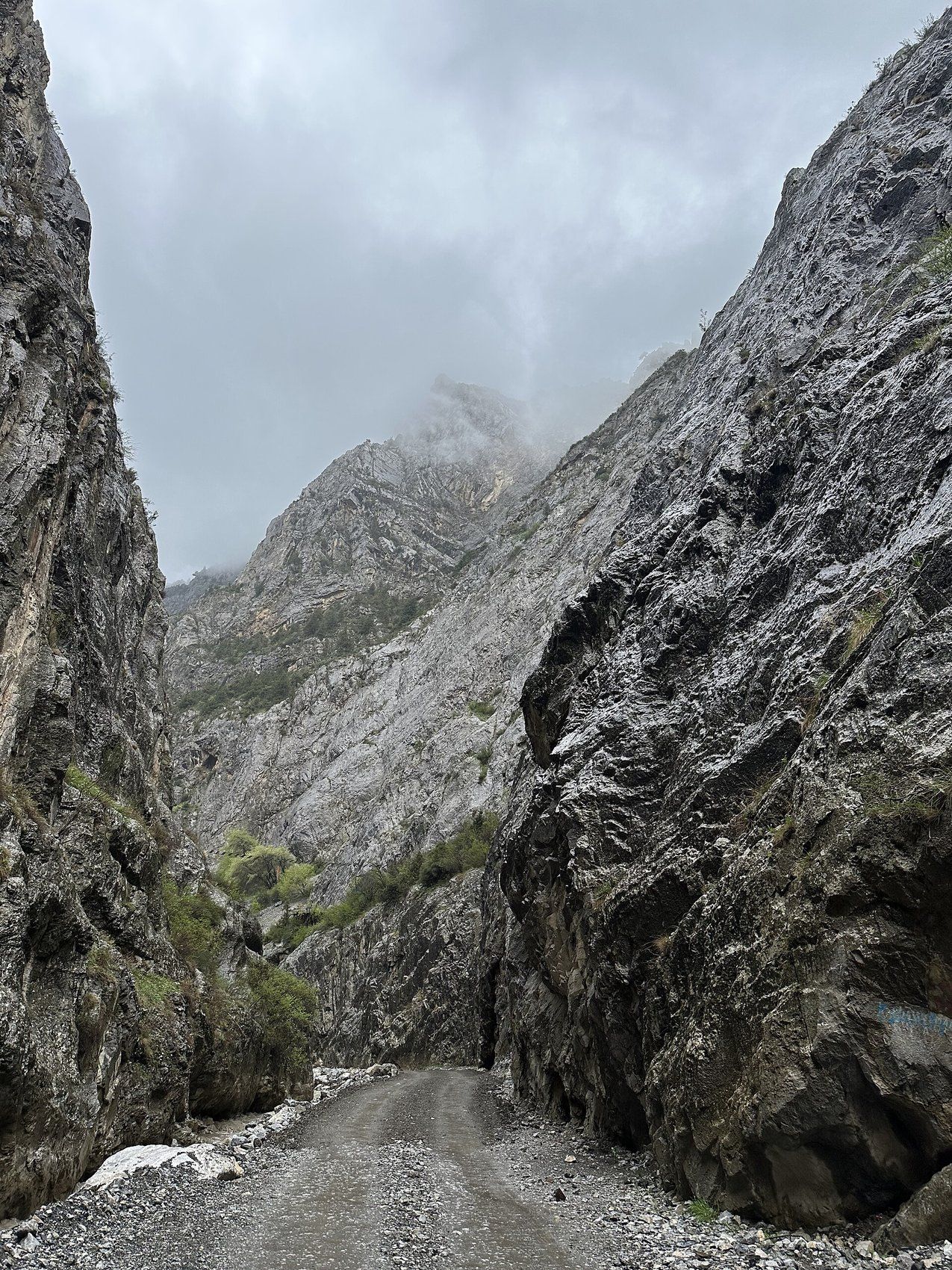
The waterfall is in the Abshir-Sai gorge in Nookat District, south-west of Osh. The road goes towards Nookat, then turns south between Nookat and Kyzyl-Kiya at a sign by the road and runs about 19 km up the gorge. Guidebooks give about 70 km from Osh; our own route calculation gives about 79 km and an hour and a half without stops. Families and pilgrims come here all summer, and many leave with a bottle or a can of water.

Milk or water,
it still flows out of the stone.
Whatever came out of this rock in the legend, what comes out today is a river that has found its way through the mountain, and people still walk up to it with empty bottles.
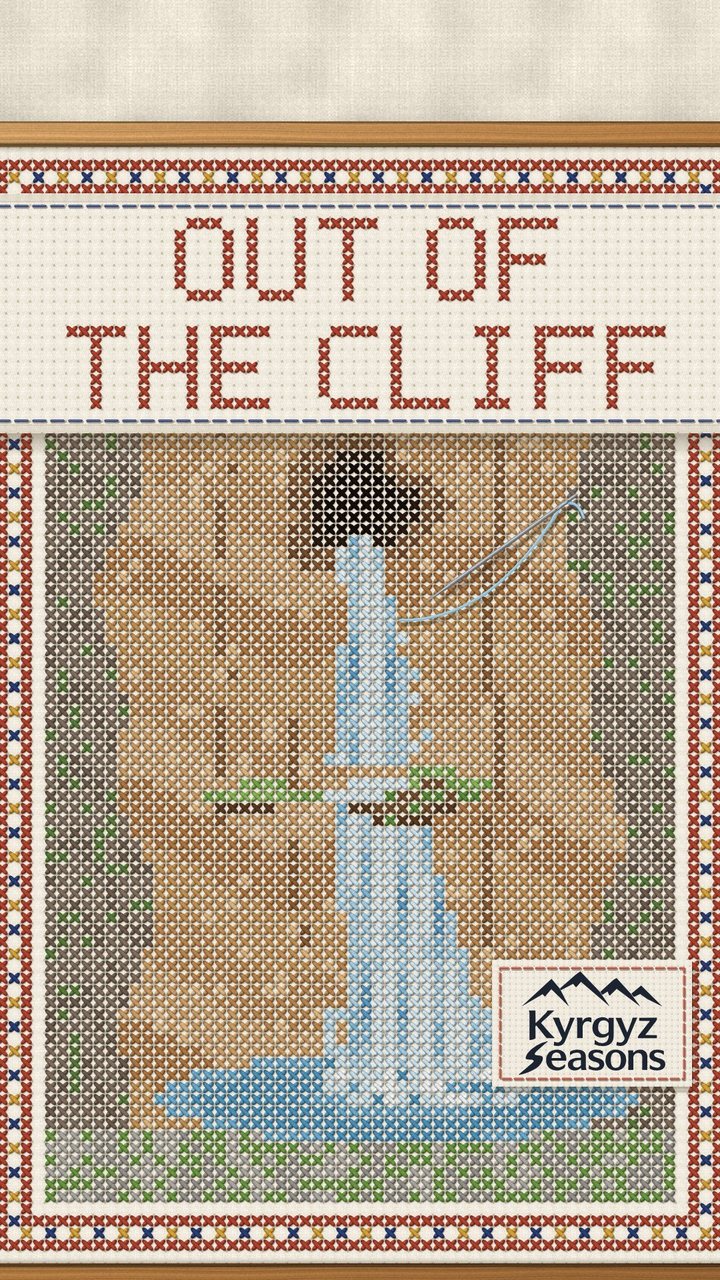 Watch the 43-second filmOut of the Stone — the short film, stitched as a cross-stitch sampler: the rock, the cave, the water and a legend of milk, one cross at a time.
Want to see it for yourself?
Routes, places and the best months to go — everything for planning a trip to Kyrgyzstan.
Sources
- Oshskaya oblast: Entsiklopediya, Frunze, 1994, p. 445 — quoted through Abshir-Ata Waterfall, Wikipedia: the mouth of an underground river, a cave of about 1.5 m, two steps of 15 m and 12 m, a natural monument since 1975.
- Wikidata Q4669733 — coordinates, heights, year.
- Protected areas of Kyrgyzstan — natural monument, IUCN III.
- Central Asia Guide, Abshir-Ata (2021) — karst cave, Kichik-Alay, limestone, the legend, the name, the route and season.
- Trip to Kyrgyzstan — vessels of water, the legend.
- Central Asia Live (2024) — the hole, the vessels, the legend.
- Nomad’s Land — the hole, heights, altitude, the legend.
- Wiktionary, Persian āb and shir — water and milk.
- 24.kg, 29 June 2024 — the mudflow and the road.
- Route estimate on OpenStreetMap data (OSRM), 29 October 2026 — about 79 km from Osh.
- Wikimedia Commons, Abshir-Ata waterfall — the photographs on this page.
Pictures
- The cave and the jet — Arina Pan, 28 August 2023, CC BY-SA 4.0. Resized.
- The waterfall from the floor of the gorge — Arina Pan, 28 August 2023, CC BY-SA 4.0. Resized.
- The two steps — Arina Pan, 28 August 2023, CC BY-SA 4.0. Resized.
- The jet close up — Arina Pan, 28 August 2023, CC BY-SA 4.0. Resized.
- Visitors at the foot of the waterfall — Gkasperek, 10 June 2024, CC BY-SA 4.0. Resized.
- The road up the gorge — Dzhusky, 19 April 2025, CC BY-SA 4.0. Resized.
- Film frames and the cover — Kyrgyz Seasons, from the short film Out of the Stone. The sampler, the stitched letters and the stitches that cover the photographs on this page are drawn in code in the style of the film.


