




Li Bai, Perhaps
A city beneath a field. A poet’s possible birthplace. And a question mark that belongs in the picture.
Watch the film · 46 sA birthplace, perhaps.
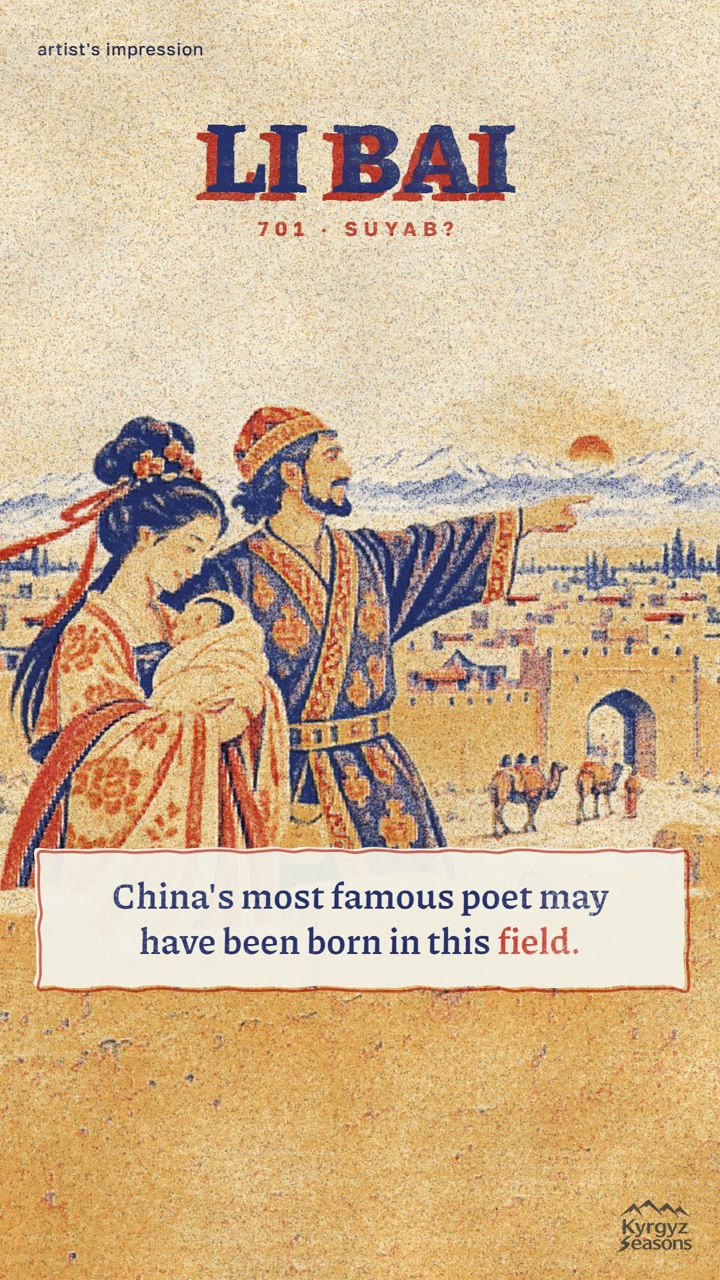
China’s great poet Li Bai may have been born in the city beneath these fields. “May” is the word that makes this a story worth following.
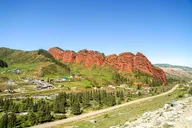
The place is Ak-Beshim, the archaeological site of Suyab in Kyrgyzstan’s Chüy Valley. The connection with Li Bai is a historical hypothesis, supported by a tradition about his family’s western origins. It is not an excavated birthplace, a surviving house or a certainty shared by every account of his life.
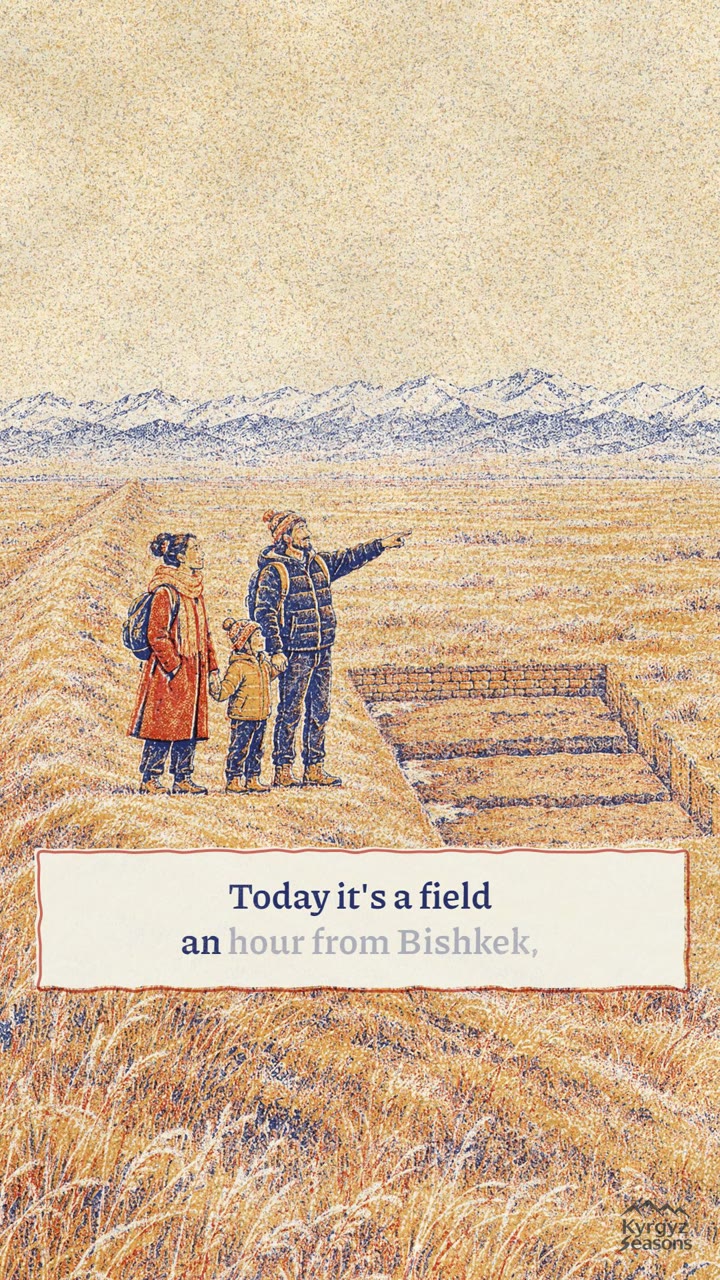
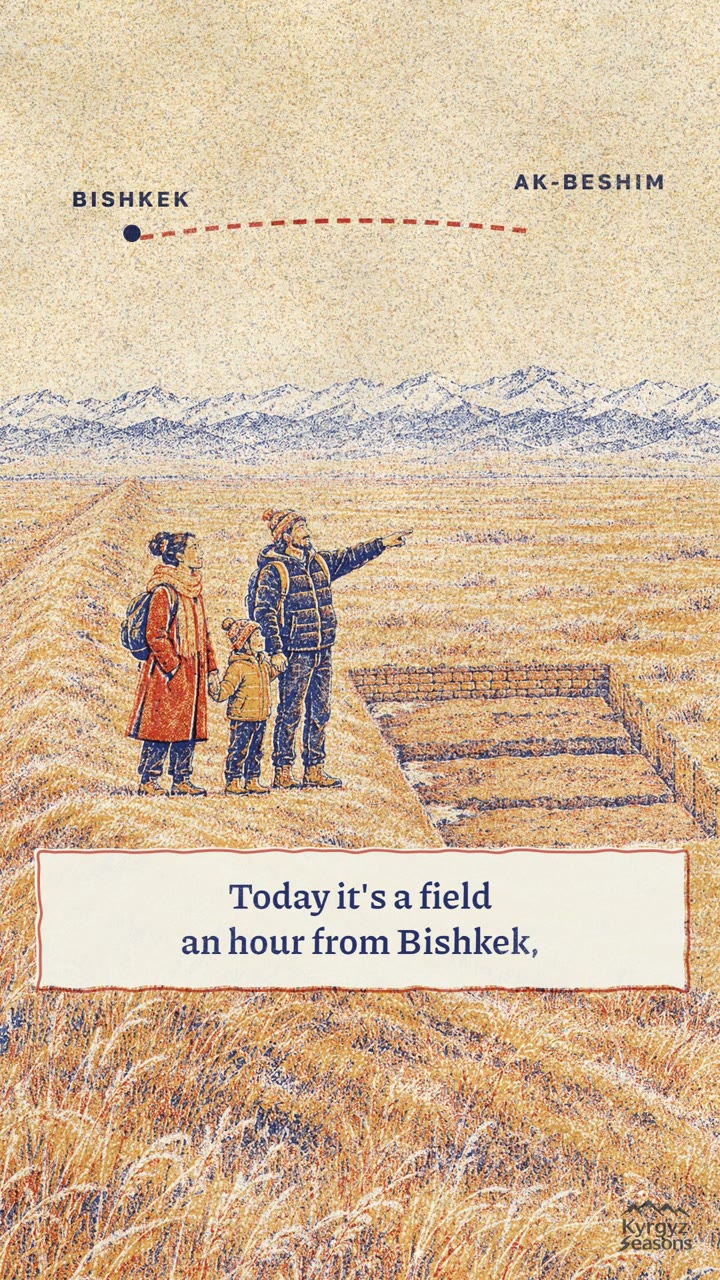
Our film begins with a family and a city printed in three colours. The people are an artist’s impression. No portrait records the infant poet here; no inscription identifies his family’s home. The question mark beside Suyab is part of the picture’s meaning. Keep it in view as the inks come into register.
A landscape can hold a compelling possibility without supplying the answer. At Ak-Beshim, the city itself offers firmer ground than the biography attached to it. Begin there: with the name that the earth eventually gave back.
One city, several names.
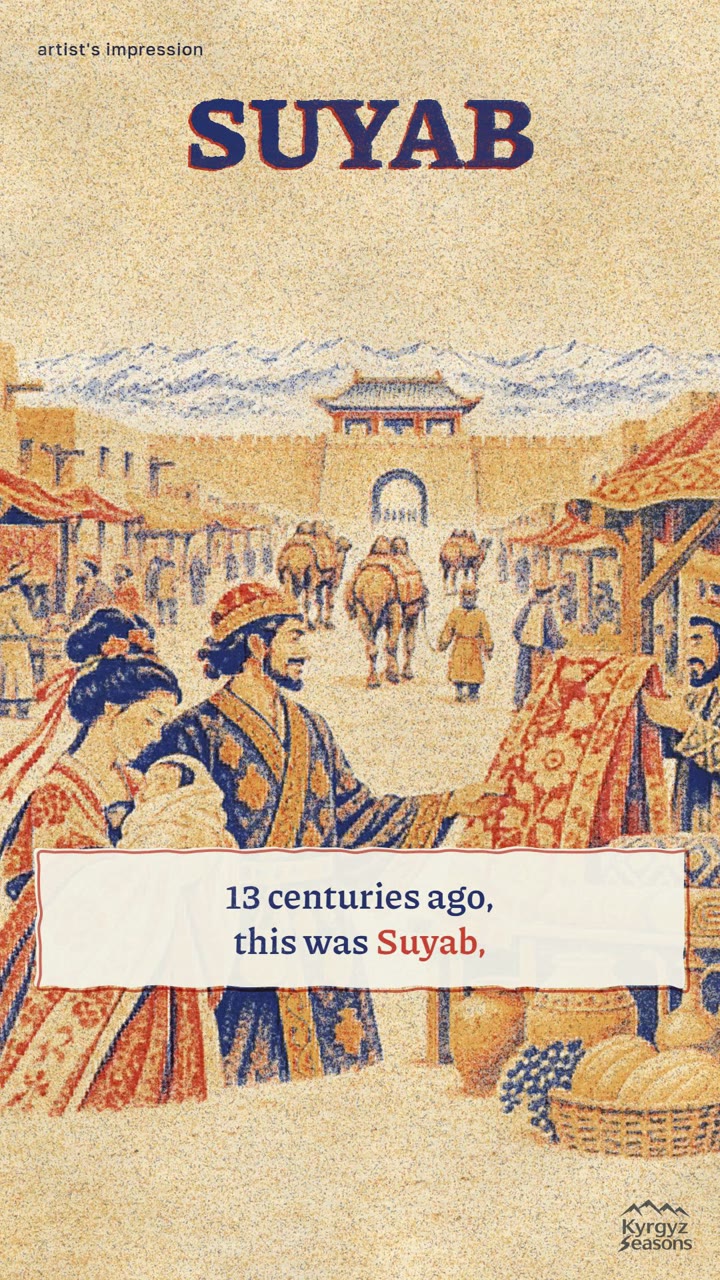
Ak-Beshim is the modern site name. Suyab is the historic city; Chinese sources call it Suye. Identifying an earthwork with a name in a book required more than resemblance. Gerard Clauson argued for the identification in 1961. A Chinese inscription discovered near the site later supplied independent support, referring to the garrison of Suye.
This was a city shaped by contact. Archaeology has revealed Buddhist and Christian buildings as well as a Zoroastrian burial ground. Those finds belong to different places and phases within the settlement. They do not make every wall contemporary, or turn the entire city into a single religious monument.
In the film, an outline and a red fortress stamp make the city legible in a moment. The real site asks for slower reading. A ridge may be a former boundary; a shallow hollow may matter to an excavator. A photograph cannot explain those traces on its own, and an animated reconstruction cannot replace an excavation plan.
A family travelled east.
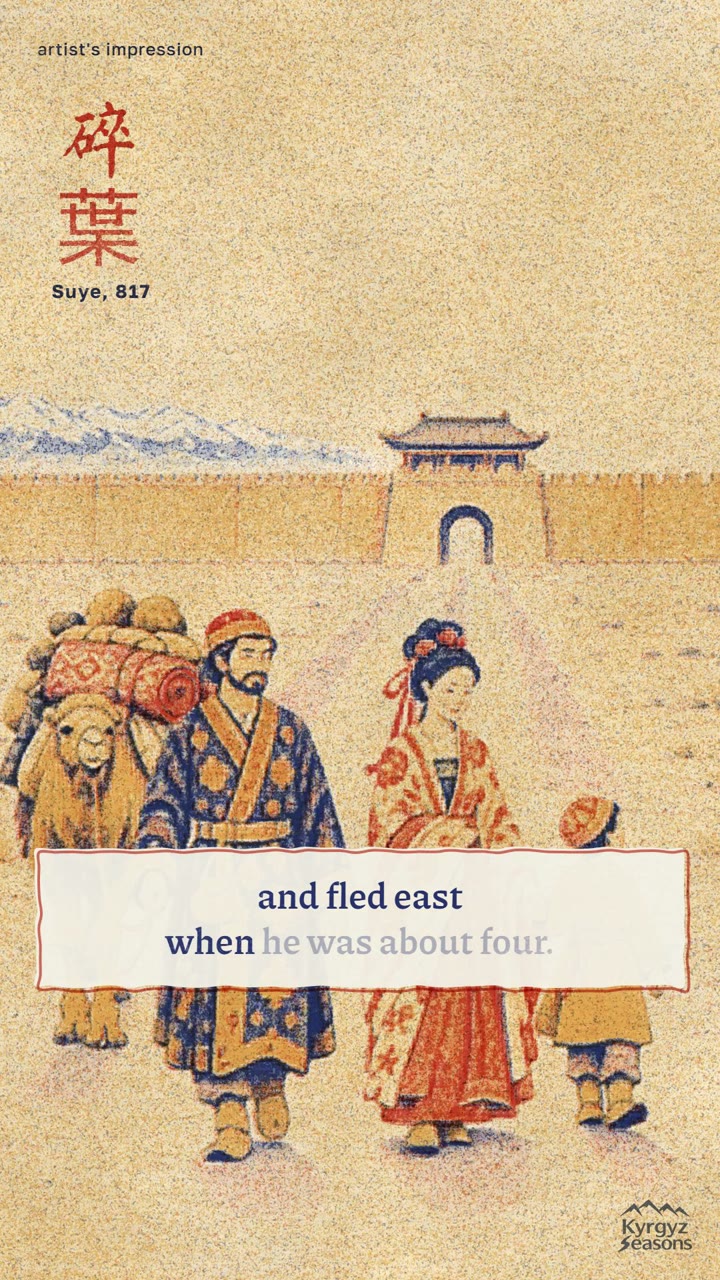
Fan Chuanzheng’s funerary account, composed after Li Bai’s death, places a branch of the family in Suye and describes a return to the Sichuan region. It also acknowledges damaged family papers and incomplete knowledge of the ancestry. This is evidence with its own history, rather than a modern birth certificate.
Scholars have used that account, together with other early biographical texts, to argue for Suyab as the poet’s birthplace. Other traditions locate his birth in Sichuan. An essay in a recent English edition vigorously defends Suyab; UNESCO’s educational material uses the more cautious formulation that one source suggests the connection. We keep that caution here.
The child’s departure in our film compresses this argument into a few seconds. The direction of travel is meaningful; the clothes, faces and exact scene are invented for the illustration. Nor should a suggested childhood connection be made to explain every later poem. A biography has gaps, and a good story leaves room for them.
A poem travels further.
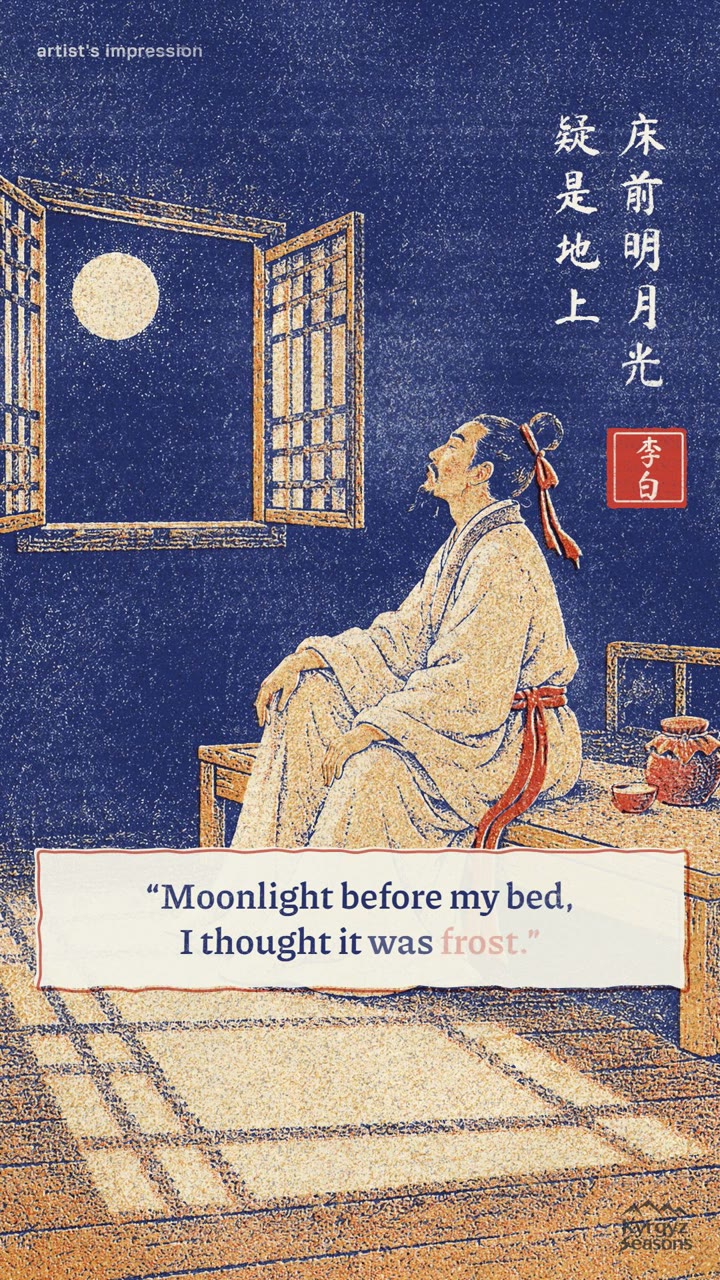
Li Bai’s “Quiet Night Thought” begins with moonlight before a bed, mistaken for frost upon the ground. The speaker looks up towards the moon, then down towards thoughts of home. The image needs very little scenery: light, a lowered head, the distance between where someone is and where they belong.
There is no evidence that this poem describes Ak-Beshim. The film brings its frost and moonlight back to the field as a poetic association. That return is ours. It should not be mistaken for a claim about where the lines were composed, or which home the speaker remembered.
The document below is a different work: Shang Yang Tai Tie, calligraphy attributed to Li Bai and preserved in the Palace Museum. It is included as a material encounter with writing, not as the manuscript of “Quiet Night Thought”. Look at the space between the marks as well as the marks themselves. A poem survives through copying, reading and recognition; a birthplace need not be settled for the words to reach us.

Earth keeps a different record.
Suyab’s urban life ended centuries ago. Its remains belong to the Silk Roads World Heritage property inscribed in 2014, alongside other sites across Kyrgyzstan, Kazakhstan and China. A serial inscription recognises a network: the movement of people, goods and ideas between places, rather than a single spectacular building.
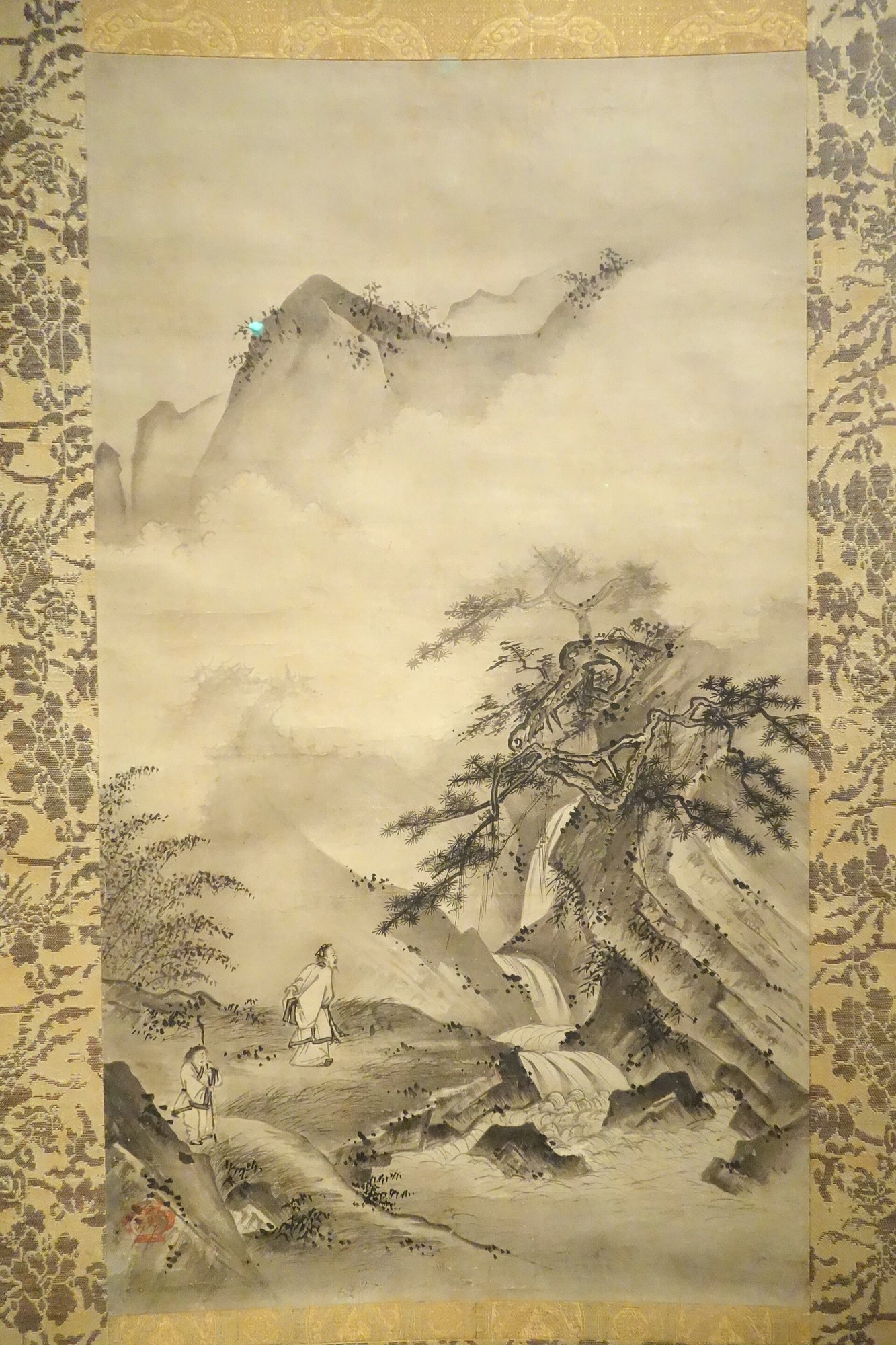
The poet had an afterlife of another kind. Painters continued to imagine him long after his own century. In this museum photograph, a Japanese scroll represents Li Bai contemplating a waterfall. It records a later artist’s response to the poet, not his appearance and not the landscape of Kyrgyzstan.
Set the two records beside one another. An archaeological site preserves fragile material traces. A painted scroll preserves an act of admiration. Neither can answer the birthplace question by itself; both explain why people continue to ask it.
Let the field remain open.
Visit Ak-Beshim for Suyab, rather than for a promised house of Li Bai. Arrange access locally and respect archaeological work and private land. The references used for this page do not establish current opening hours, a ticket price or an entrance to a particular excavation. We therefore give none.
Bring the question with you, but allow the place to be more than its most famous possible resident. The city matters even if a future study changes the poet’s biography. Its name, its religious buildings and its connections across the Silk Roads have histories of their own.
The last image of the film returns to light upon a field. You do not need to mistake it for proof. A possibility can lead you to a real place, and a real place can teach you how carefully a possibility should be told.
A possibility, held carefully
The city is real. The birthplace remains a question.
Watch the 46-second filmThe story in three printed inks: indigo, ochre and vermilion. Historical scenes are artistic interpretations.
Want to see it for yourself?
Routes, places and the best months to go — everything for planning a trip to Kyrgyzstan.
Sources
- Fan Chuanzheng, New funerary stele for Lord Li, Tang primary text.
- Suyab, the True Birthplace of Li Bai, scholarly chapter, 2025.
- G. Semenov, Suyāb, Encyclopaedia Iranica, 2002/2013.
- UNESCO, Silk Roads: Chang’an–Tianshan Corridor and the Suyab educational poster.
- Li Bai, Quiet Night Thought.
Pictures
- Film plates: Kyrgyz Seasons, the finished Ak-Beshim film; historical scenes are artistic interpretations.
- Shang Yang Tai Tie: digital reproduction attributed to Li Bai, Palace Museum; public domain via Wikimedia Commons. Photograph date and photographer unrecorded. Different work from Quiet Night Thought.
- Sōami scroll: museum photograph by Daderot, 5 November 2013, CC0, Wikimedia Commons. A later Japanese depiction of Li Bai, not Ak-Beshim. No openly licensed photograph of the Ak-Beshim site was located for this page; neither image is presented as one.