




A Few Dozen Horses
A Han emperor sent an army across the deserts for a few dozen perfect horses from a valley far to the west. In that valley, ancient horses are carved high on a cliff — and some scholars think they are the same breed.
Watch the film · 47 sSixty thousand for a few dozen
“An emperor sent sixty thousand soldiers for a few dozen perfect horses.”From the film
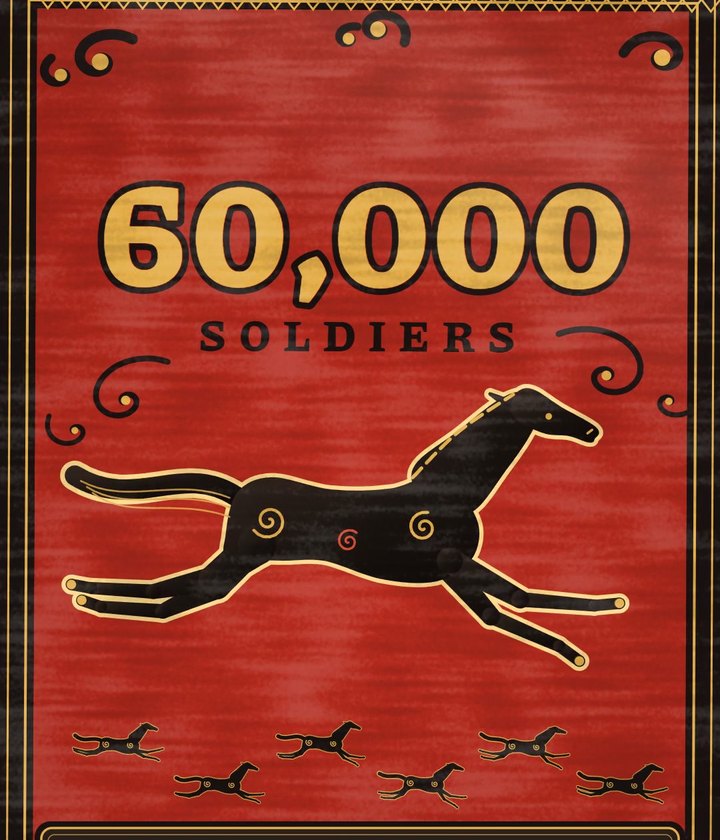
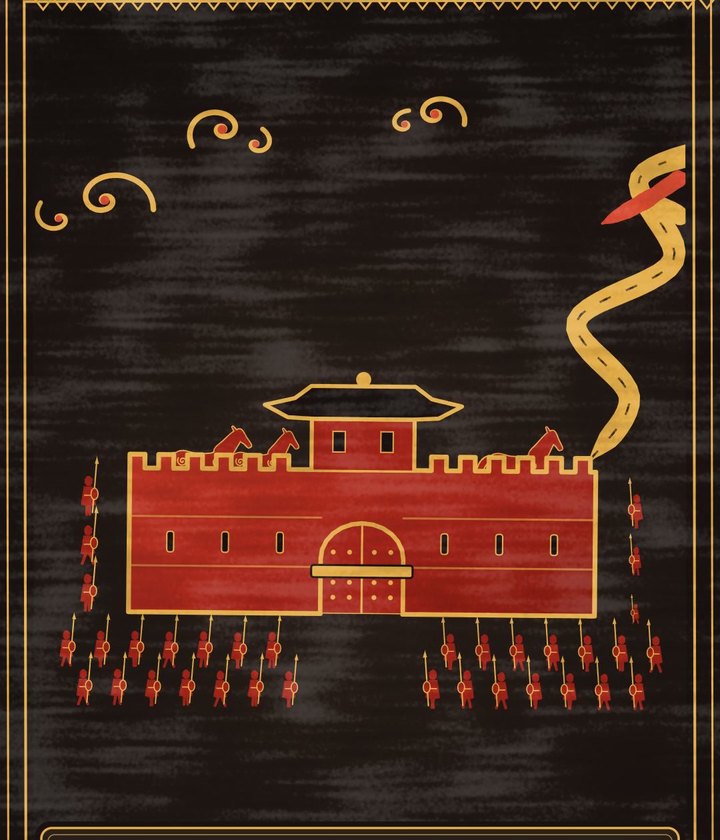
In 102 BC an army left Dunhuang, the last Han town before the desert. Sixty thousand men, a hundred thousand oxen, more than thirty thousand horses.
It was marching west to a country the Chinese called Dayuan, in the Fergana Valley — the valley that today is shared by Uzbekistan, Kyrgyzstan and Tajikistan. The goal was not land. It was horses.
The army’s ledger
One dot is a thousand men. Sima Qian, who lived through the war, wrote down how many left — and how many came back.
60,000 men left Dunhuang in 102 BC.
They came back with a few dozen of the finest horses and about three thousand ordinary ones. Little more than ten thousand men walked home through the Jade Gate. Sima Qian does not blame the desert or the enemy for most of the losses: he blames the officers, who stole the soldiers’ rations.
Heavenly horses
“China called them heavenly horses, said to sweat blood, from a valley far to the west.”From the film
The Han emperor Wu needed horses. His enemies, the steppe nomads, rode better and faster, and Chinese horses were small.
An oracle told him that a divine horse would come from the north-west. So when the first big horses arrived from the Wusun, a people of the steppe, the emperor named them “heavenly horses”. Then his envoys reached Dayuan and saw something better.
A name that moved
Tap to follow the title “heavenly horse” as it passes from one herd to another.
First, the oracle’s title goes to the Wusun horses.
Dayuan, Sima Qian wrote, had more than seventy walled towns, rice and wheat, and wine from grapes. “It has many fine horses; the horses sweat blood.” Their ancestors, people said, were foals of a heavenly horse.
The city without wells
“Its king wouldn’t give them up. The army cut off his city’s water, until his nobles did.”From the film
The best horses were kept in a town called Ershi, and the king of Dayuan would not sell them. When a Han envoy cursed him and smashed the golden horse he had brought as payment, the envoy was killed on his way home.
In 104 BC the emperor sent his general Li Guangli, with the title “General of Ershi”. The first march failed: the towns on the way shut their gates, and only one or two men in ten got back to Dunhuang. The emperor would not let them through the Jade Gate. They had to try again.
The second army reached the capital. It had no wells — its water came from a river outside the walls. The Han engineers turned the river away and laid siege. After forty days the nobles killed their king, Wugua, and offered a deal: take the horses and go.
- 104 BCFirst marchFails in the desert towns. One or two men in ten return.
- 102 BCSecond march60,000 men leave Dunhuang. The river is diverted, the capital besieged.
- 101 BCThe horses“A few dozen” of the best and more than 3,000 others go east. A new king, Mocai, is set up.
- LaterTributeThe next king, Chanfeng, sends two heavenly horses to China every year.
Li Guangli was made a marquis. The emperor wrote a song for his new horses. And by the palaces of the capital, Sima Qian says, the envoys planted the grapes and the alfalfa they had brought from Dayuan, “as far as the eye could see”.
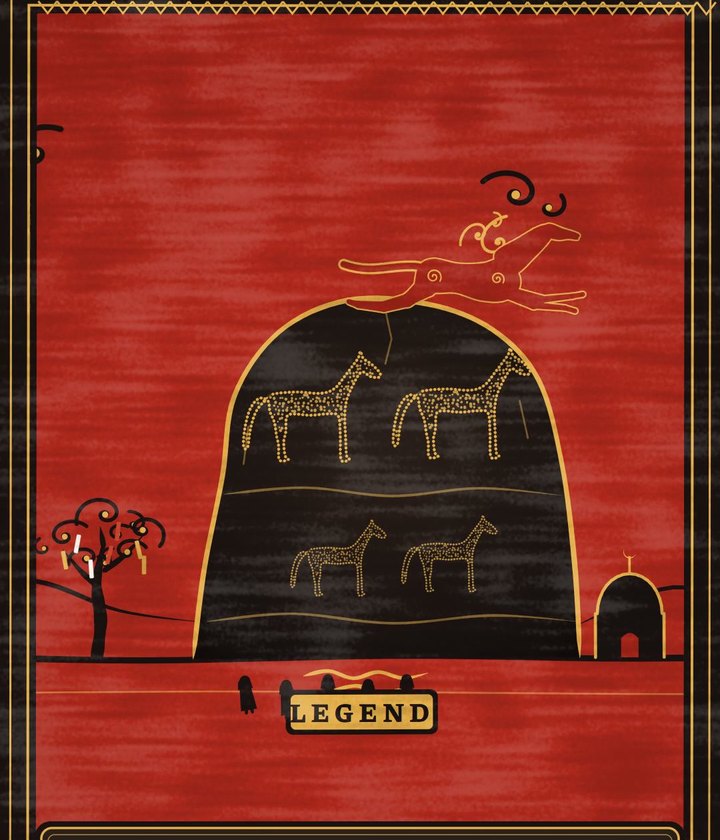
The cliff
“In that same valley, at Aravan in Kyrgyzstan, ancient horses are carved into a cliff.”From the film
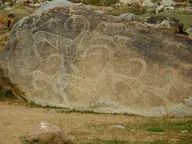
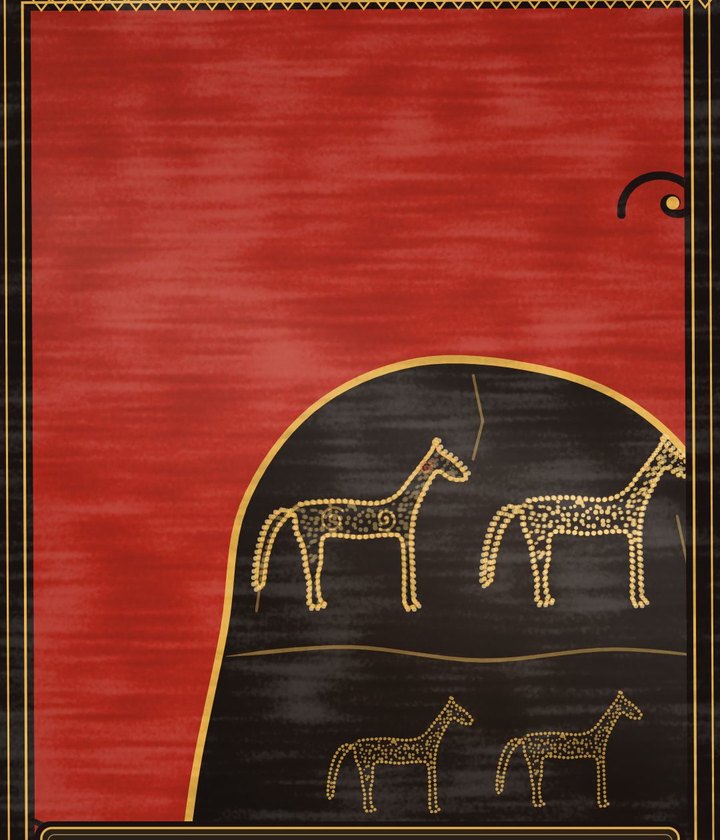
On the eastern edge of Aravan, a small town about 25 km west of Osh, a bare rocky ridge rises above the houses. High on its face are horses.
They are carved into the rock, not painted. The archaeologist Mikhail Masson described them in 1939, and Alexander Bernshtam’s expedition drew them in September 1946. There were four horses, all facing right, in pairs. The upper pair is about 15 metres up the cliff; each horse is half a metre to a metre long. Around them: three small rams facing the other way, a deer with branching antlers, tiny human figures and signs.
Then and now
A schematic drawing, not a photo: the horses as Bernshtam’s team saw them in 1946, and what you can make out today.
1946: two pairs of horses, rams, a deer and small figures.
Time has not been kind. In 1962 Yuri Zadneprovsky found the horses badly scratched with graffiti. In the early 1990s they were painted over. The lower pair can no longer be seen, and the small early figures are barely visible.
The heavenly ones?
“Some scholars think they’re the heavenly ones.”From the film
Masson thought so first, in 1940. Bernshtam and Zadneprovsky agreed. Their reason is the shape of the horse.
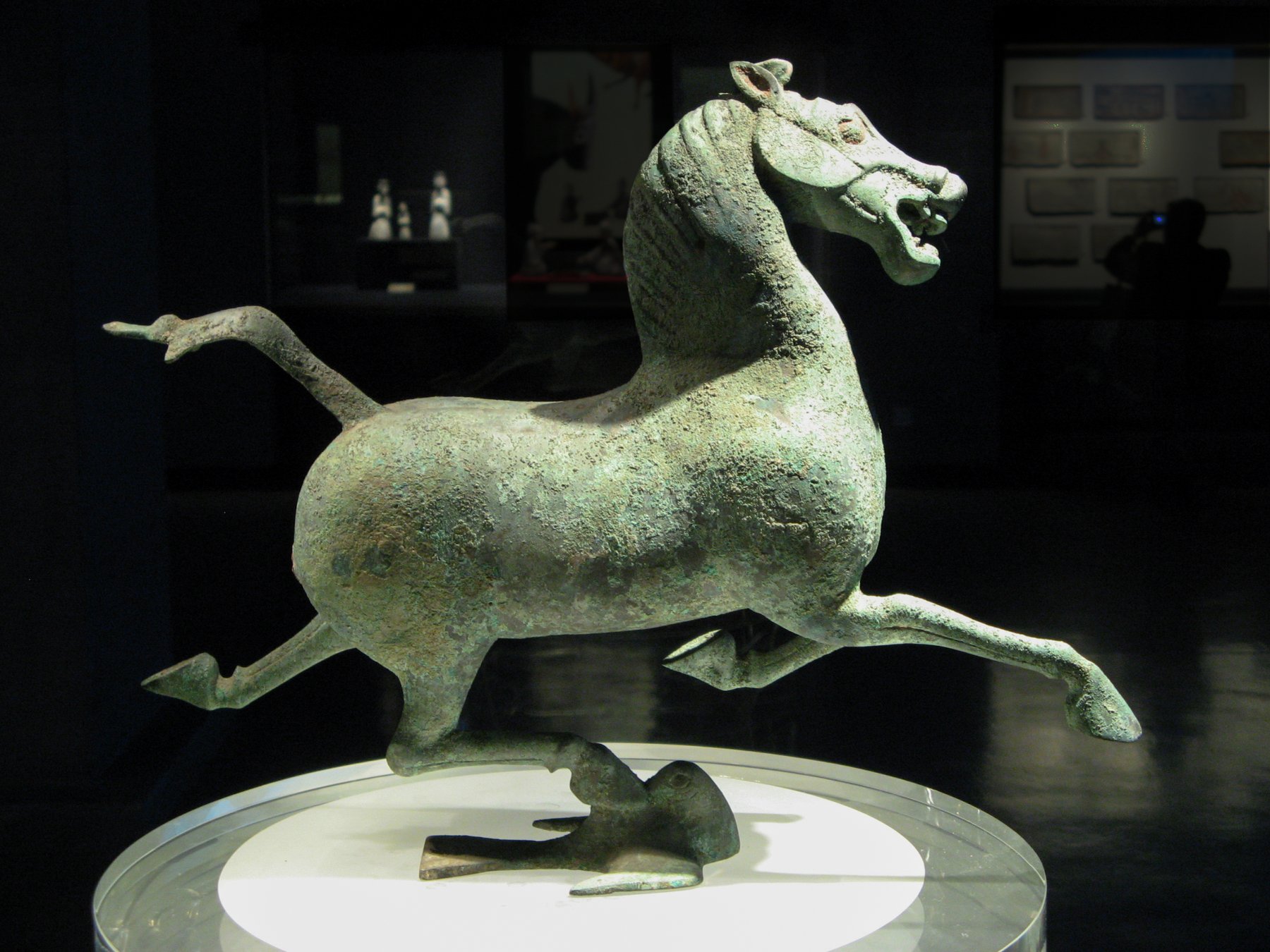
The Aravan horses are not the stocky steppe pony of most Central Asian rock art. They have a lean body, long legs, a long curved neck and a small head — a tall, fast riding horse. That fits what the Chinese wanted from Dayuan. But there is no inscription, and no one can prove the carvers had the heavenly horses in mind.
How old are they?
Each scholar gives a different range. The ochre band is the war of 104–101 BC.
They all overlap around 2,000 years ago — so the safe answer is: about two thousand years old.
Two more things are not settled. Where exactly Ershi stood is still argued: Bernshtam put it in today’s Uzbekistan, and the Chinese-Uzbek excavation at Mingtepa, digging since 2012, calls that site “very likely” the capital of Dayuan. The siege is not placed at Aravan itself: the cliff lies in the same valley, not in the besieged city.
And are today’s Akhal-Teke horses of Turkmenistan their descendants? People often say so. A 2024 study found a Tang-era horse in China with a mother line close to the Akhal-Teke — but from only two genomes. It is a hint, not proof.
Pilgrims beneath the horses
“Today, pilgrims pray beneath them. Locals say a saint’s flying horse once stopped here.”From the film
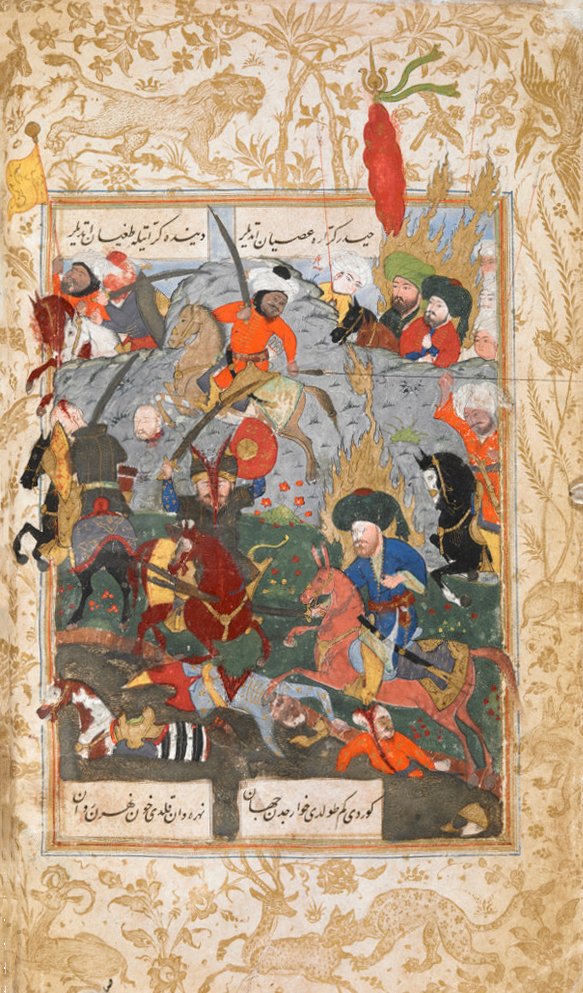
For the people of Aravan the cliff is not an archaeological site. It is a shrine, and its name is Dul-Dul At — “the horse Duldul”.
At the foot of the rock there is a spring, an old cemetery, a symbolic tomb and a mosque built in 2015 where a Sufi shrine once stood. A hole in the rock is worn smooth by pilgrims, who put their head and hands into it. People come to pray for children and for healing.
So the same horses are read twice: by scholars as Dayuan’s heavenly breed, by pilgrims as the mount of a saint. Neither reading needs the other.
Fact, guess, legend
- FactHan China sent armies to Fergana in 104 and 102 BC for its horses, and brought a few dozen of the best home.
- FactHorses are carved high on the cliff at Aravan, in the same valley, roughly 2,000 years old.
- HypothesisThey show the Dayuan breed the Chinese called heavenly.
- HypothesisThe Akhal-Teke descends from those horses.
- LegendThe horse of Ali stopped at this cliff.
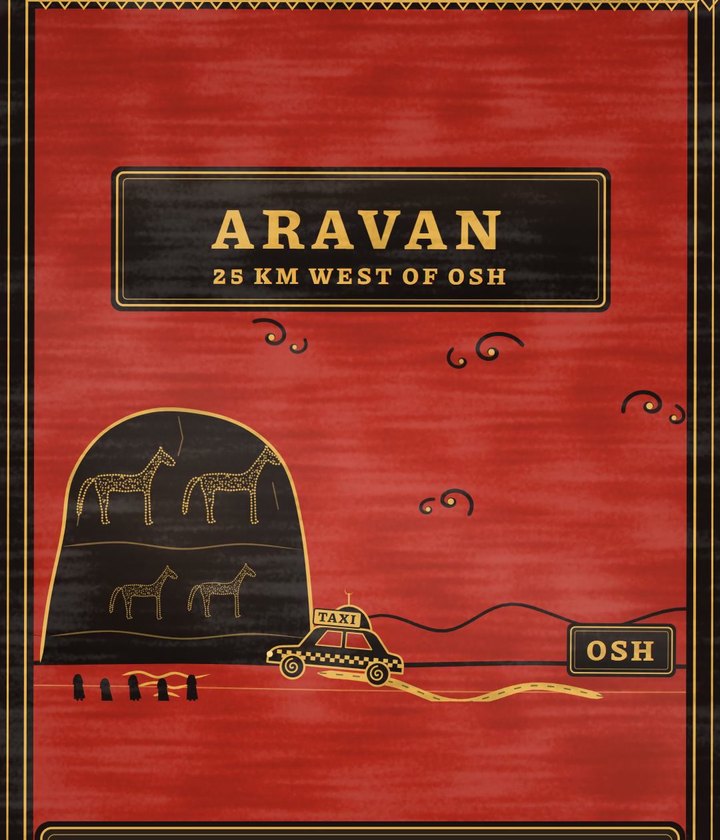
You need a taxi from Osh
“An emperor needed an army to reach them. You need a taxi from Osh.”From the film
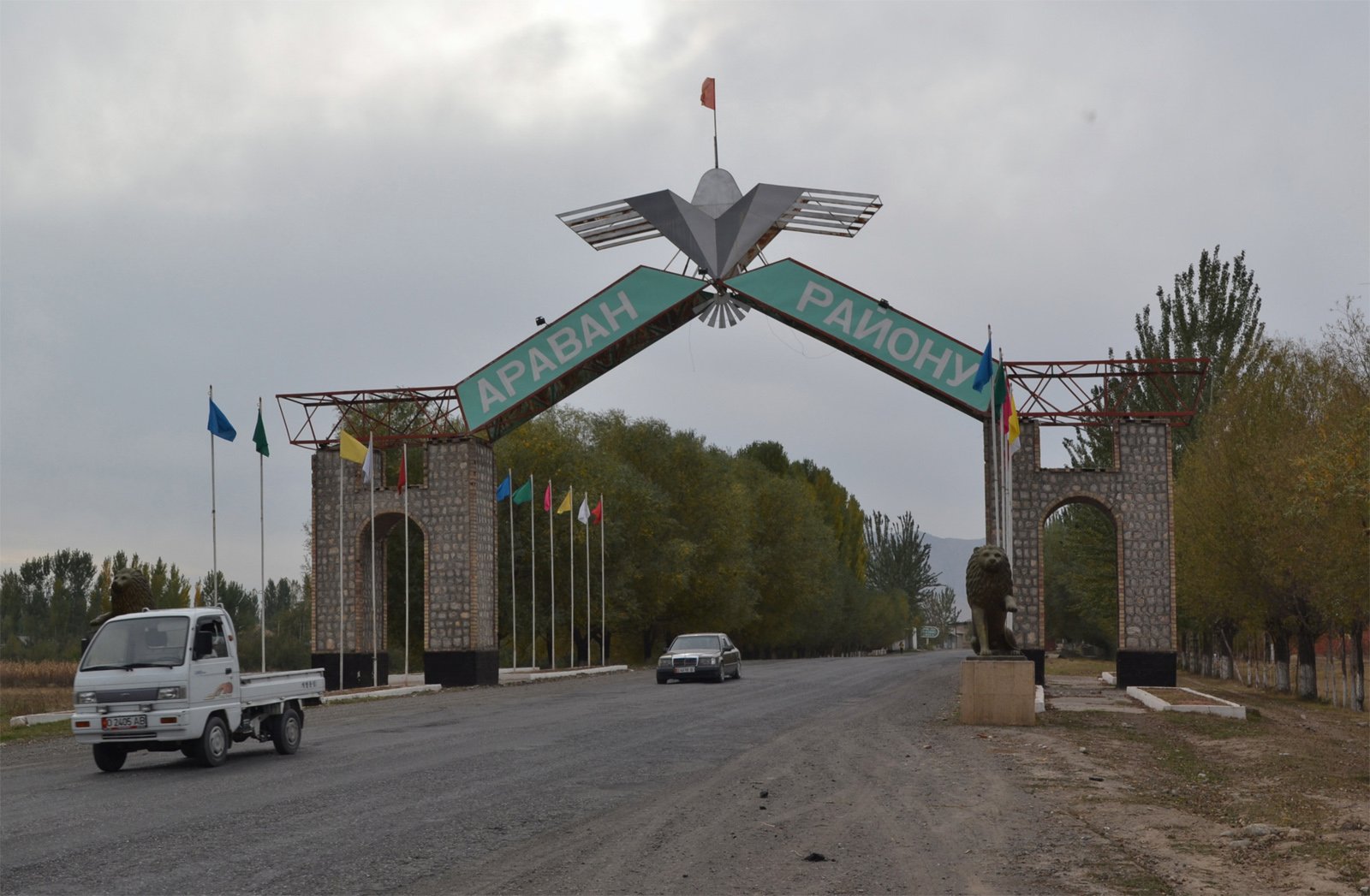
The cliff stands on the eastern edge of Aravan, a small town in the Fergana Valley west of Osh. Green gates lead into the shrine — Dul-Dul At. Inside: the spring, the old cemetery, a mosque and, high on the rock, the horses.
An army then, a taxi now
Sixty thousand men walked for a few dozen horses. The horses on the cliff at Aravan are a short ride from Osh.
 Watch the 47-second filmThe same story painted on a Han lacquer tray: red and black lacquer, ochre inlay, clouds that unfurl.
Want to see it for yourself?
Routes, places and the best months to go — everything for planning a trip to Kyrgyzstan.
Sources
- Sima Qian, Shiji, ch. 123 and 24, about 94 BC; tr. B. Watson, Records of the Grand Historian: Han Dynasty II, Columbia University Press, 1961, rev. 1993. Chinese text
- Ban Gu, Hanshu, ch. 61 and 96A; tr. A. F. P. Hulsewé and M. A. N. Loewe, China in Central Asia: The Early Stage, 125 BC – AD 23, Brill, 1979.
- Yu. A. Zadneprovsky, “The Aravan rock carvings”, Sovetskaya etnografiya 1962 no. 5, 125–129. PDF
- M. E. Masson, 1940 and 1948; A. N. Bernshtam, 1948 — the first descriptions of the Aravan cliff and the heavenly-horse hypothesis.
- S. Pietrowiak, Rock Art Research 38(2), 2021, 152–168. rockartresearch.com
- Zhu et al., Genes 15(6), 790, 2024. PMC11203007
- Global Times, May 2023, on Mingtepa. Central Asia Guide, “Dul-Dul At”, 2020. Wikipedia, “Aravan, Kyrgyzstan”.
Pictures
- Lacquer plates: frames from the Kyrgyz Seasons film “A Few Dozen Horses”. The hero tray, the horse and the cliff drawing are drawn from the same film.
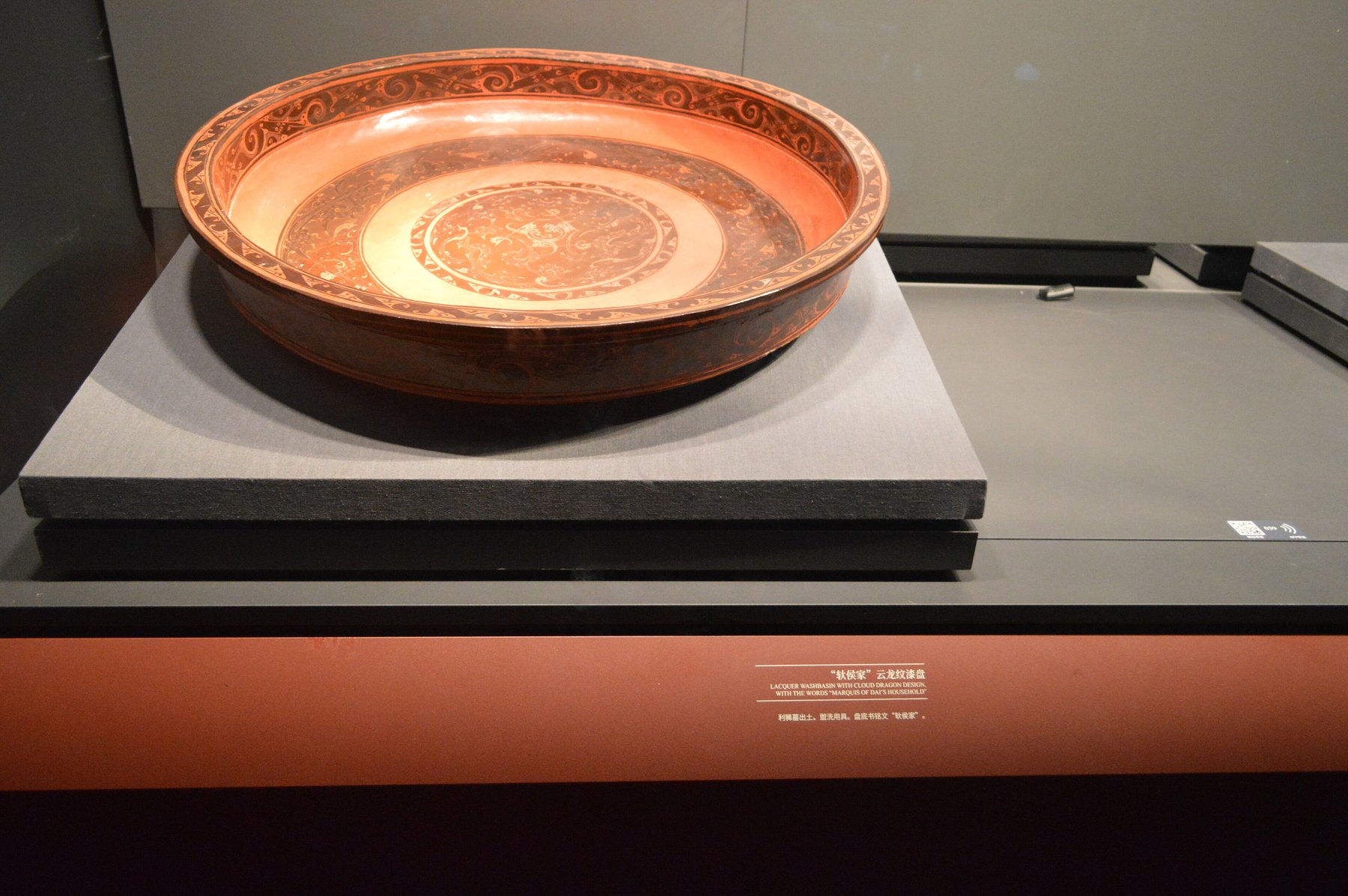
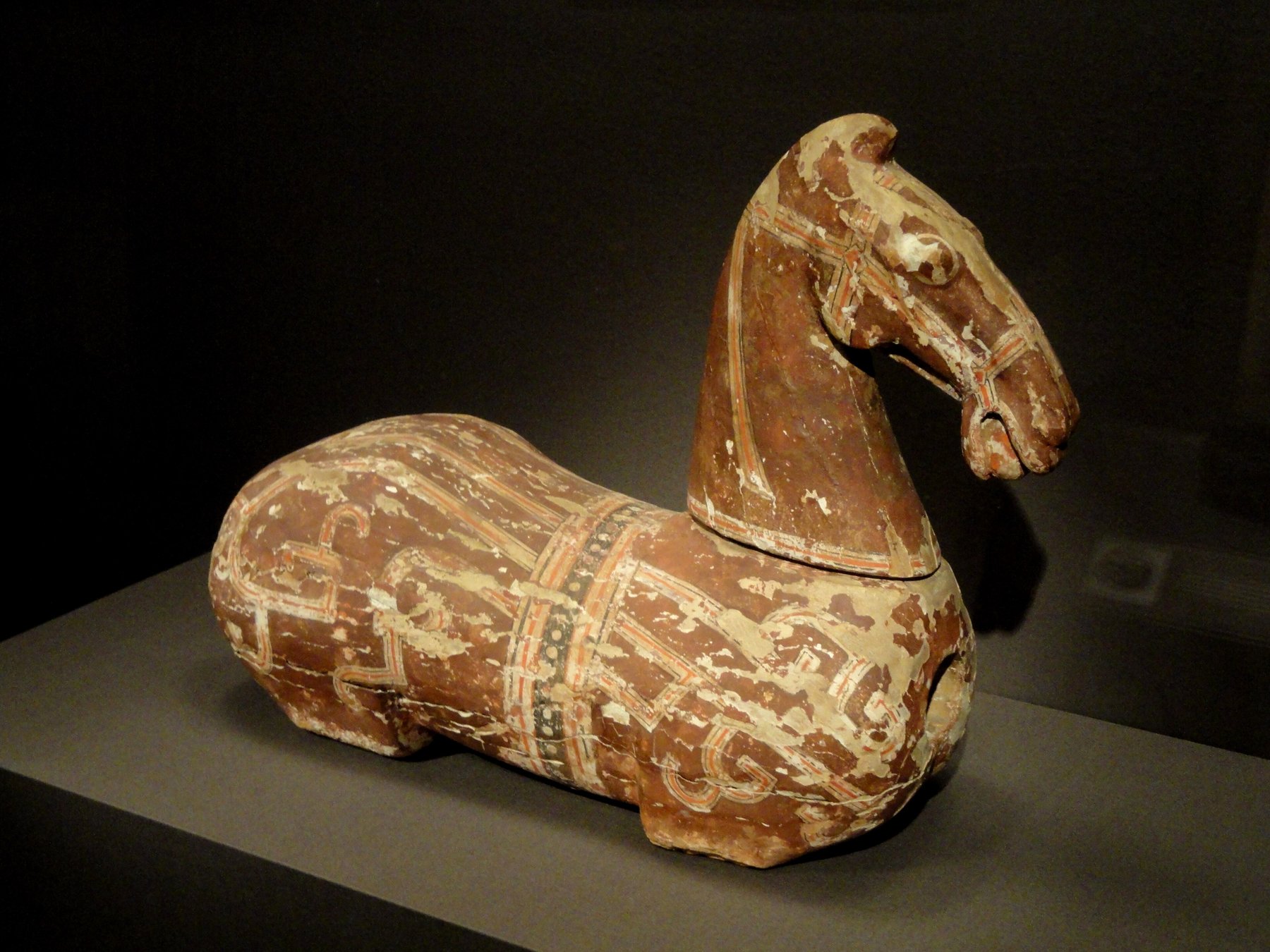
- Lacquer washbasin, tomb of Li Xi at Mawangdui, Hunan Museum: Huangdan2060, CC BY 3.0. Lacquered wooden horse, Arthur M. Sackler Gallery: Daderot, CC0.
- Flying Horse of Gansu, Gansu Provincial Museum: G41rn8, CC BY-SA 4.0. Ali on Duldul, Ottoman miniature, British Library Or. 7238: public domain.
- Aravan District: deactualizator, CC BY 3.0. All via Wikimedia Commons.