

Nobody Built These Pillars
Water builds. People sign. Water leaves another layer.
Watch the film · 47 sIllustration · not a growth clock or a surveyed section
“Forty Pillars” is not our headcount.
Chil-Ustun’s name is usually translated as “Forty Pillars”. Ogudin traces that reading through earlier descriptions. His article describes a cave of natural formations near Aravan, in the Osh region. The name makes the place sound architectural before we have even entered it.
But a familiar translation is not a survey of exactly forty columns. Belyakov’s popular essay offers another reading connected with partridges and a perch. We keep that as an alternative proposal, not a settled replacement for the usual name.
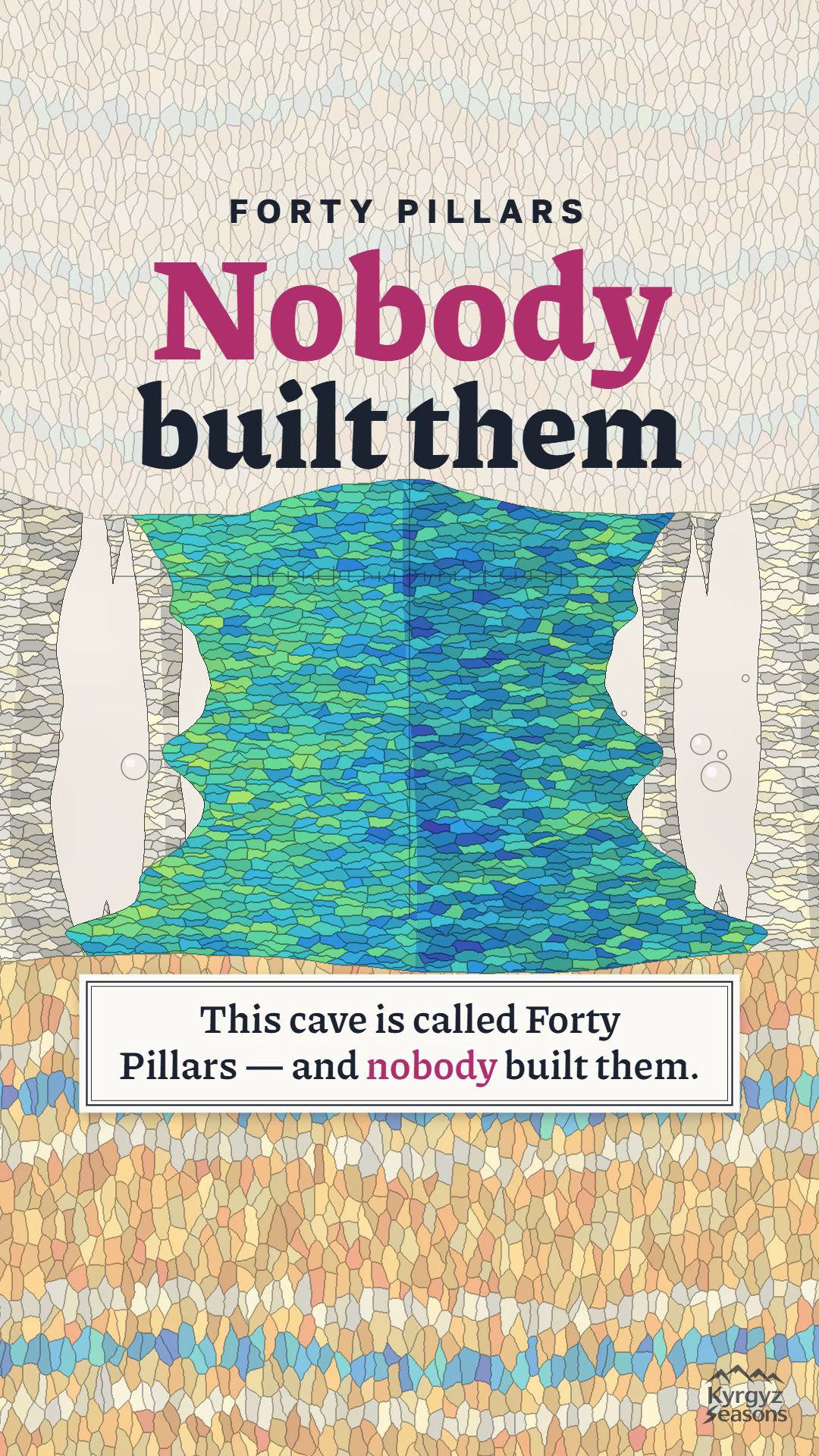
The film makes a different distinction immediately: nobody built the pillars. Its colours are the language of a microscope. They are not a promise that a torch inside the cave will reveal a room glowing turquoise and magenta.
The builder arrives as a drop.
Water can carry dissolved material through rock and leave calcite behind when it enters a cave. A stalactite grows down from the ceiling; a stalagmite grows up from the floor. When the two meet, the result is a column. A familiar architectural word turns out to describe a mineral process.
Move the growth control above to join the shapes. There is no number of years attached to the slider: it explains a relationship, not a growth rate. The age of the limestone, the opening of a cave and the age of a particular formation are separate questions.
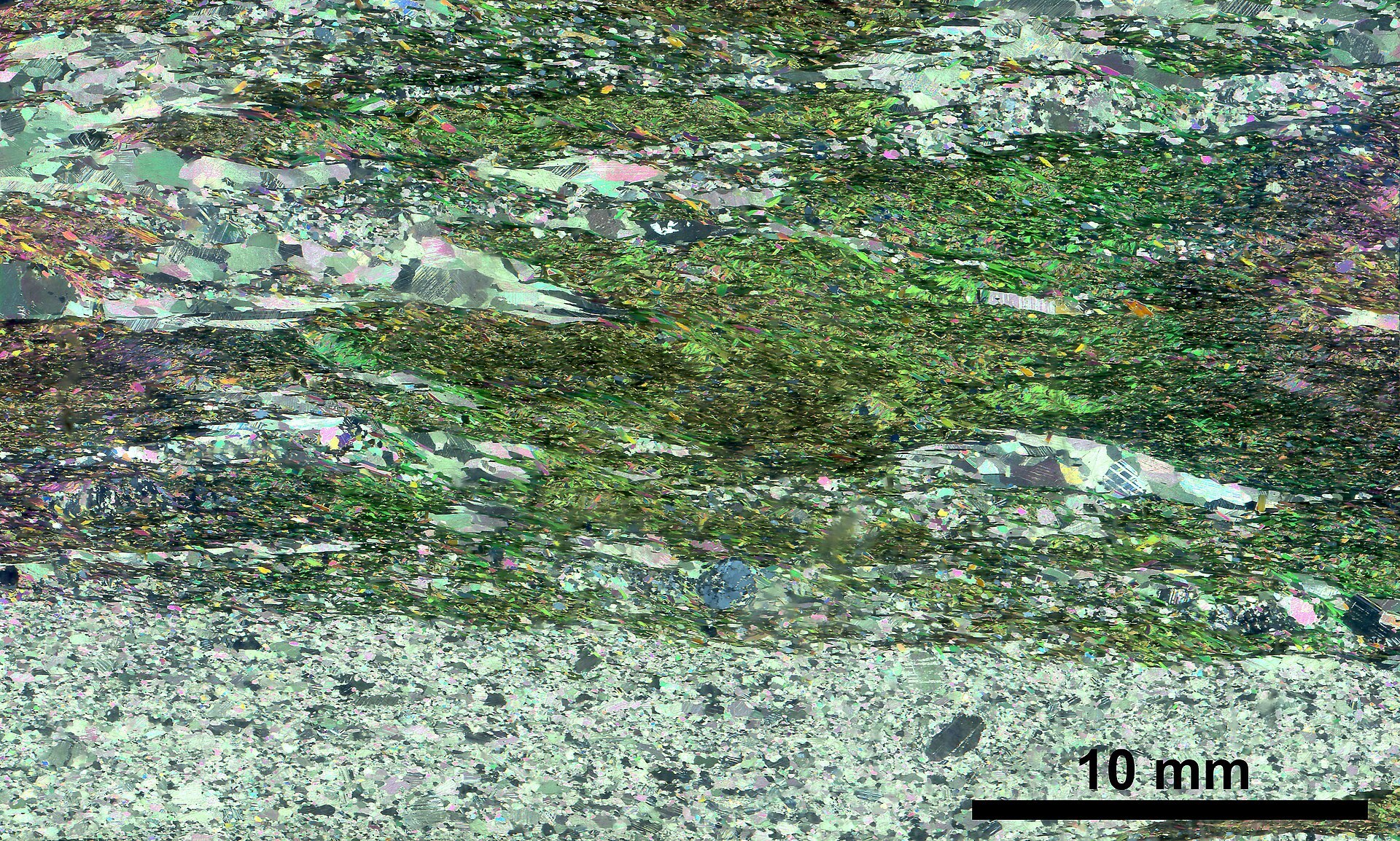
The other control changes the coloured grains. Calcite has striking interference colours under crossed polarizers. That optical effect gives the film its world. Our scene borrows the idea, without claiming a laboratory measurement of material collected at Chil-Ustun.
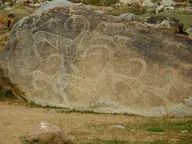
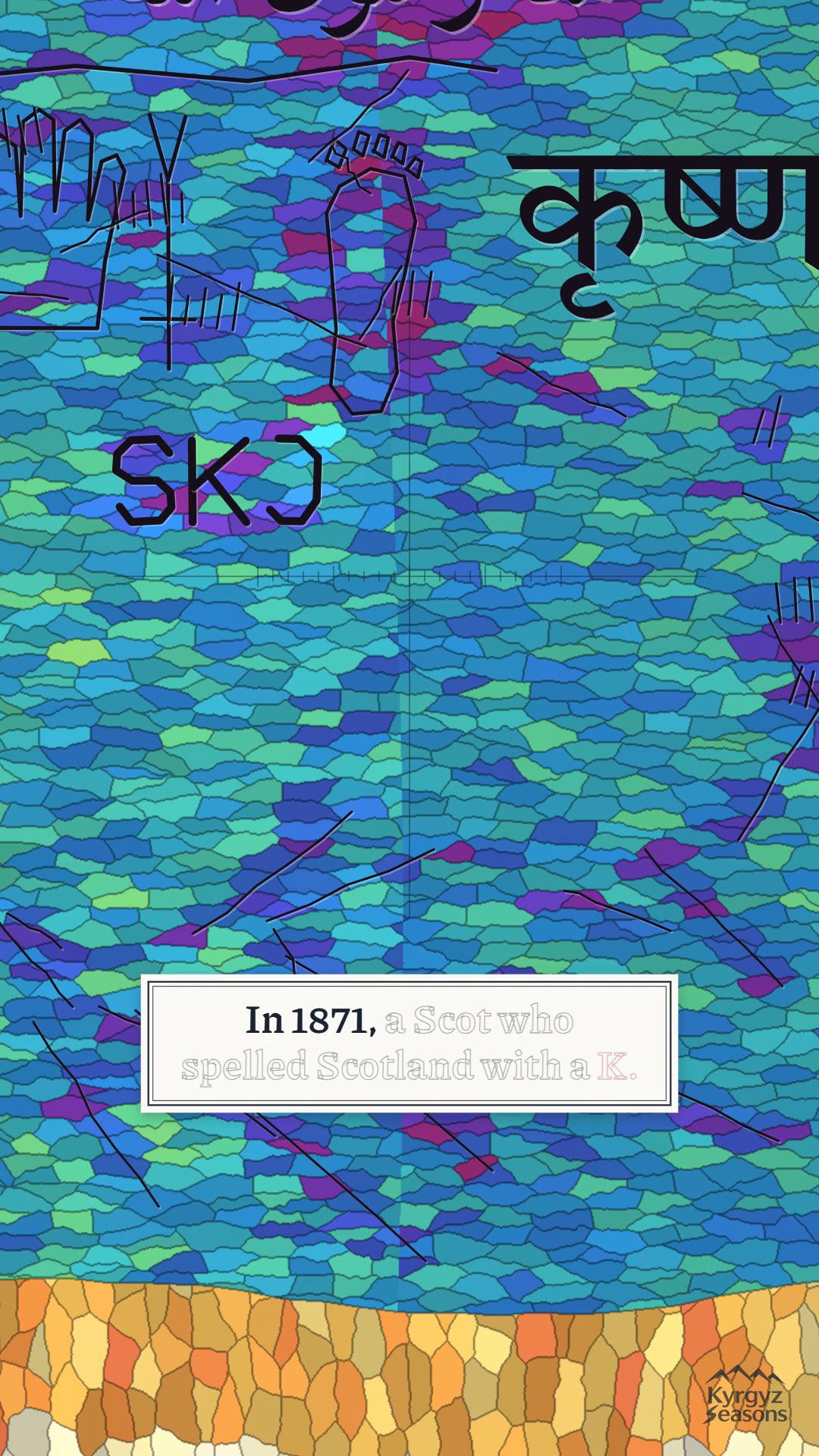
The stone became a page.
Ogudin places the known dated inscriptions within roughly the three centuries preceding his 2003 article. The earliest dated Arabic-script example in his account is 1716/17. “Ancient writing everywhere” would lose that useful limit.
Religious words
The article records the shahada and passages from Quranic suras. A script is not by itself a date.
A preliminary reading
Ogudin reports eleven Devanagari inscriptions. The preliminary reading identifies religious content including Krishna’s name and suggests the eighteenth century. It is not an independently rechecked translation here.
A name and a year, as transcribed
SKOTLAND
A. DALRIMPL
1871
CILIUSTUN
Ogudin transcribes these four lines and identifies the visitor as a Scot. We have not independently established the writer’s biography.
The film moves quickly from one script to another. Reading slowly lets their different levels of certainty stay visible. It also leaves a simple boundary for a visitor: old writing is evidence to protect, not an invitation to add a new signature.
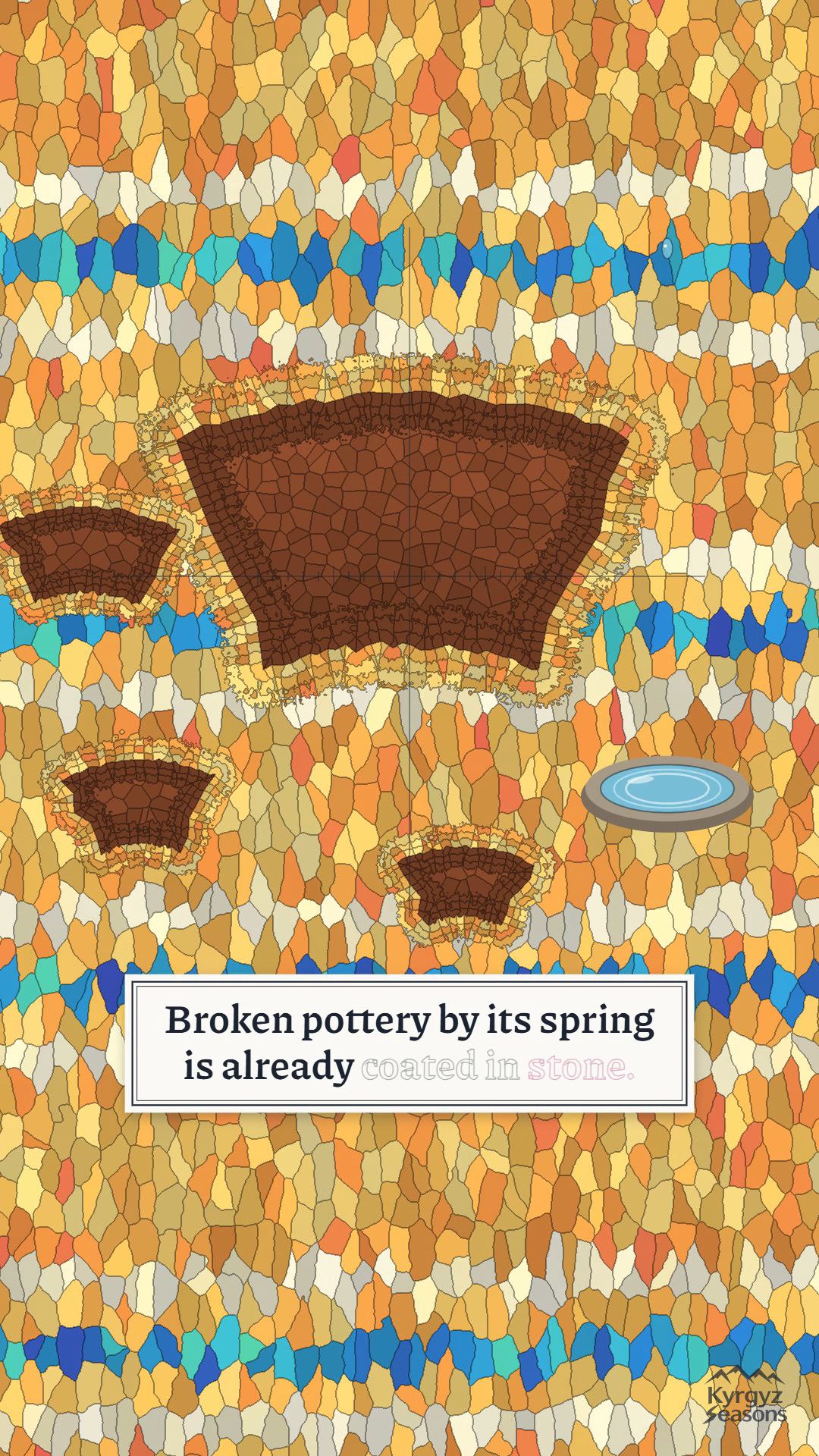
People wrote on stone. Water coated their objects.
At a small spring in the first hall, Ogudin describes pottery fragments covered with calcium salts. The film turns that observation into its final layer: the water has not simply retired after making a column. Its account of the spring belongs to the published field record, not a claim that we sampled it today.
The cave also carries stories of a hidden saint and a passage towards a river and a garden. Ogudin records these as accounts people told him. A legend can explain how a place is imagined without becoming a map of an actual secret passage.
Our colours fade as you scroll, revealing the photographs beneath. That gesture is a way of separating interpretations from records. It does not turn the Finnish mineral section into Kyrgyz cave rock, or a view of Aravan District into the cave mouth.
A cave near a road is not a walk-in stop.
Historical accounts describe pilgrims and difficult ladders; the present travel description also treats the approach as specialist climbing, with equipment and a knowledgeable local guide. Arrange any attempt with a qualified local guide and confirm access and conditions first. This page is not a route description or permission to enter.
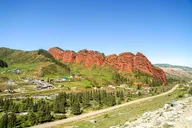
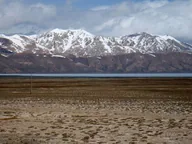
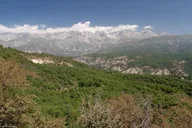
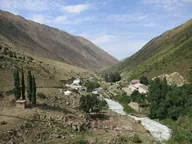
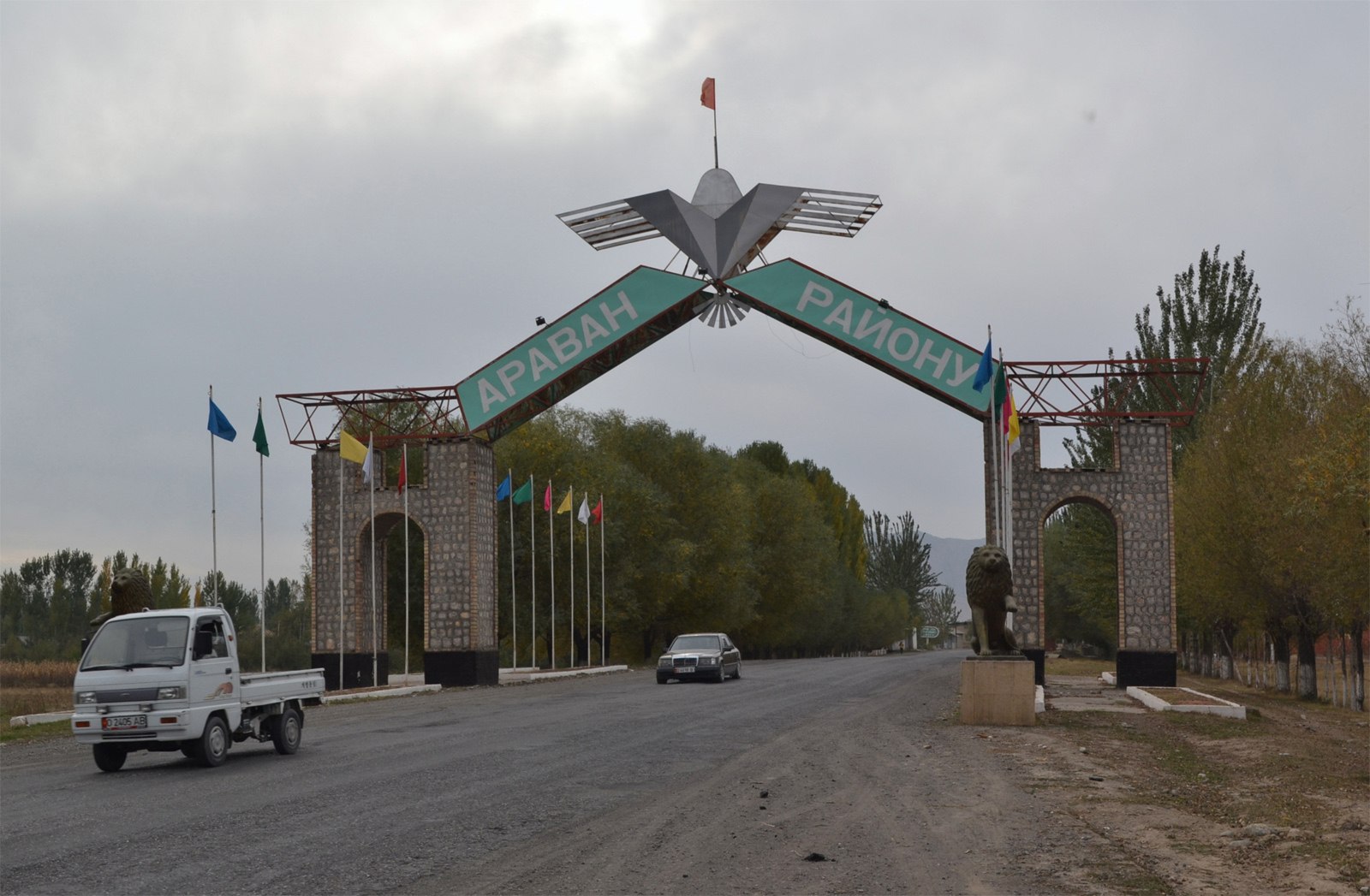
The regional photograph below shows the gateway of Aravan District, taken in 2014. It gives the journey a real setting while leaving the cave unclaimed. We did not find an openly licensed photograph that we could verify as Chil-Ustun itself; a picture of a neighbouring cave would not solve that gap.
Use the Osh guide for the wider trip. We have not verified a current permit procedure, opening hours, fees or a reliable season for this cave. Leave formations and pottery where they are, and let the oldest builder keep working.
The work is not finished
The oldest signature here belongs to a process, not a person: water leaving stone behind.
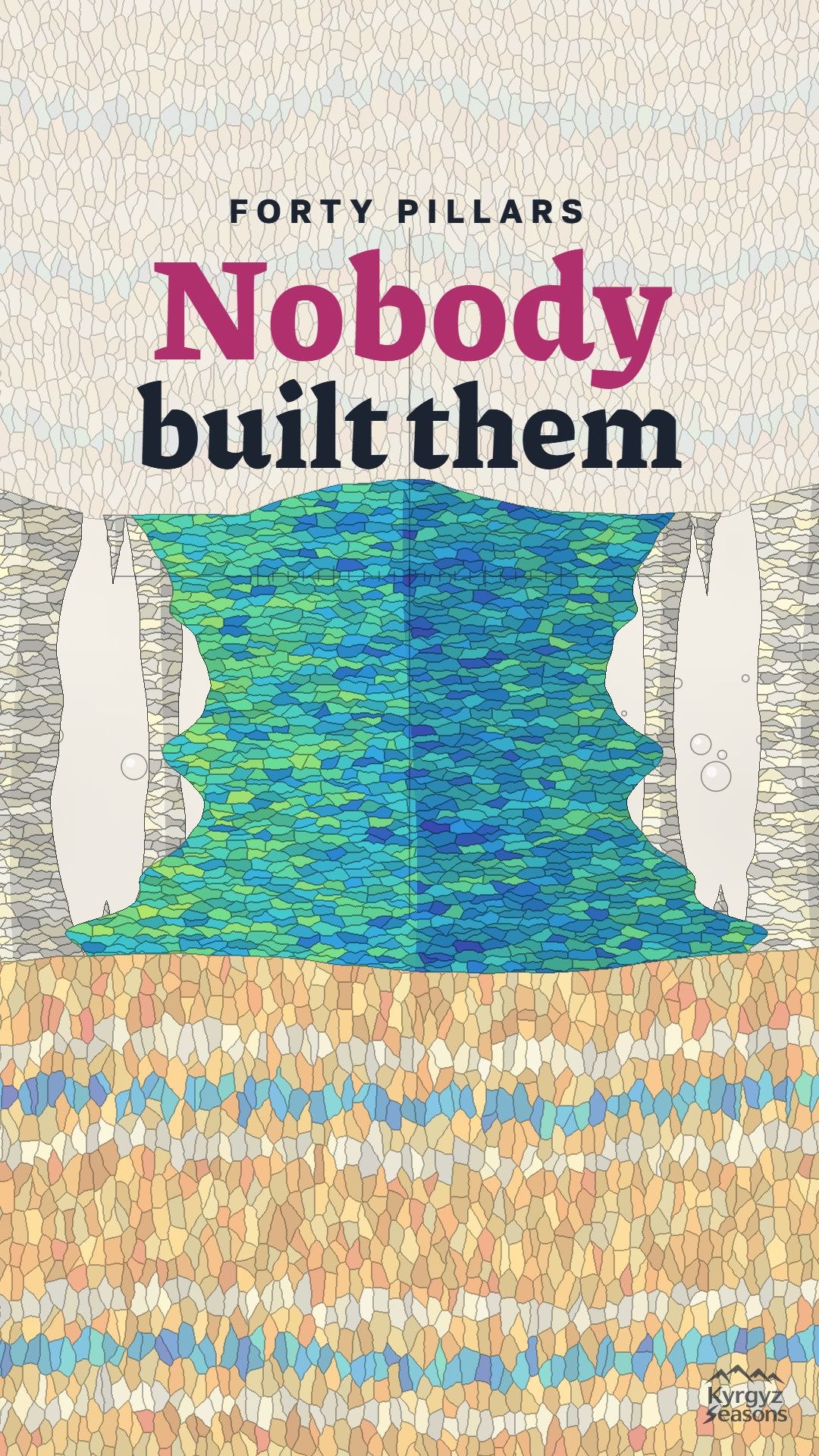 Watch the 47-second filmThe film turns the cave into a calcite thin section under crossed polarizers. Rotate the light, join the two growths and let the coloured grains fade to reveal real photographs. This is a visual interpretation, not a measured sample from Chil-Ustun.
Want to see it for yourself?
Routes, places and the best months to go — everything for planning a trip to Kyrgyzstan.
Sources
- Ogudin (2003): cave observations, inscriptions and collected accounts; source 1.
- National Park Service: mineral deposition and columns; source 2.
- Ogudin and Belyakov: distinct readings of the name; source 3.
- Open University: optical context; source 4.
- Access context and its limits: source 5.
Pictures
- Film frames: Kyrgyz Seasons. The coloured thin-section cave and inscriptions are artistic interpretations, not survey drawings or a laboratory specimen.
- Aravan District gateway: deactualizator, 18 October 2014, CC BY 3.0, Wikimedia Commons. Resized. Regional context, not the cave entrance.
- Thin-section scan: kallerna, 20 September 2016, CC BY-SA 4.0, Wikimedia Commons. Apatite ore, sample 501-M3, Siilinjärvi, Finland, crossed polarizers; includes carbonates and mica. Resized. Not collected at Chil-Ustun.