


Job's Mountain
Above a city in southern Kyrgyzstan, warm water comes out of a low, dry hill. People in the valley say this is where the Prophet Job was healed. The legend is old, the water is real, and the hill still carries his name.
Watch the film · 43 sA hill with a prophet's name
“Locals say the Prophet Job was healed on this hill.”From the film
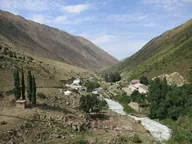
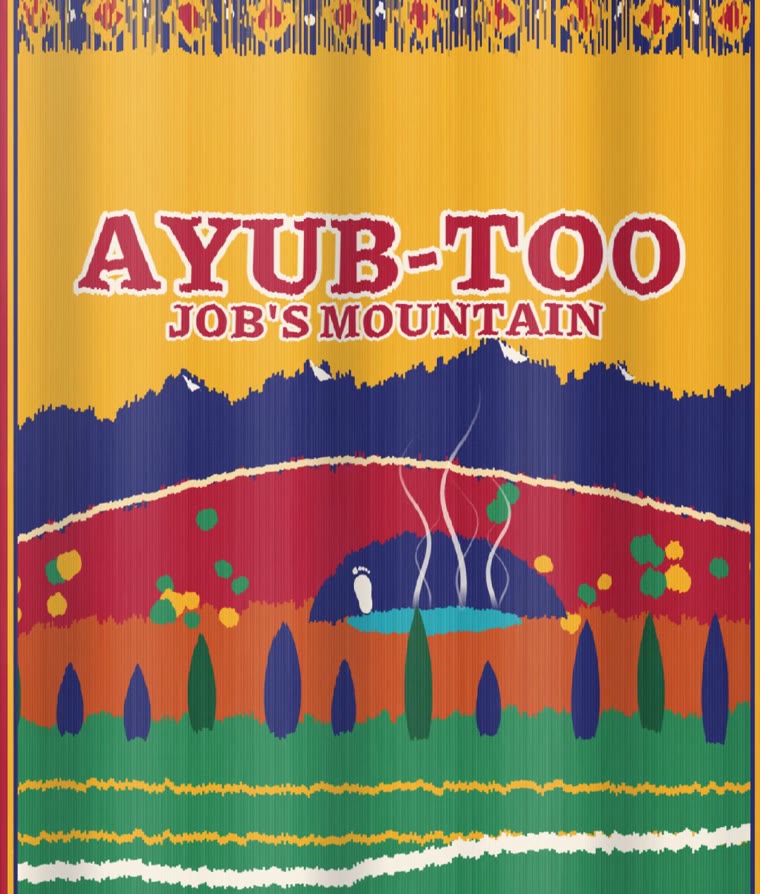
Above the city of Jalal-Abad in southern Kyrgyzstan, renamed Manas in 2025, rises a low, dry ridge. It is called Ayub-Too, the mountain of Ayub, and Ayub is the name the Quran gives to the man the Bible calls Job.
Job is the patient sufferer of both books: a righteous man who loses his children, his wealth and his health, is covered in sores from head to foot, and still does not curse God. On the slope of this hill warm water comes out of the ground, and the people of the valley say that this is where his suffering ended.
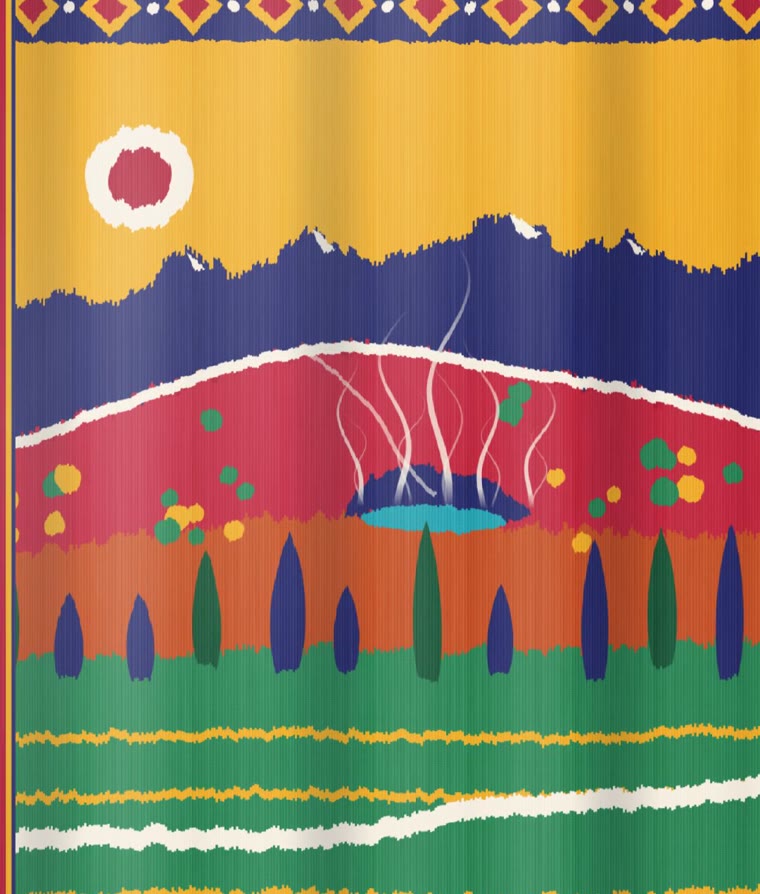
That is a legend, and this page tells it as one. But it is not a new one. In 1893 the Brockhaus and Efron encyclopaedia, writing about the springs of Hazret-Ayub, already mentioned “a local legend” of the long-suffering Job healed by their water. Hazret is a word of respect, something like “his holiness”. The hill, the springs and the shrine on it all carry the prophet's name.
One stamp of the foot
“The story goes: he stamped his foot on the rock, and hot water burst out.”From the film
In the spring of 1907 the writer Ivan Yuvachev travelled through the Fergana Valley and wrote the story down as it was told to him.
When Job's time of trial was over, the tale goes, God told him to strike the rock with his right foot, and a spring of hot water burst out. Then he struck it with his left foot, and cold water came. He bathed in the hot water, drank the cold, and was healed of his terrible disease.
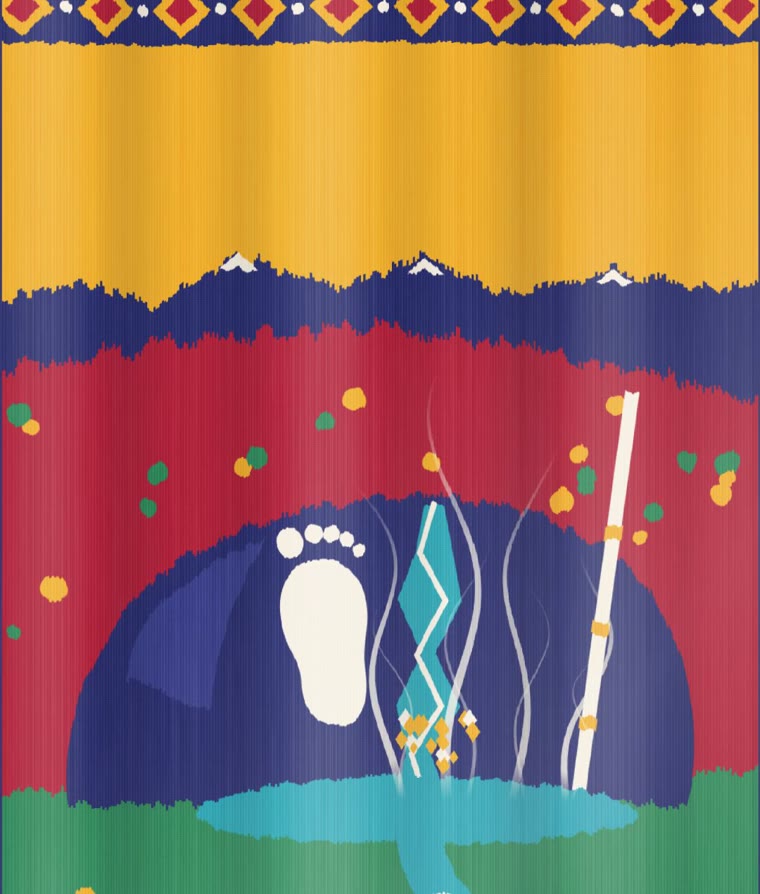
The scene is older than the hill. In the Quran, God answers Job's prayer: “Stomp your foot: here is a cool spring for washing and drinking.” The verse names no place. Fergana gave it an address.
Yuvachev was not naive about it. Fergana, he wrote, will show you where Enoch, Noah, Job, David and Solomon prayed or were buried, as if the great sacred events had all happened here; he saw in such tales the wish of believers to carry the Bible story onto their own ground. And Ayub-Too is one of several claimants. Places in Syria, Oman, Lebanon and Uzbekistan are also shown as Job's tomb or the place of his healing.
Warm water, measured
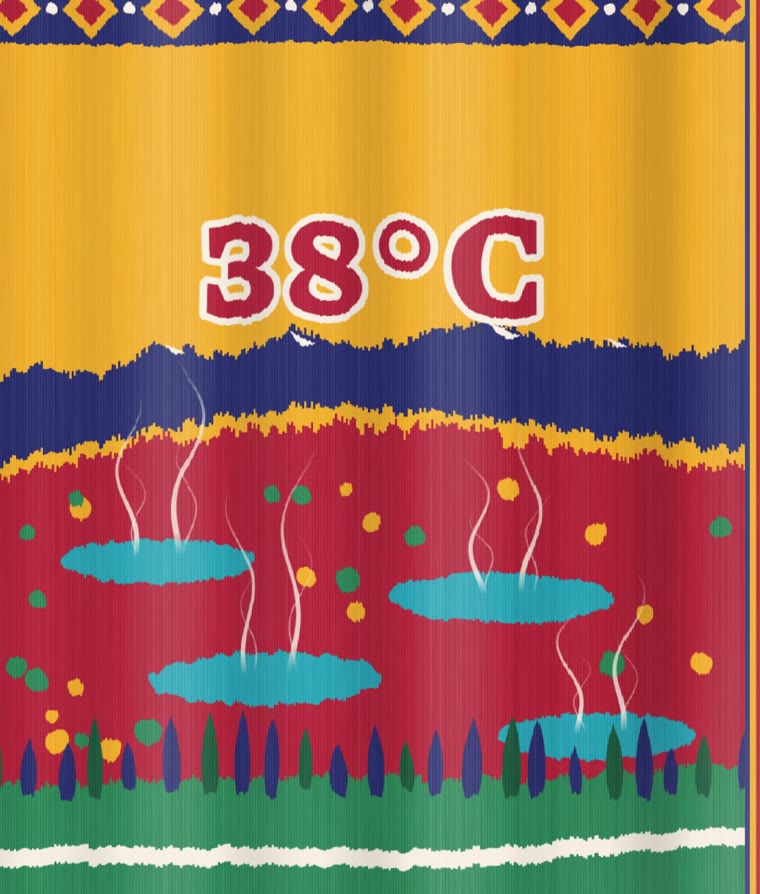
“The springs are real, and still warm.”From the film
Whatever one believes about Job, the water is no legend. The encyclopaedia of 1893 gives the numbers.
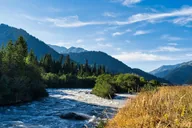
There were several springs, and the local people held only one of them sacred. That one gave 8,640 buckets a day, about 106,000 litres, at 38 to 39 °C, with a faint trace of hydrogen sulphide. Today the water comes up through seven wells 75 to 130 metres deep, warm up to 44 °C.
Russians, the encyclopaedia says, learned of the springs in 1877. Local people had been bathing in them long before; how long, no record we found can say. Dates like “the 2nd century BC” go around the internet without a source, so we leave them out.
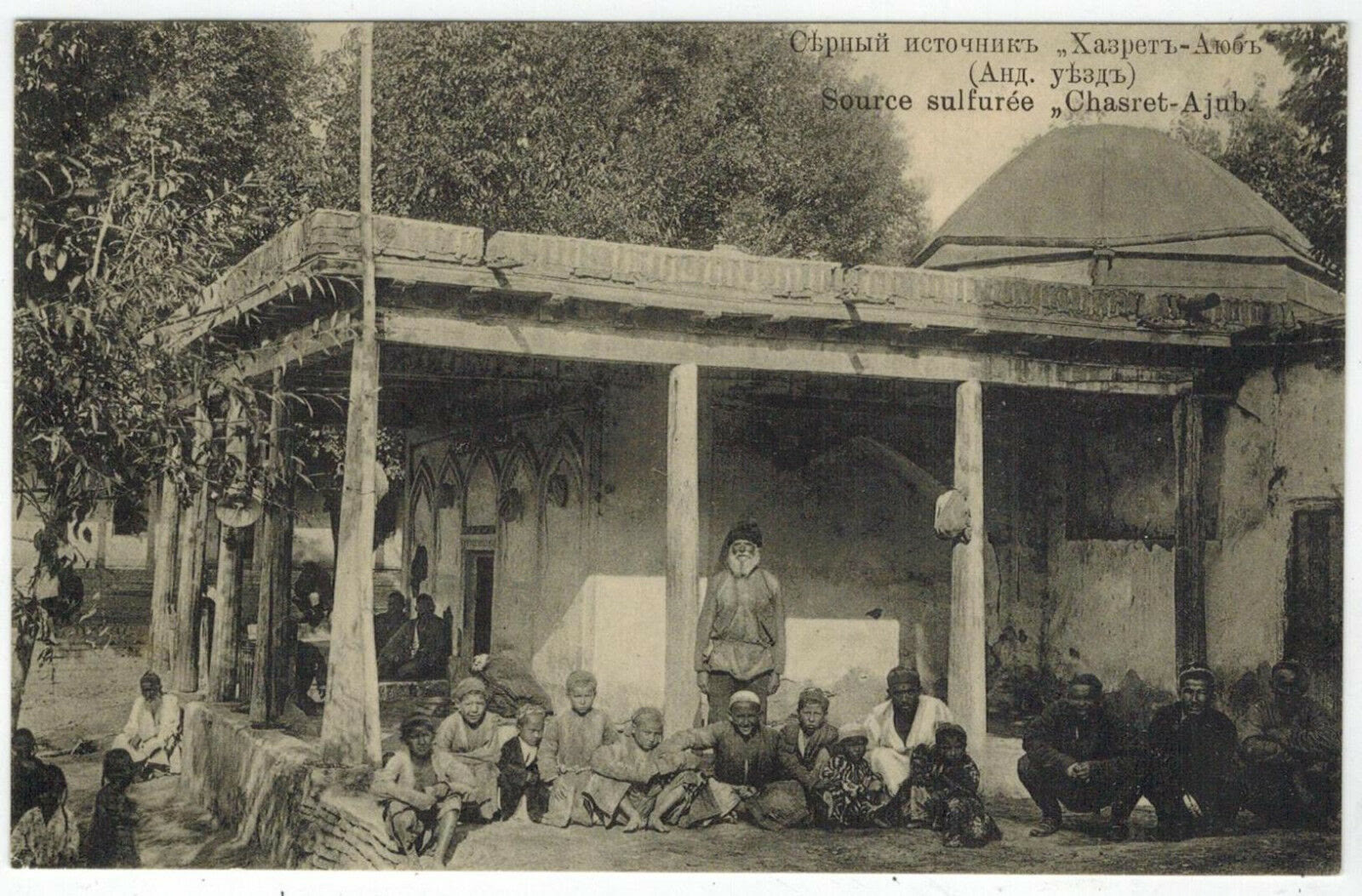
On the postcard the spring is no spa: a low roof on wooden posts, a domed building behind it, trees, and the people of the place sitting on the ground for the camera. The caption is printed twice, in Russian and in French.
Sick soldiers, three baths
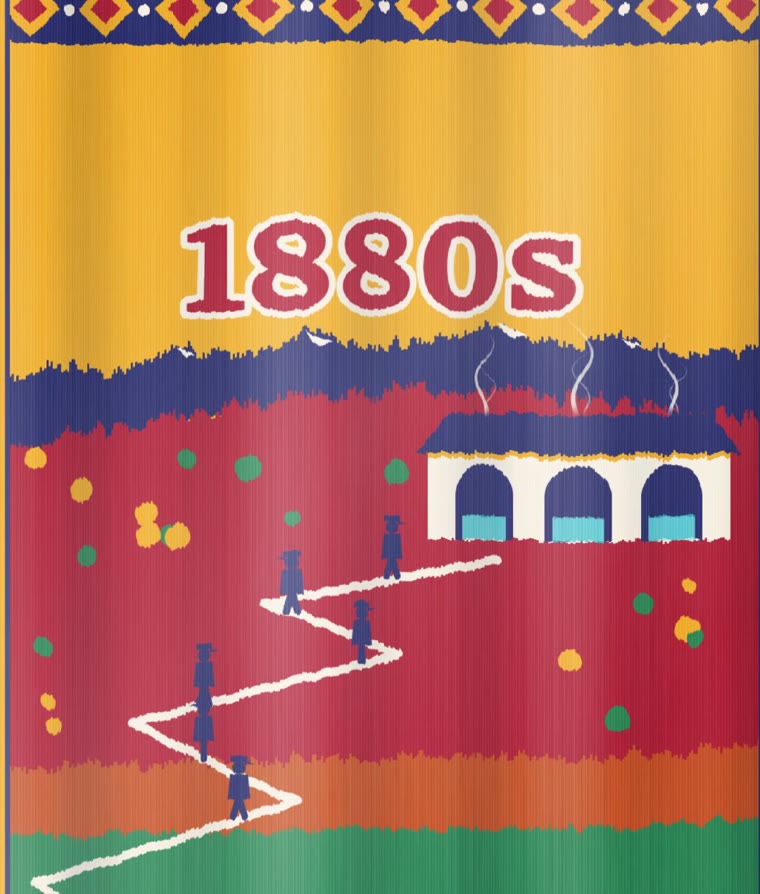
“By the 1880s, the Russian army was sending sick soldiers to bathe in them.”From the film
Within a few years of learning about the springs, the army had found a use for them.
From 1884, the encyclopaedia records, chronically ill soldiers of the lower ranks were sent to the waters. From 1885 there was a sanitary station; for the season an infirmary of 25 beds opened, and baths were built at three of the springs.
The hill in the records
Each year is woven into the cloth by its own weft thread. Tap a year to read what was written.
A doctor notes the springs; the encyclopaedia later dates Russian knowledge of them to this year.
Chronically ill soldiers of the lower ranks.
A sanitary station, a seasonal infirmary of 25 beds and baths at three springs.
“A local legend” of Job healed by the water, and one spring held sacred.
Yuvachev writes down the hot spring and the cold one.
Voshchinin finds pilgrims, a tomb, a military infirmary and a bath-house.
The city is renamed; the hill and the sanatorium keep their names.
When the geographer Vladimir Voshchinin came in 1914, he found a military infirmary and a bath-house kept clean enough, and among the bathers, besides the local people, many Russian patients. Doctors measured, soldiers bathed, and the legend went on being told beside the bath-house.
The Maiden's Spring
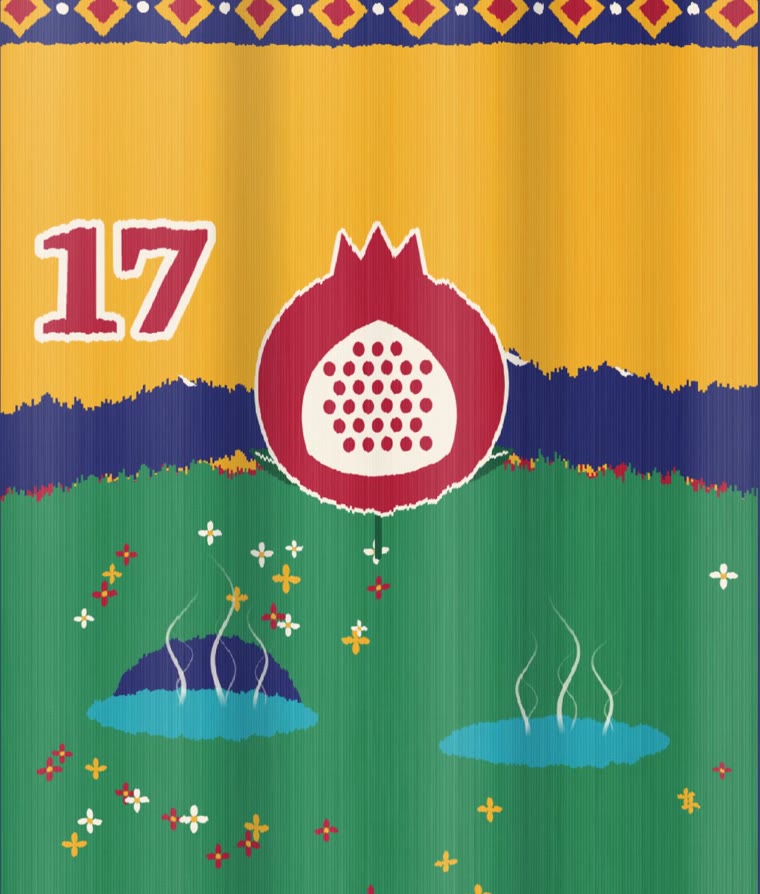
“And Job's wife? Legend says she bathed in a second spring and turned seventeen again. It's still called the Maiden's Spring.”From the film
The story does not end with Job.
In 2010 two Turkish researchers recorded what the imam of the resort's mosque and others told them on the hill. Job's wife came to the springs, they said, and bathed in the water of a second spring, and she became a girl of seventeen. That spring was named Kyz-Bulak, the Maiden's Spring. Job himself, in the same telling, became a young man of eighteen.
Kyz-Bulak is a real place: it is the name of one of the resort's two holy springs, next to the spring of Ayub. The name is a fact. The seventeen years belong to the legend.
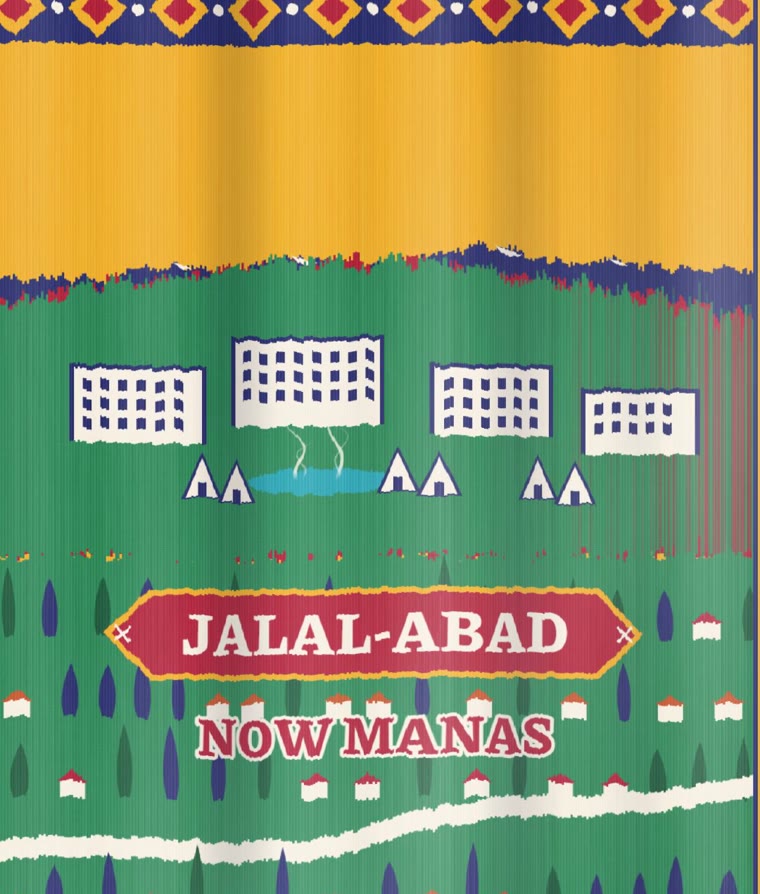
One more version is told about the hill, and it belongs to the cloth of this page. The Russian Wikipedia retells an article of 1900 by M. Brodovsky: the healed Ayub stuck his staff into the worms that had fallen from his sores; the staff became a mulberry tree, the worms became silkworms, and his wife, Bibi Rahim, began to spin silk. We could not open that article, so take it as a story about a story.
Silk itself is no legend in the Fergana Valley. Margilan, in the south of the valley, has been known for its silk since the 10th century, and the valley's bright silk is patterned in ikat, the cloth the film is woven in.
Line up the threads
In ikat the threads are dyed before they are woven. The weaver can never line them up exactly, so every edge comes out feathered. Move the threads and see.
The tomb we did not draw
Voshchinin climbed the hill in 1914 for more than the baths.
At the top, he wrote, were the springs that drew crowds of local people to bathe and to bow at the tomb of the prophet Job, Hazret-Ayub: by tradition Job was healed by these waters and died here too. From the cliff beside the grave he looked down on a golden-green valley, with countless groups of pyramidal poplars and the Kugart river running through it like a silver ribbon.
He saw something else beside the grave: a long flat stone set on its edge on a pedestal, walled like the tomb, where women who had no children came to sit and pray. Whether the stone is still there, we could not find out.
Nor do we know what the tomb looks like today. We found no recent description or photograph of it, so the film does not show it, and neither does this page. The domed Chashma-Ayub in Bukhara, another spring of Job, is a different building with its own legend.
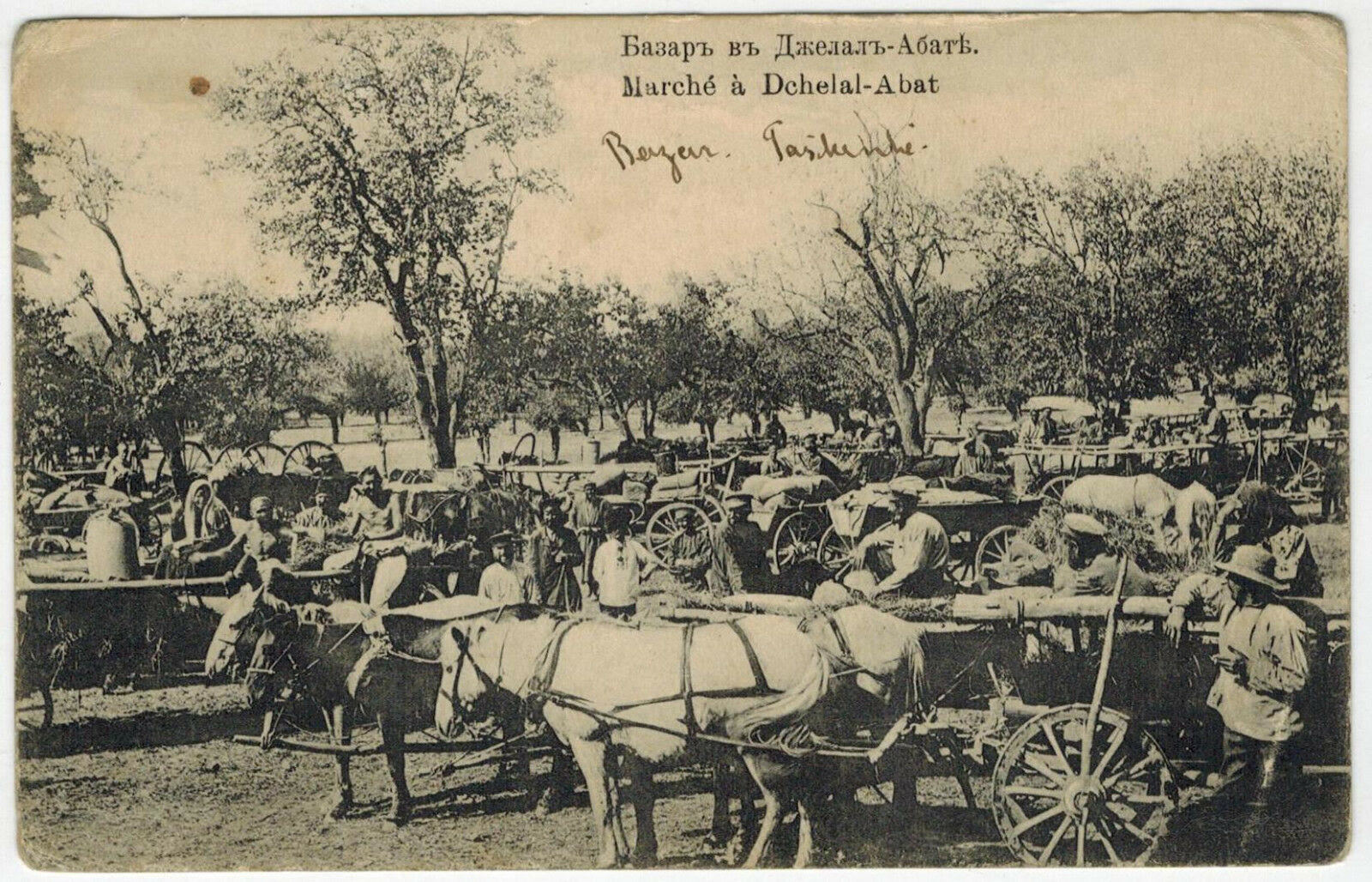
The town under the hill was a market town of clay and poplars then. It grew into the regional capital, changed its name, and kept the hill.
A spa on the edge of the city, open all year
“Today it's a spa just outside Jalal-Abad, now Manas, open all year.”From the film
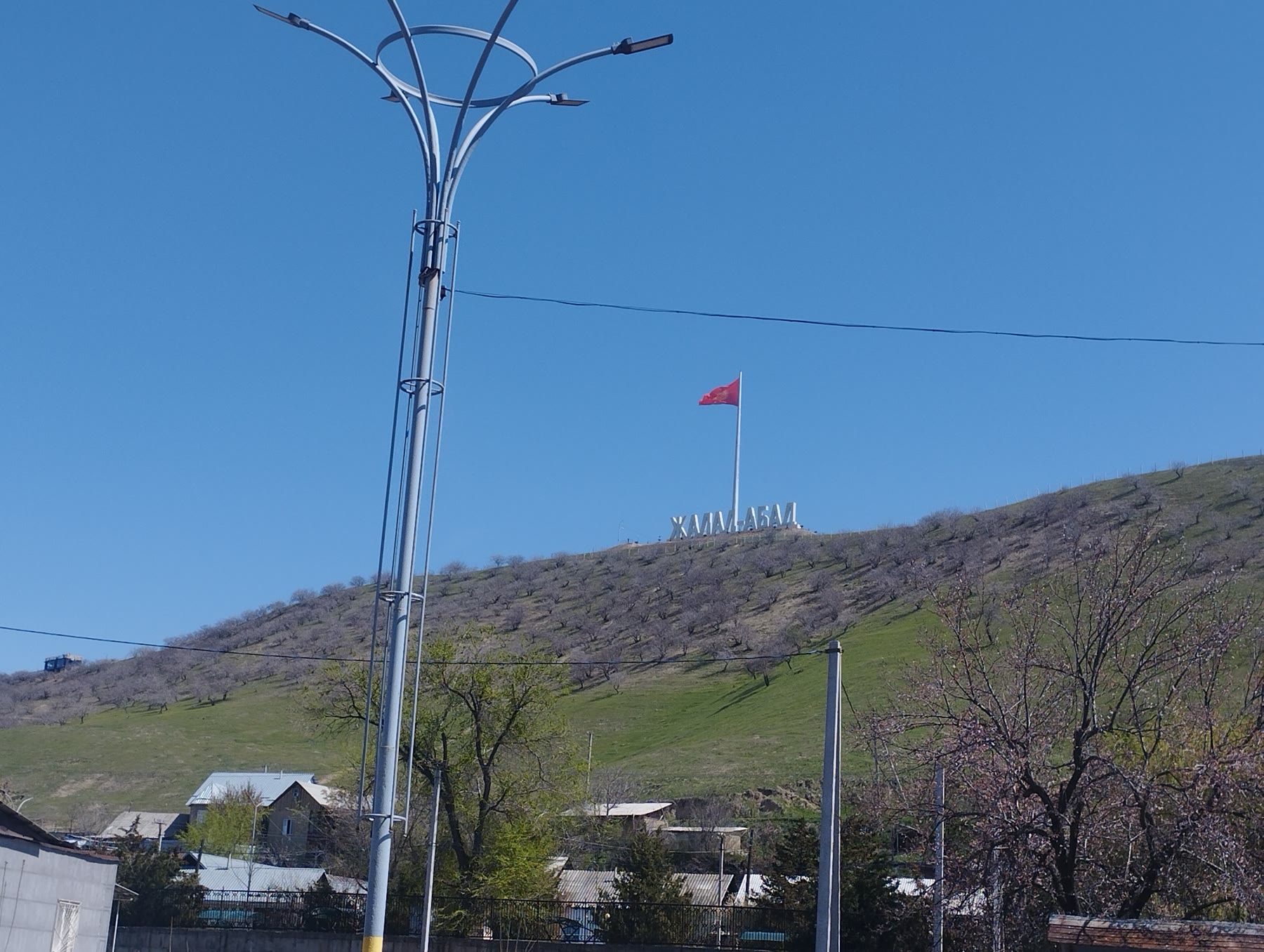

The springs are now the state sanatorium Jalal-Abad, on the slope of Ayub-Too about 5 km from the city and about 980 m above the sea. It works all year. In 2024 it opened a new building, and in 2025 it added pools and A-frame cabins and renovated the drinking pavilion. The city has officially been called Manas since September 2025; the region and the sanatorium keep the name Jalal-Abad. Osh, with the nearest airport with regular international flights, is about 110 km away by road.
The hill still bears his name:
Ayub-Too, Job's Mountain.
Doctors measured the water, soldiers bathed in it, and the city below changed its name. The name of the hill stayed, and so did the story people tell beside its springs.
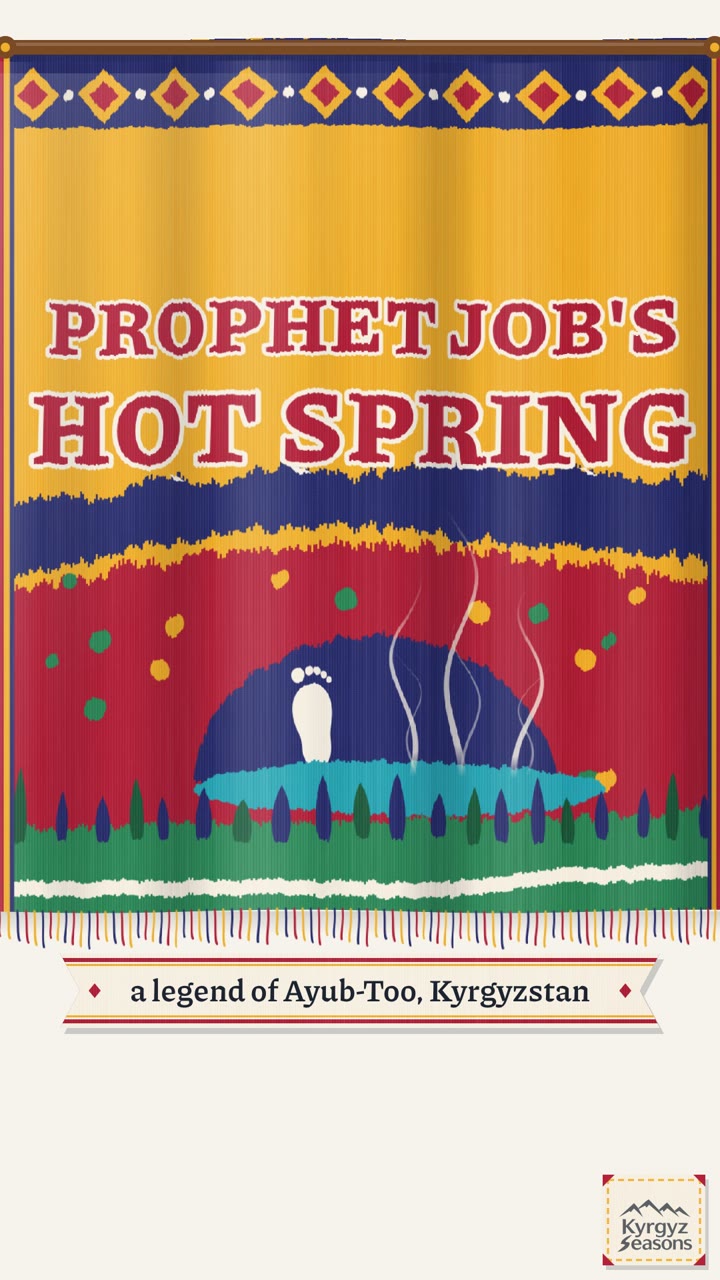 Watch the 43-second filmJob's Mountain — the short film, woven as a Fergana silk ikat: the hill, the stamp of a foot, the warm springs, the soldiers and the Maiden's Spring, one thread at a time.
Want to see it for yourself?
Routes, places and the best months to go — everything for planning a trip to Kyrgyzstan.
Sources
- Brockhaus and Efron Encyclopaedic Dictionary, vol. Xa, 1893, “Jalal-Abad-Ayub mineral springs” — Wikisource: the legend, the water, the soldiers and the infirmary.
- I. P. Yuvachev, “Kurban-Jan-Datkha”, Istoricheskii Vestnik, no. 12, 1907 — Vostlit: the two stamps of the foot.
- The Quran, 38:41–44, translation by Mustafa Khattab — quran.com.
- The Book of Job, 2:7 — Bible Gateway.
- V. P. Voshchinin, 1914, and M. Brodovsky, 1900, as quoted in Manas (city), Russian Wikipedia — the tomb, the view, the stone, the silk legend.
- K. Tuğ, Y. Bedirhan, Bingöl University Journal of Social Sciences 6 (12), 2016, pp. 193–207 — DergiPark: Kyz-Bulak and the field notes of 2010.
- Great Soviet Encyclopedia, 3rd ed., “Jalal-Abad” — booksite.ru: the resort, 5 km, 980 m, the climate.
- Jalal-Abad mineral water and mud, card citing Kyrgyzpatent — origin-gi.com: wells and temperature today.
- Economist.kg, 14 January 2026 — new buildings and the drinking pavilion.
- 24.kg, 18 September 2025 — Jalal-Abad renamed Manas.
- List of tombs of Job, Russian Wikipedia and Tomb of Job — the other places of Job.
- OrexCA, road distances — Osh to Jalal-Abad, 110 km.
- Ikat and Margilan, Wikipedia — the cloth of the film.
- Wikimedia Commons, postcards of Jalal-Abad and Manas (city) — the photographs on this page.
Pictures
- Sulphur spring Hazret-Ayub — postcard of the 1910s, Tashkent, published by I. A. Bek-Nazarov, photographer unknown, public domain.
- The cattle market of Jalal-Abad — postcard of the 1910s by the same publisher, photographer unknown, public domain.
- The slope of Ayub-Too with the city sign — Mirzoulugʻbek, 1 April 2024, CC0. Resized.
- Film frames and the cover — Kyrgyz Seasons, from the short film Job's Mountain. The woven hill, the chapter lozenges, the ribbons and the dyed threads over the photographs on this page are drawn in code in the style of the film.

