









Whose tomb is this?
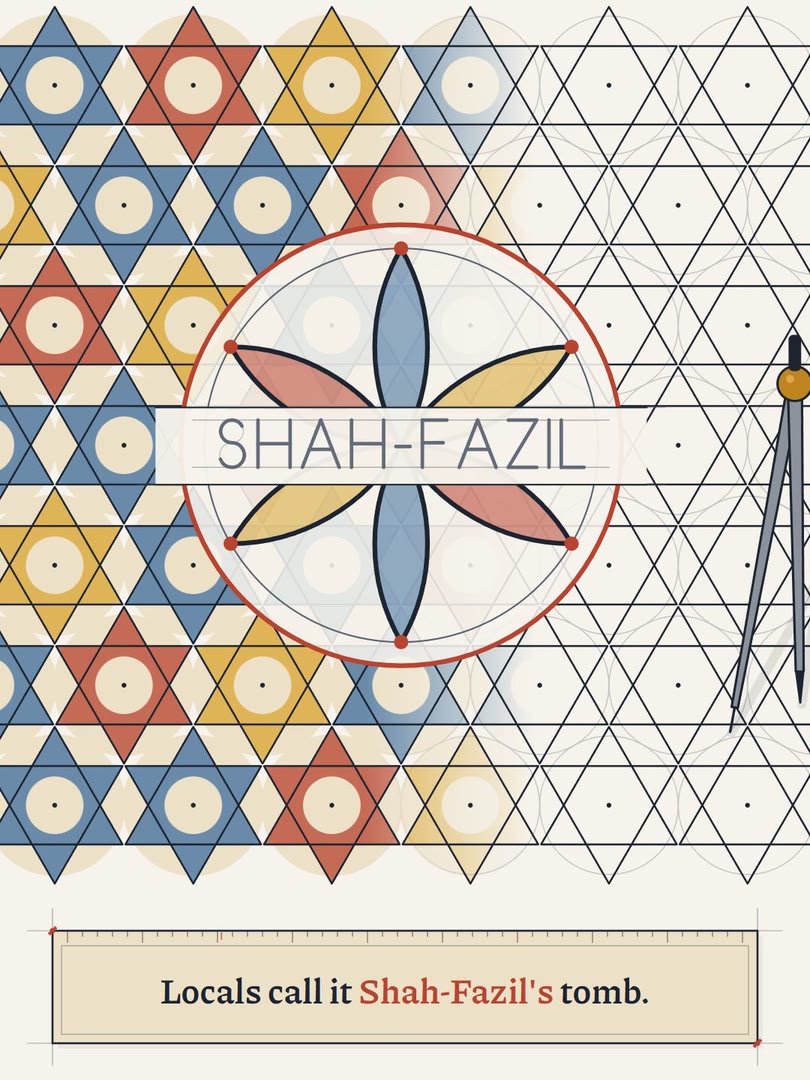
Locals call it Shah-Fazil’s tomb. Its walls name another man. Lay the two names out with compass and ruler and see which one the carver wrote.
Watch the film · 45 sOne tomb.
Two names for it.
“Locals call it Shah-Fazil’s tomb. Its walls name another man.”From the film
In the village of Safed-Bulan, at the north-western edge of the Fergana Valley, a brick tomb with a tall dome has been visited by pilgrims for centuries. Everyone there will tell you whose it is: Shah-Fazil’s, a hero of the tales about the coming of Islam to Fergana.
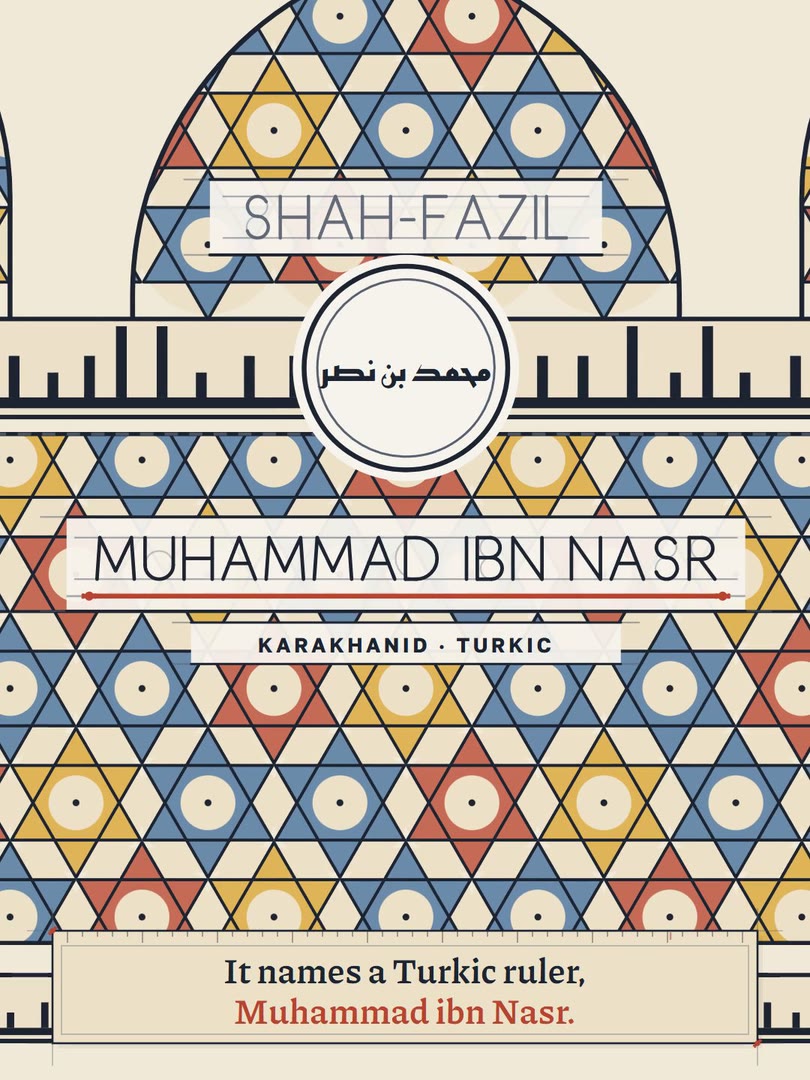
The walls disagree. Inside, three bands of carved Persian writing run around the room, and the upper two say plainly whose tomb this is: a Karakhanid ruler, Sayf al-Dawla Muhammad ibn Nasr ibn Ali. The building was raised, or at least decorated, on the orders of his son. The name Shah-Fazil does not appear in them.
Neither name is wrong in its own way. One is what the stone records; the other is what the people who come here remember. This page lays them out the way the film does, on a carver’s sheet: pencil for what people say, ink for what the walls say, colour last.
Plain brick,
built around 1060.
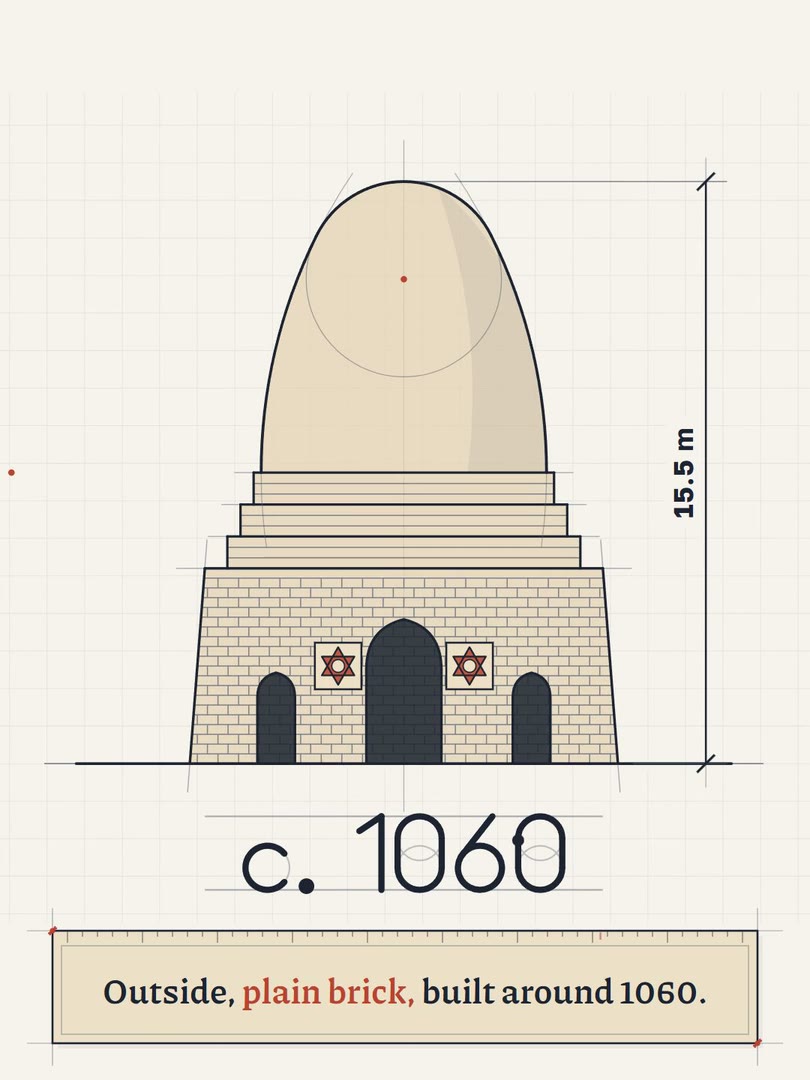
From the road the mausoleum gives nothing away. It is a single square room of fired brick, 11.1 by 11.7 metres outside, set almost exactly to the points of the compass. The walls lean in slightly as they rise, like a cut-off pyramid; above them sits a stepped drum and then a high dome. Of its 15.5 metres, the walls take 5.2 and the dome 10.3. The walls are more than a metre and a half thick.
The outside is bare. The only ornament is a pair of small panels on either side of the door, with simple geometry; one holds a six-pointed star. That star is the seed of every pattern on this page.
The date comes from the writing, not from a carved year: there is none. Reading the inscriptions, Nastich and Kochnev placed them between 1055 and 1059; coins of Muhammad ibn Nasr struck in 1061 then nudged that a little later, but not by much. In his 2019 book Nastich gives “most likely between 1055 and 1062”. “Around 1060” holds both readings.
Floor to dome,
carved plaster.
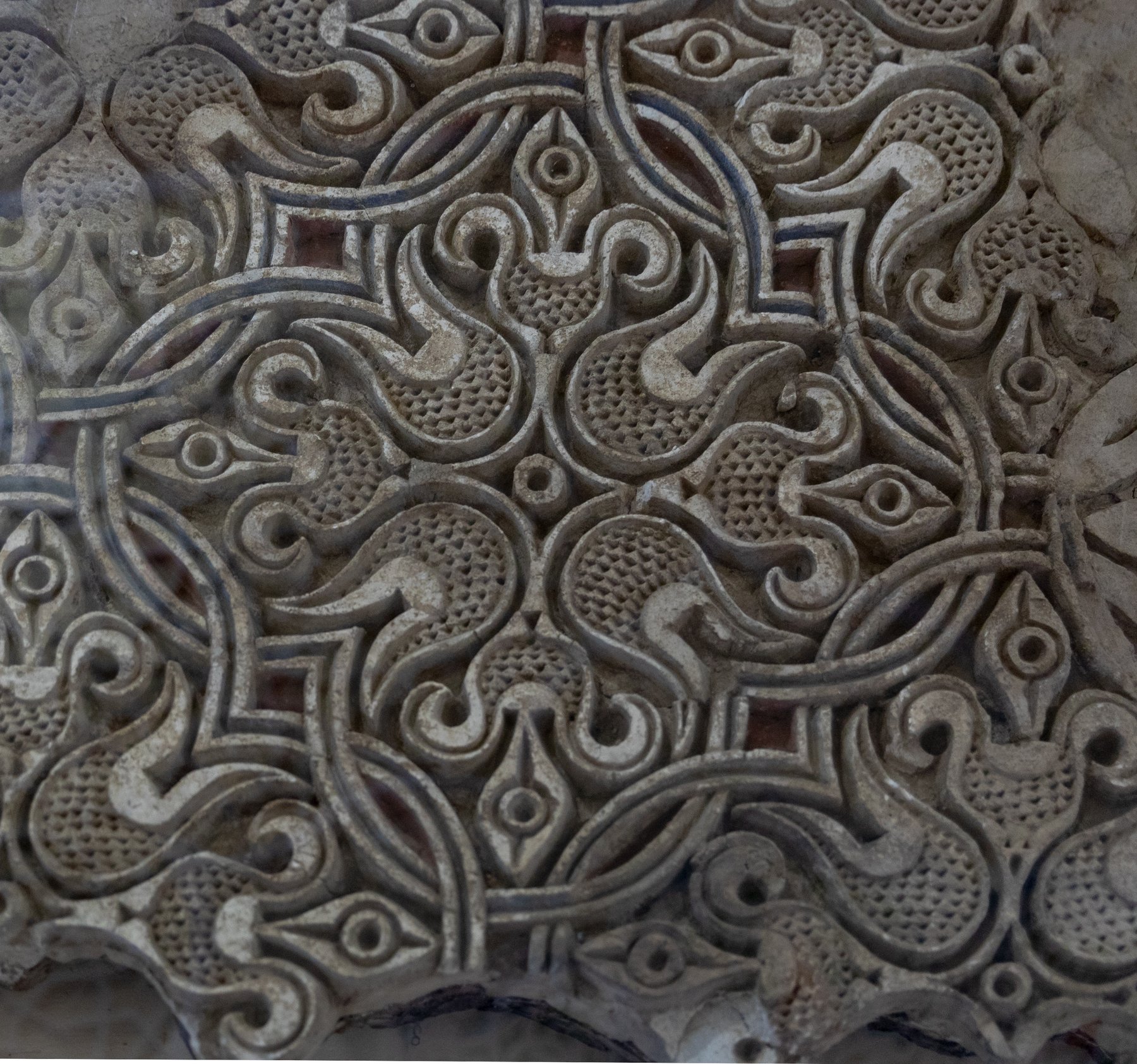
Step through the door and the brick disappears. At first only the niches of the octagon under the dome were dressed, with bricks laid in a herringbone. Later the whole room was plastered and carved. The plaster is ganch, a gypsum mix that can be cut while it sets. It covered the interior from floor to ceiling. The carving was tinted blue, light blue, red and yellow.
The method was the one the film shows. Most of the ornament is cut in lines, as if traced from a drawing. The carver kept the pattern flat and cut the background away around it. A lattice of stars like this starts as circles of equal size on a grid. Their crossings give the points. Joining the points gives the stars.

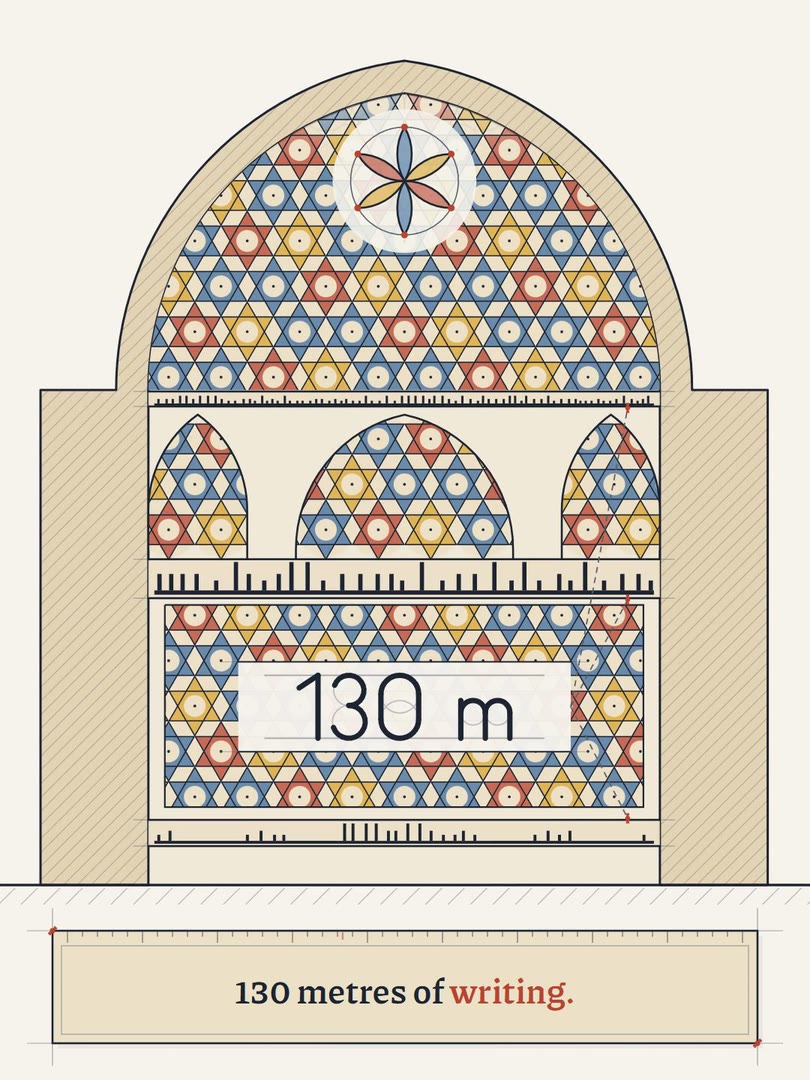
Around the room run three horizontal bands of writing in Persian. The narrow one above the corner arches is about 25 cm high; the one below them is about 60 cm, with large raised letters. Laid end to end, the three bands come to about 130 metres. The letters have no dots and no spaces between words, and one master carver may have cut them all, though that is a guess.
Not all of it is still there. Soviet repairs were never finished, and metal scaffolding stood inside and outside for more than forty years. For the latest restoration, the team worked from photographs taken in 1948. Measure the bands below and switch between the walls as carved and as they survive.
None of it says Shah-Fazil.
It names a Turkic ruler.
The Karakhanids were a Turkic dynasty that ruled much of Central Asia from the tenth century. The man in the upper bands, Muhammad ibn Nasr, is a shadowy figure. Little is known about him beyond his coins. The inscription gives his title, Sayf al-Dawla, “sword of the state”. It notes that his father was famous for his piety. It names the son who built or decorated the tomb, Mu‘izz al-Dawla, also called Abbas.
One word in it has caught the eye of the authors of the 2023 study: the dead man is called shahid. That may mean he died a violent death, perhaps in the wars between Karakhanid princes in the middle of the eleventh century. That is their hypothesis, not a record. Sources disagree even on the years of his reign, so we leave them out.
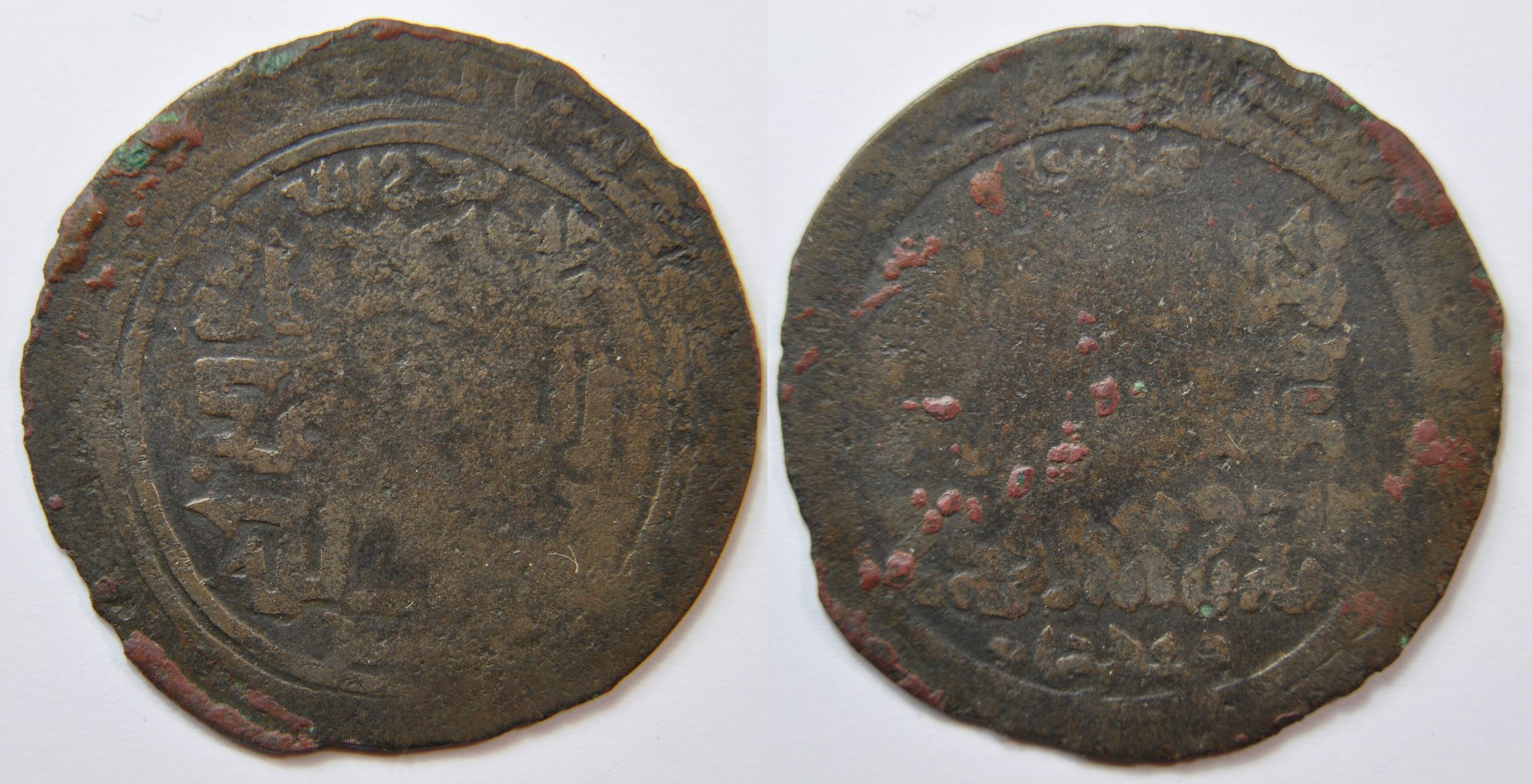

Between the Persian bands are medallions framed by short texts in Arabic Kufic. They hold the formulas you would expect in a tomb: the basmala, the profession of faith, a verse of the Qur’an (9:33), and, again and again, al-mulk li-llah: “dominion belongs to God”. It is an odd sentence to repeat around a king.

So who was Shah-Fazil?
A hero of legend.
The tale is old. In the early fourteenth century the writer Jamal al-Din al-Qarshi already knew of two graves at the place then called Ispid-Bulan. One was a “grave of heads”, the other a “grave of souls”, linked to a campaign of the first warriors of Islam. The full story was written down in the eighteenth century as the Qissa-i Shah-Jarir.
In it Shah-Jarir, said to descend from the Prophet, comes with an army to preach, and he and his companions are killed here. A servant woman named Bulan buries the dead and turns white with grief. Safed is Persian for white. Years later his son, Shah-Fazil, returns, the people accept Islam in peace, and a tomb is raised for him. Historians treat these people as legendary. The first reliable Arab campaign into Fergana came in 712–713, long after the dates of the tale. But the link between this place and the first warriors of Islam formed early, probably by the time the tomb was built.
- 650s–680sThe tale · legendThe dates the versions give for Shah-Jarir’s campaign.
- 712–713The recordThe first reliable Arab campaign into Fergana.
- c. 1060The stoneThe tomb of Muhammad ibn Nasr is built and carved.
- early 1300sThe tale, writtenAl-Qarshi notes the graves of heads and of souls at Ispid-Bulan.
- 1700sThe tale, in fullThe Qissa-i Shah-Jarir is written down.
- 1948 · 2014–17The record, keptThe earliest photographs; the restoration that used them.
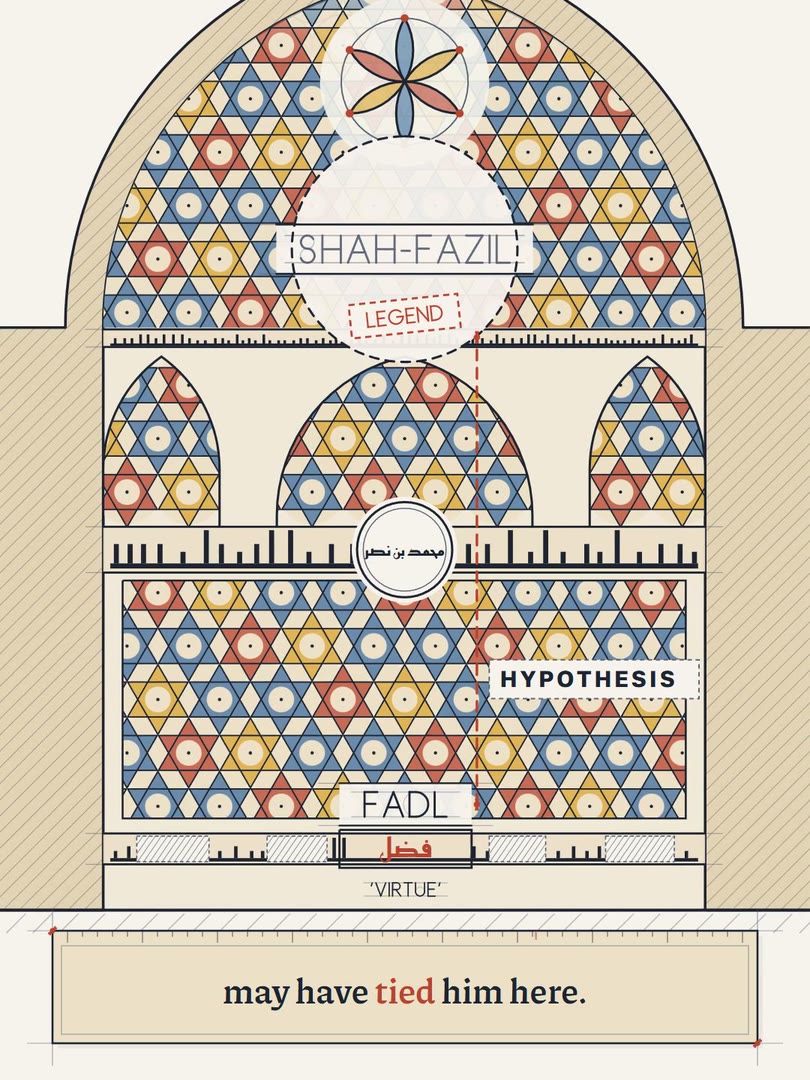
So how did a legendary hero end up with a real king’s tomb? The best answer so far lies in the lowest band. That band runs nearest the floor and is the most damaged: about a quarter of its 72.5 metres survives. Its text is a moral one. In it is the Arabic word fadl, which means “virtue” or “merit”.
Abashin suggests that this word may be what tied the tomb to Shah-Fazil. Read later as a name, fadl would turn into Fazil. It is a hypothesis, and a good one: it needs no forgery and no mistake, only a worn word and the story people already told about this place.
Go to Safed-Bulan. Look up, then look down.
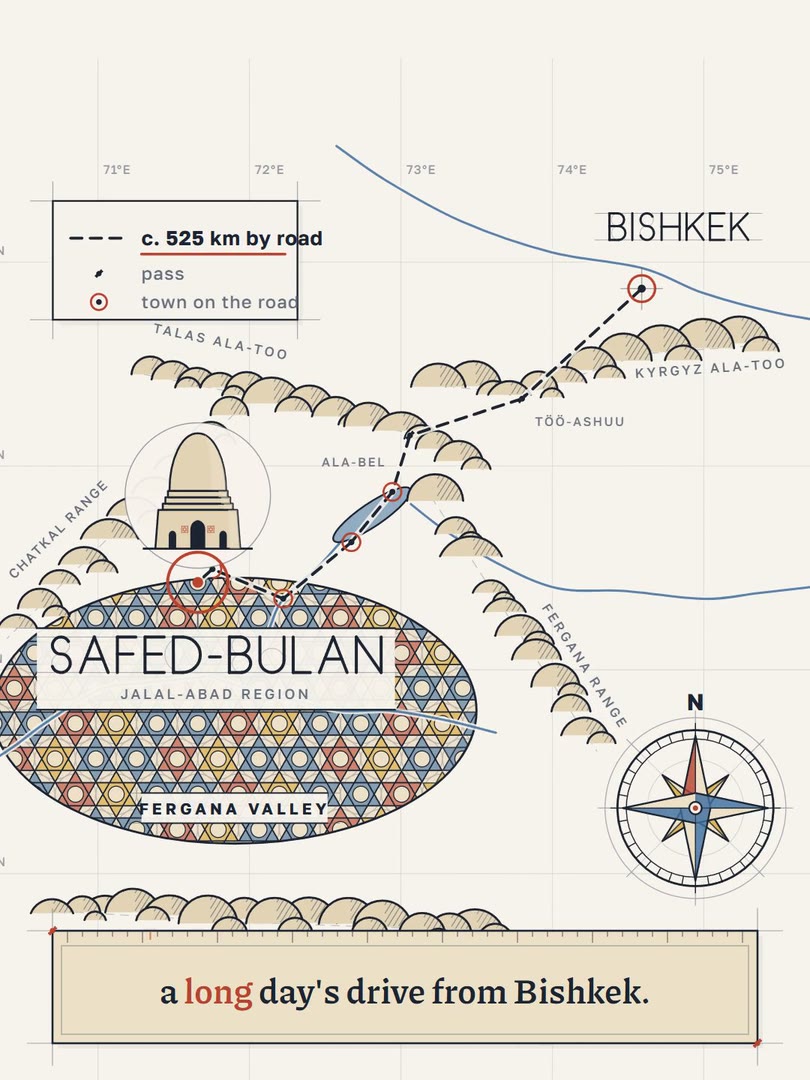
“It stands in Safed-Bulan, a long day’s drive from Bishkek.”From the film
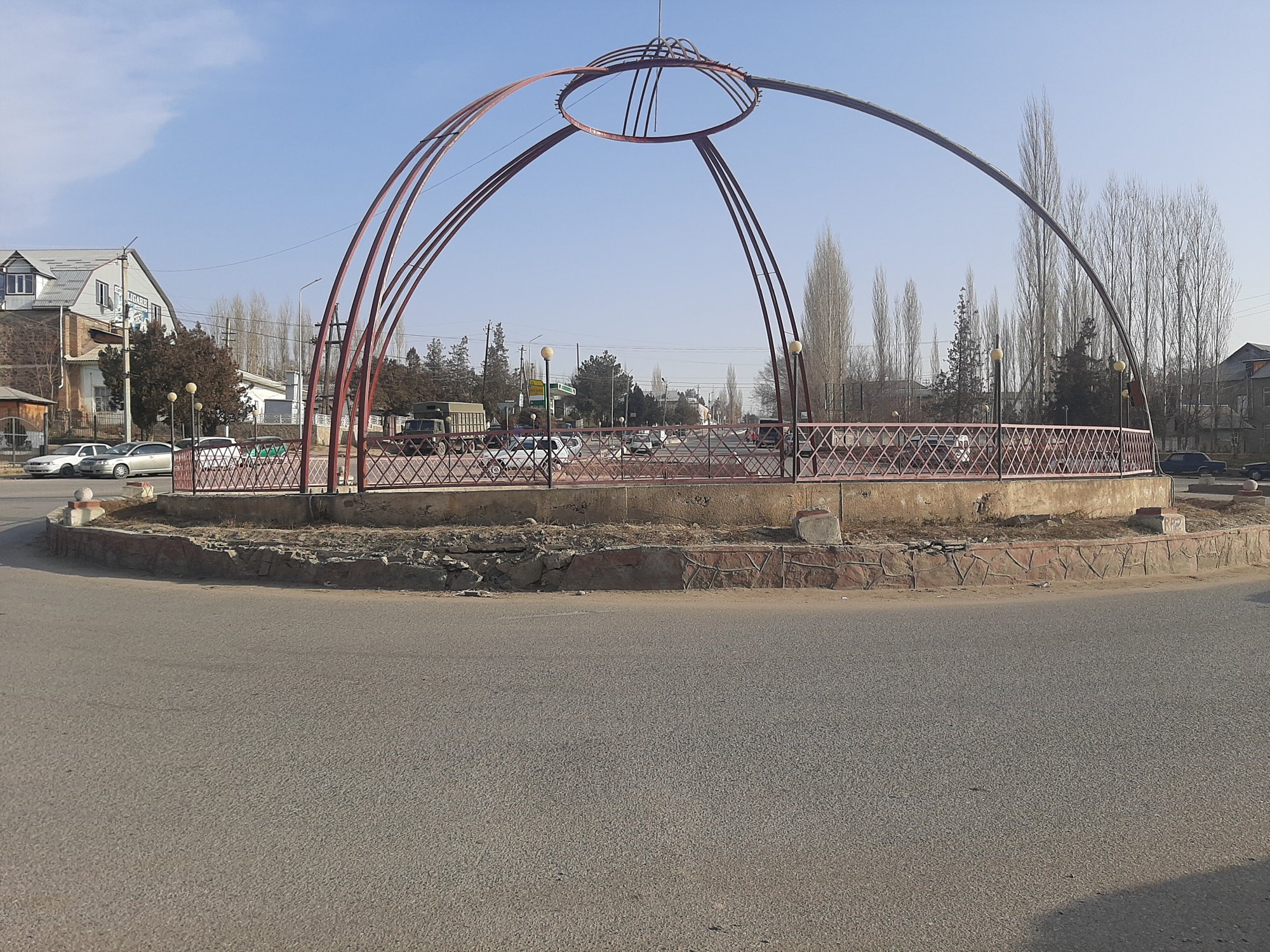

The mausoleum stands in the village of Safed-Bulan, called Gulistan until 2004, in the Ala-Buka district of Jalal-Abad Region, at the north-western edge of the Fergana Valley. It is about 14 km east of Ala-Buka and about 11 km south-west of Kerben. It is a state museum-reserve and a working place of pilgrimage: more than 33,000 people came in 2024. Inside, look up to the narrow band under the dome, the one that survives almost whole. Then look down to the broken band near the floor, where the word fadl was found.
Locals still call it Shah-Fazil’s.
The walls still name another man.
Both names belong to the place now: one carved into the plaster, one carried by the people who keep coming.
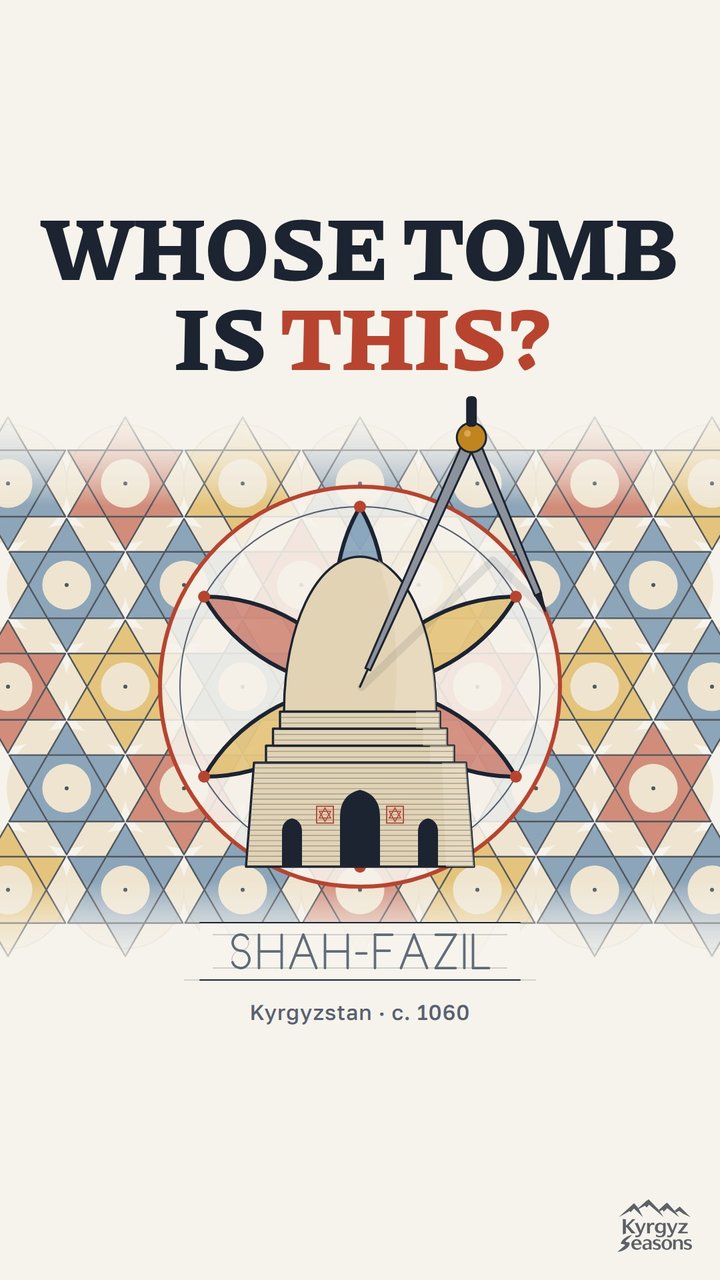 Watch the 45-second filmAnother Man — the short film, drawn on a carver’s sheet with compass and ruler: pencil for what people say, ink for what the walls say, colour last.
Want to see it for yourself?
Routes, places and the best months to go — everything for planning a trip to Kyrgyzstan.
Sources
- S. N. Abashin, ‘Safid-Bulan’ — encyclopaedia entry after Nastich and Kochnev (1988): plan, inscriptions, dating, the word fadl, the legend.
- Imankulov et al., 2023, Architectural Studies 9(2), DOI 10.56318/as/2.2023.72 — the building, the three bands and their survival, restoration and climate.
- J. Kolbas, review of V. N. Nastich (2019), JRAS 30(4), 2020 — dating range 1055–1062.
- Universal History of Architecture, vol. 8 — the linear carving technique.
- Rossiyskaya Gazeta, 3 August 2017 — scaffolding, the 1948 photographs, the restoration.
- Safedbulan and Shakh Fazil — location.
- MIR, 16 May 2025 — visitors and status.
- 24.kg, 28 October 2014 — the shrine of Bulan and its rule.
- OpenStreetMap routing (OSRM), our estimate of 29 October 2026 — road distances and driving times.
- Kyrgyz Seasons: Shakh Fazil — the place on our site.
Pictures
- Carved ganch, Hulbuk museum, Tajikistan — Ninara, 8 July 2018, CC BY 2.0. Resized. A comparison, not Shah-Fazil.
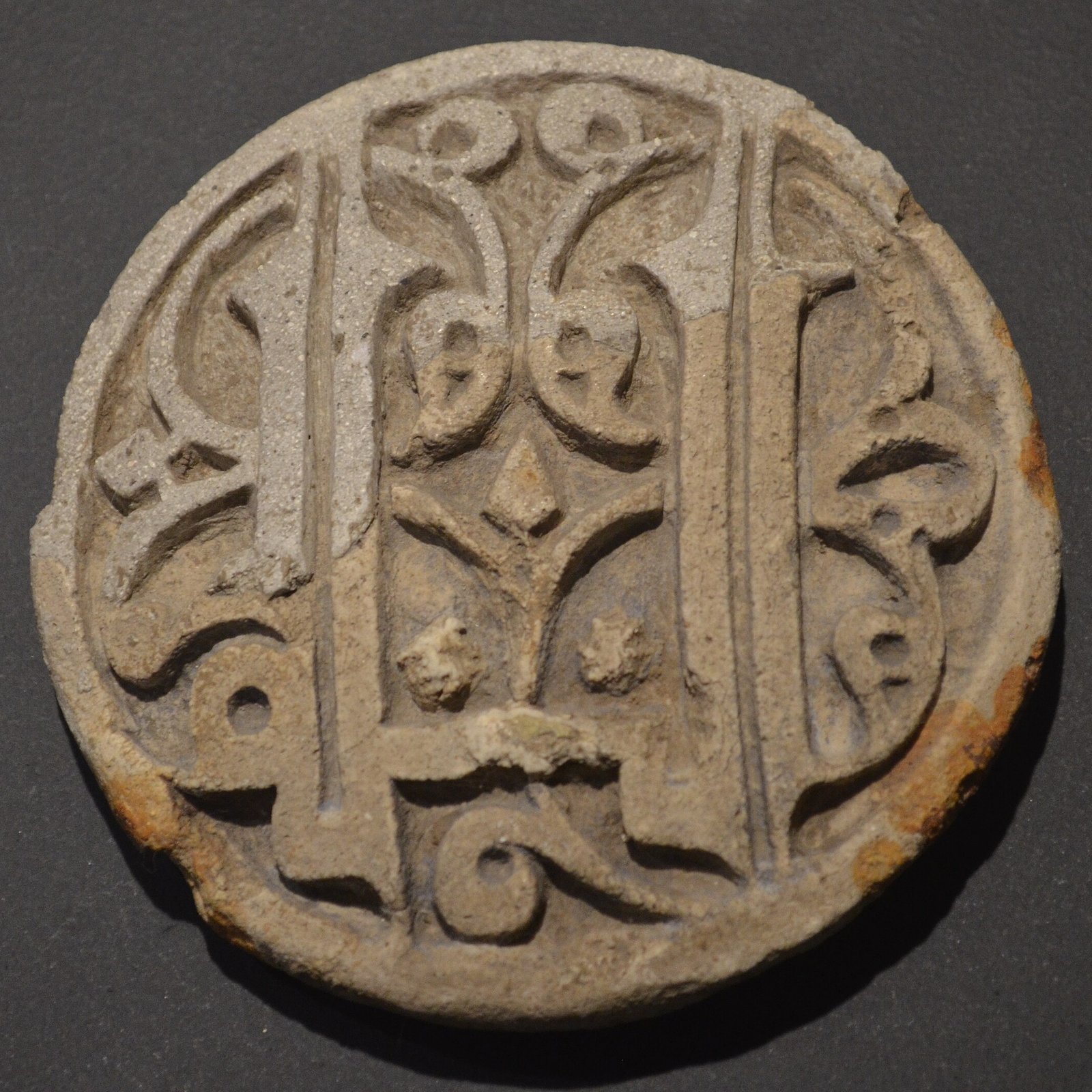
- Stucco medallion with Kufic writing, Nishapur, 10th century, National Museum of Iran — Darafsh, 6 August 2016, CC BY-SA 3.0. Cropped to the medallion and resized. A comparison, not Shah-Fazil.
- Copper dirham of the Karakhanids of Transoxiana, struck at Banakath in 602 AH (1202) — Jean-Michel Moullec, 12 May 2013, CC BY 2.0. Resized. A later khan’s coin, not one of Muhammad ibn Nasr.
- Centre of Ala-Buka — Abdyrashit Satylganov, 12 December 2021, CC BY-SA 4.0. Resized.
- We found no openly licensed photograph of the Shah-Fazil mausoleum itself; photographs of the building and its inscriptions are published in Imankulov et al. (2023) and in the MIR and 24.kg reports listed above.
- Cover and six film frames: Kyrgyz Seasons, illustrations from the 2026 film. The compass drawings, star lattice and lettering on this page are drawn in code in the manner of a carver’s layout; they are not copies of the mausoleum’s carving or inscriptions. The Arabic lettering is set in Reem Kufi (SIL Open Font License).