
The Cameras See the Rest
A smoky shape crosses the rocks. The difficult part is knowing who came back.
Watch the film · 44 s150 on film is not 150 in the country.
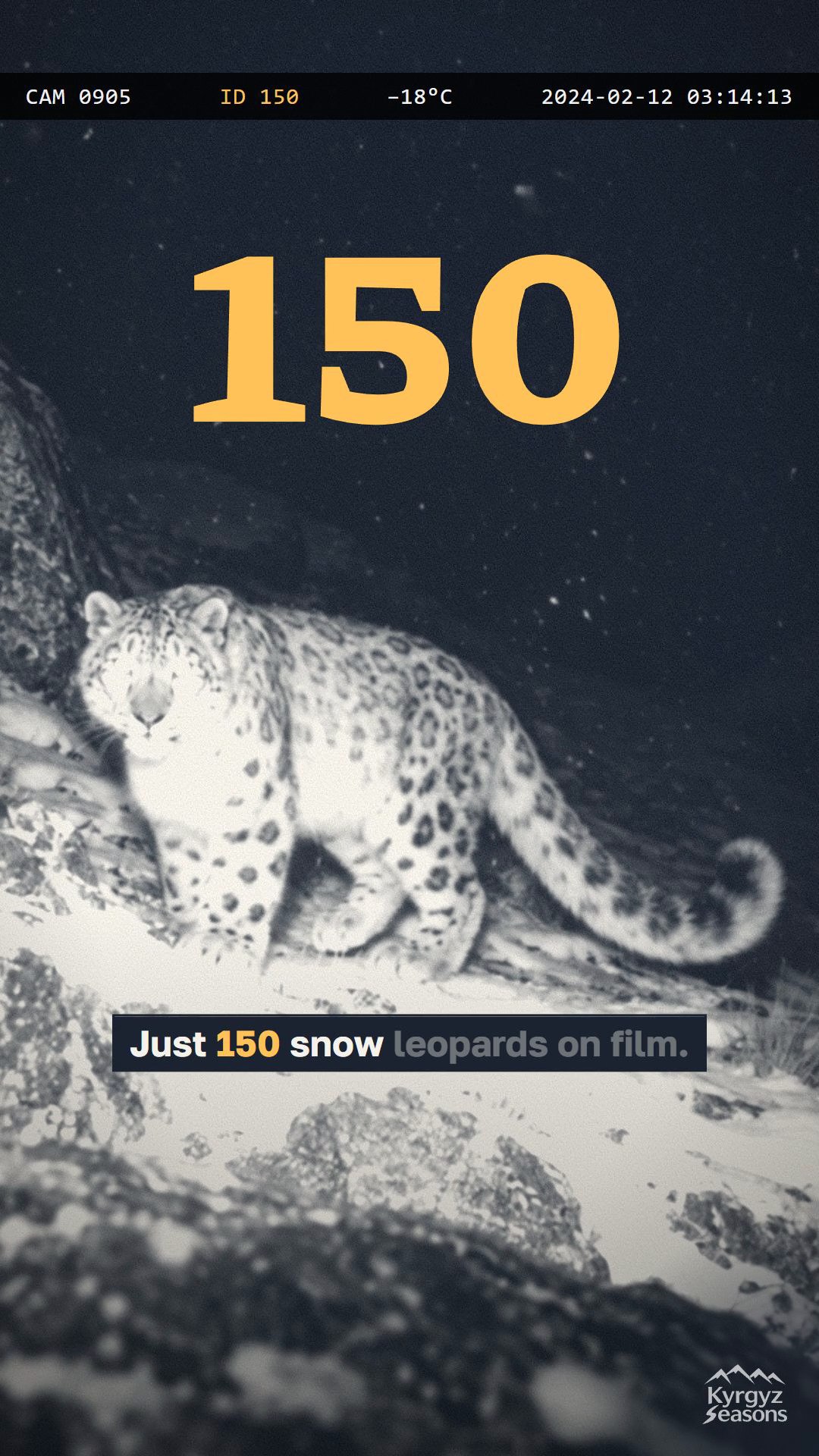
The hook sounds almost like a failed search: 905 cameras, four years, 150 snow leopards. But the final number needs its missing words. These were 150 different adults identified in photographs, not every snow leopard alive in Kyrgyzstan.
The 2026 national status paper reports camera work from 2020–2024: 905 traps across 589 locations, producing 372 detection events. Its population model estimated about 300 adults, with a 95% confidence interval of 246–366. A photograph, an individual and an estimate are three different things.
Different adult cats identified on film.
Estimated adults nationwide. 95% confidence interval: 246–366.
Switch between the two. The animal does not multiply when you press a button; the question changes. One asks how many recognisable cats entered the records. The other asks how many adults the evidence suggests may live beyond the photographs. Keeping those questions apart lets a small collection of images tell a larger story without pretending it sees everything.
Why this rock?
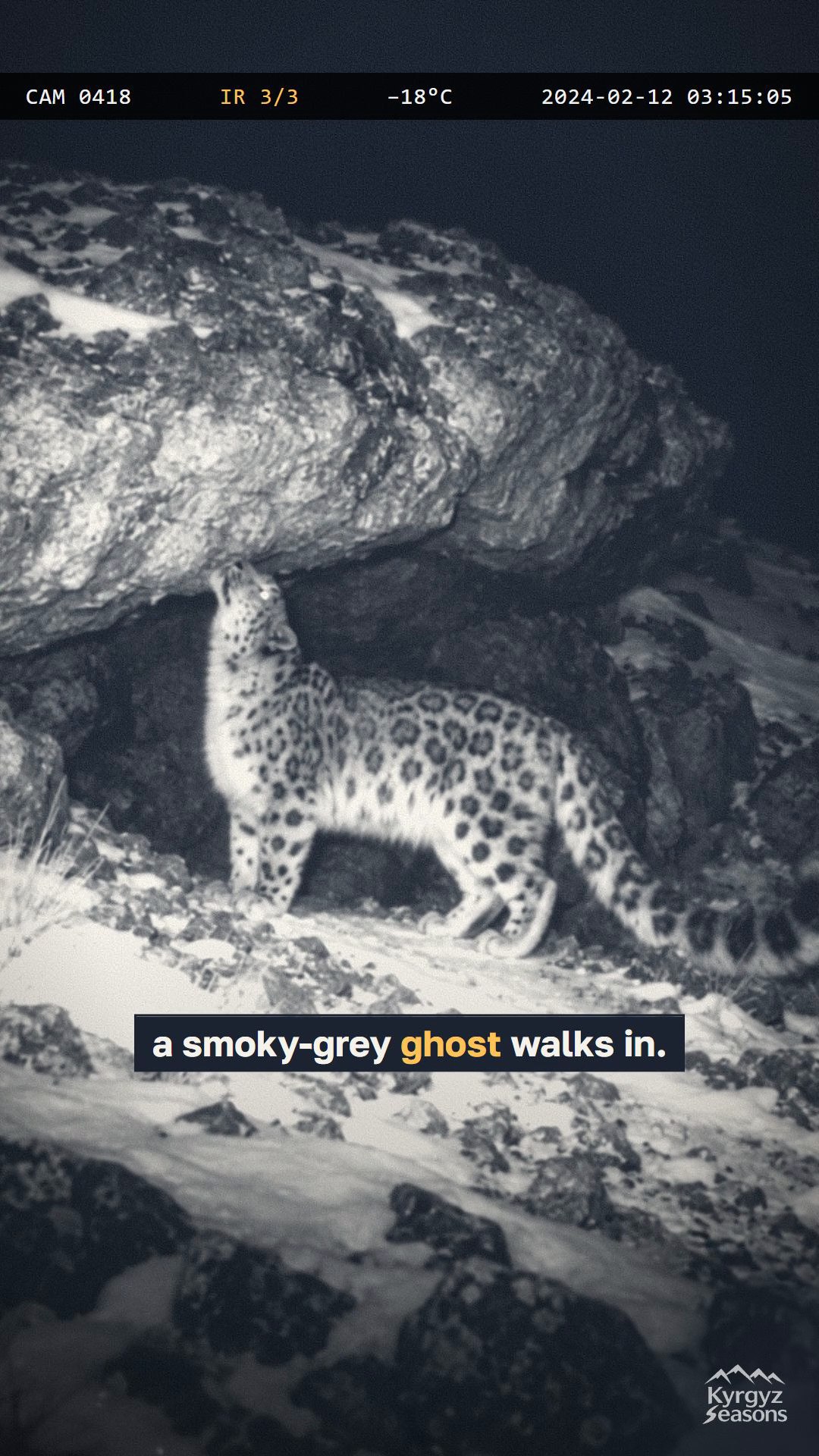
To a visitor, one boulder may look much like the next. A field team reads a different landscape: places an animal uses, the marks it leaves, the narrow passages where a camera has a reason to wait.
In her account from Sarychat-Ertash, researcher Sherry Young describes working with rangers to find marking sites. Overhanging rock faces can bring a cat into view as it rubs or marks. The team chooses the place before leaving the camera to do the waiting.
Our film stretches that wait into grain, darkness and a motionless slope. Its clock and camera labels are graphic devices, not data recovered from a field instrument. The imagined scene helps us feel the delay; the linked field account supplies the real work behind it. Look for that distinction whenever a wildlife image arrives with a convincing timestamp.
The coat keeps the identity.
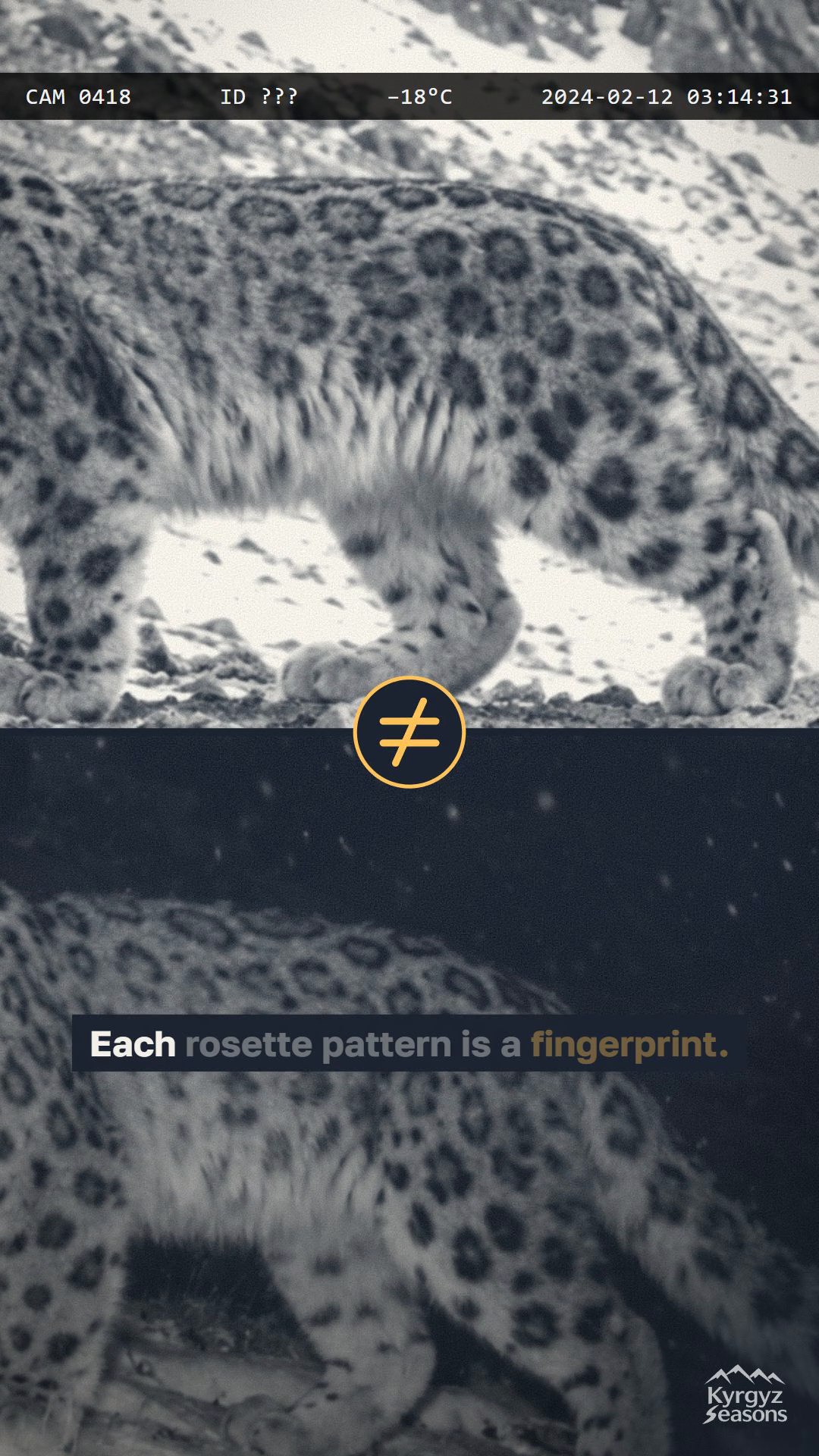
There is a second task after finding an animal in a frame: deciding whether it has appeared before. The Snow Leopard Trust’s field account explains how researchers recognise individuals by their unique rosette patterns. A useful photograph is therefore more than an attractive face; it can reveal the side of a body clearly enough to compare.
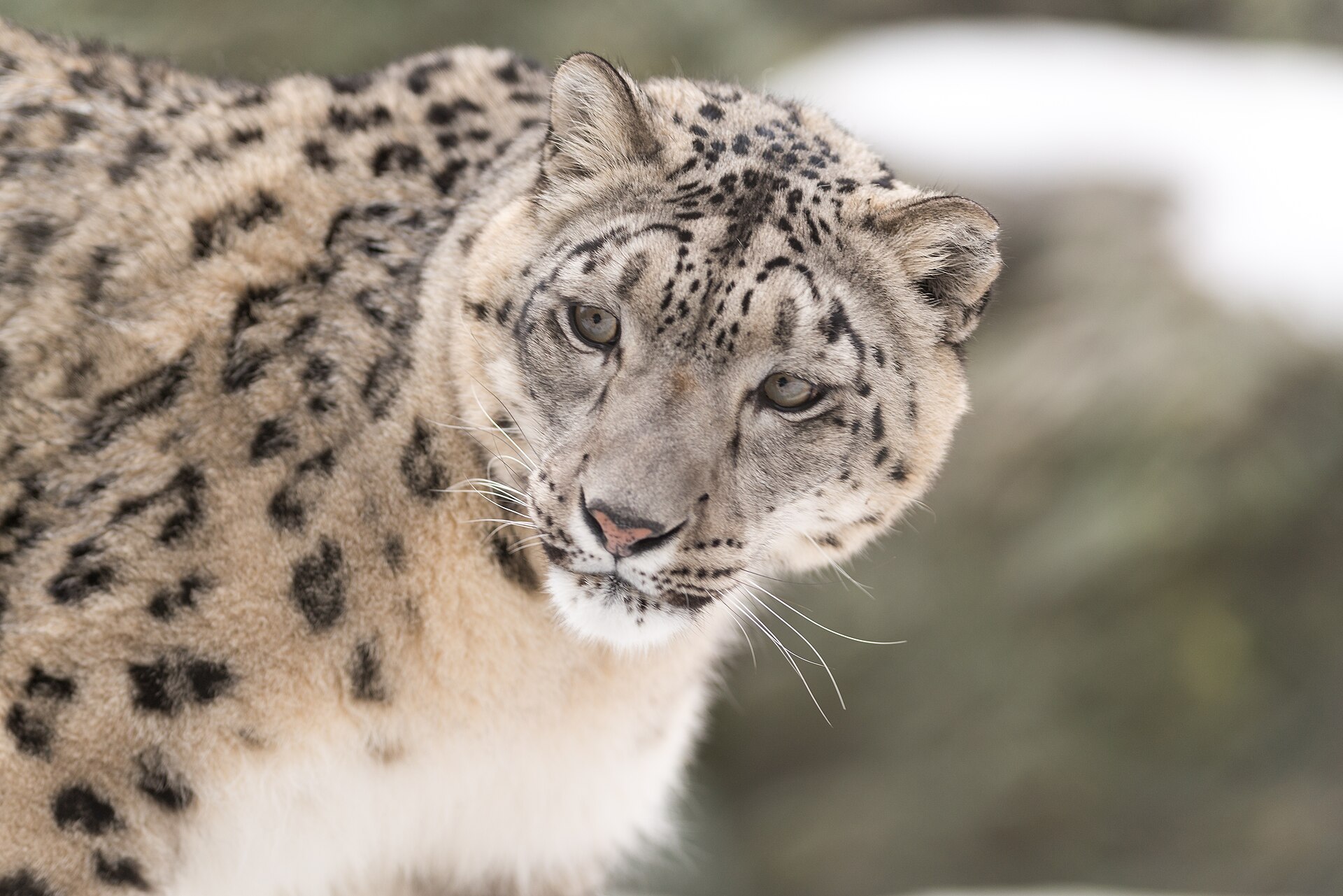
The film turns that idea into amber rings and a fictional identification stamp. The real photograph below offers a slower look at the coat. It was taken in captivity at Stone Zoo in Massachusetts. It illustrates the markings; it is not one of the Kyrgyz survey’s 150 adults, and nothing here assigns it a research identity.
A winter visit begins with permission.
Sarychat-Ertash is a strict nature reserve, not a trail to enter on a whim. Its management plan describes controlled access. Arrange a permitted visit with the appropriate local organiser; a page, a film or an old management document is not permission to enter.
UNDP’s February 2026 account describes organised watching from mid-autumn to late winter, with groups of no more than six and services provided by local residents. Rangers and guides are part of what makes the visit possible, not an optional addition to the scenery.
Go prepared to look without a promised sighting. The point is not to make an animal approach or to turn an uncertain encounter into a deadline. Let the local team set the limits. We give no precise cat locations, independent route, current price or claim that a leopard will appear. The mountains do not owe a visitor a close-up.
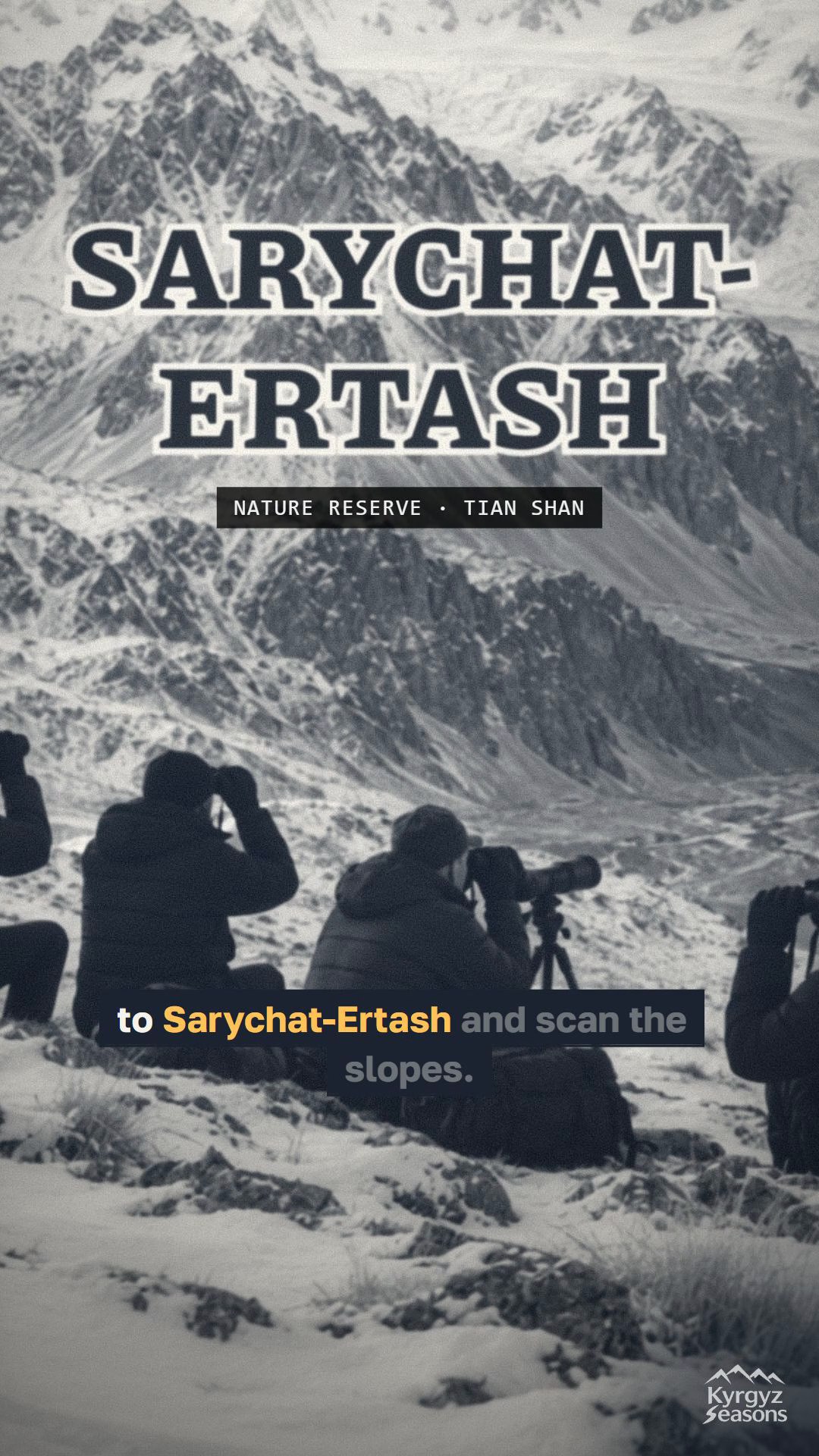
The empty frame is still a view.
Young’s field story ends with fresh signs and a cat the team cannot see. That is a useful companion to any spectacular wildlife photograph: presence and visibility are not the same thing.
A clear portrait can make an animal seem available, as though turning up were enough. The second real photograph is deliberately labelled too: a captive cat, photographed far from Kyrgyzstan. Enjoy the face without letting the image promise an encounter in the wild.
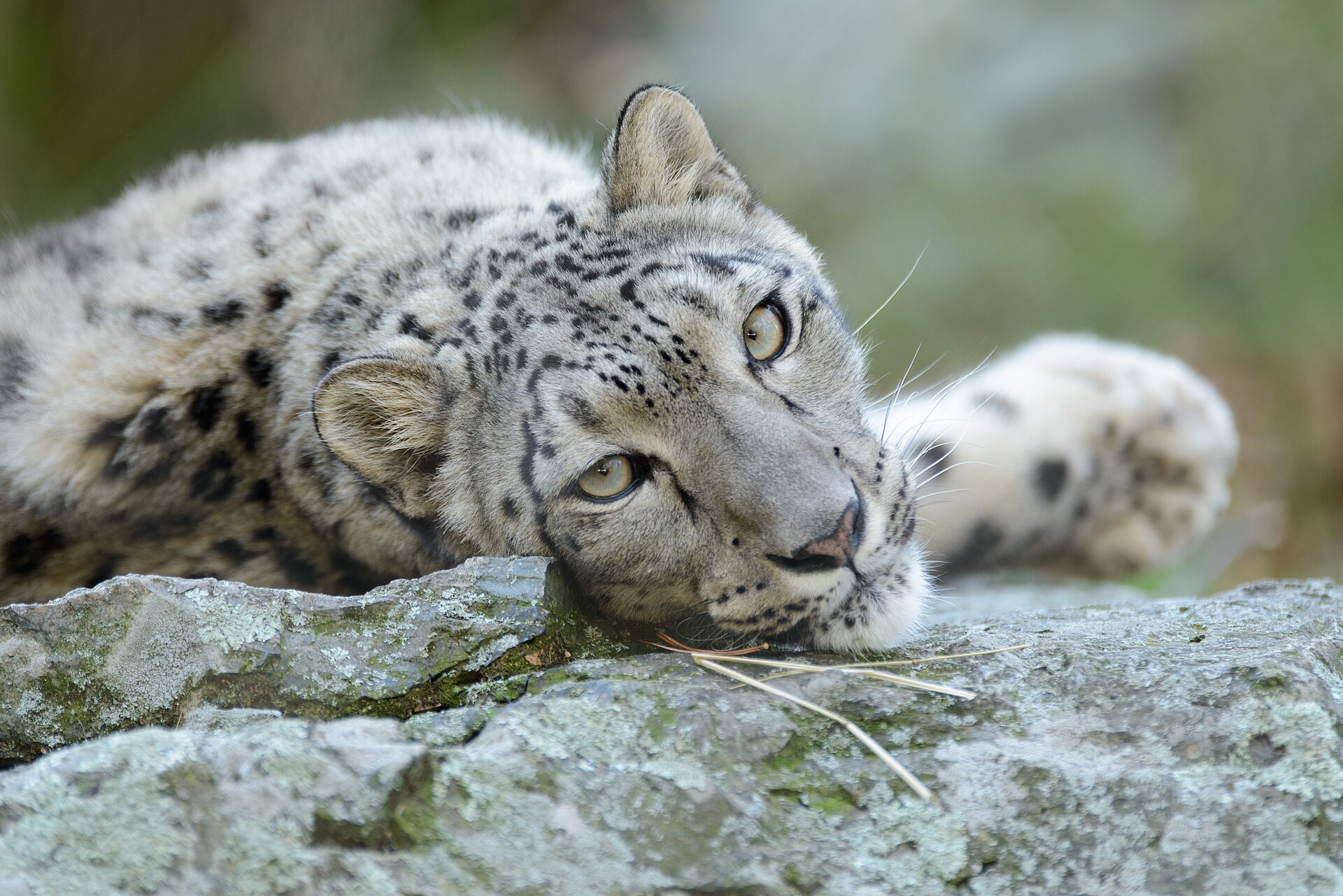
The film leaves us with tracks. A camera stays behind while the visitor goes home. What you bring back may be a glimpse, a mark in snow, or simply a better sense of how much a landscape can conceal. That is not an unfinished journey. It is a more patient way of seeing one.
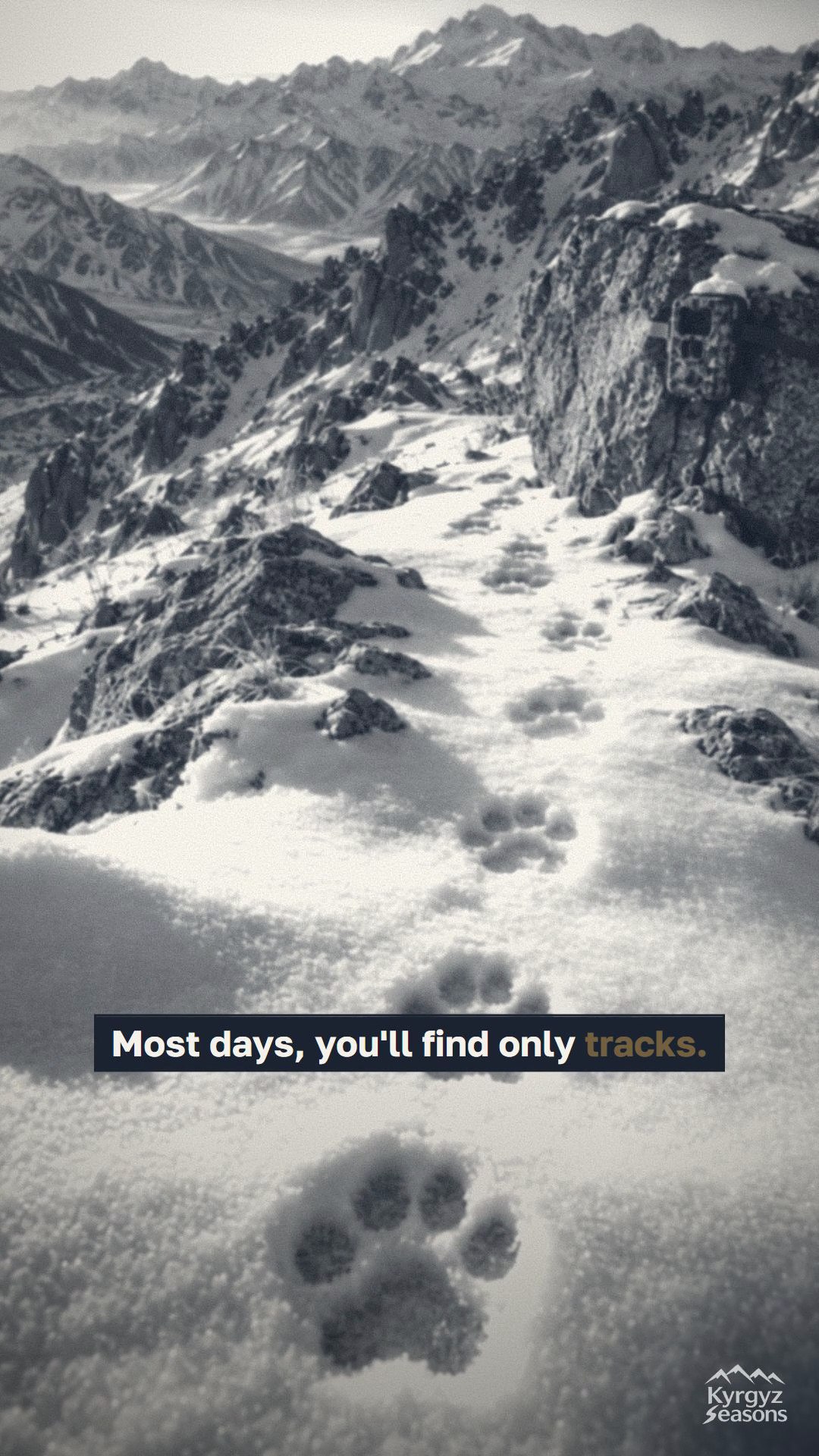
Leave room for the unseen
A mountain can be full of life even when nothing walks into your frame.
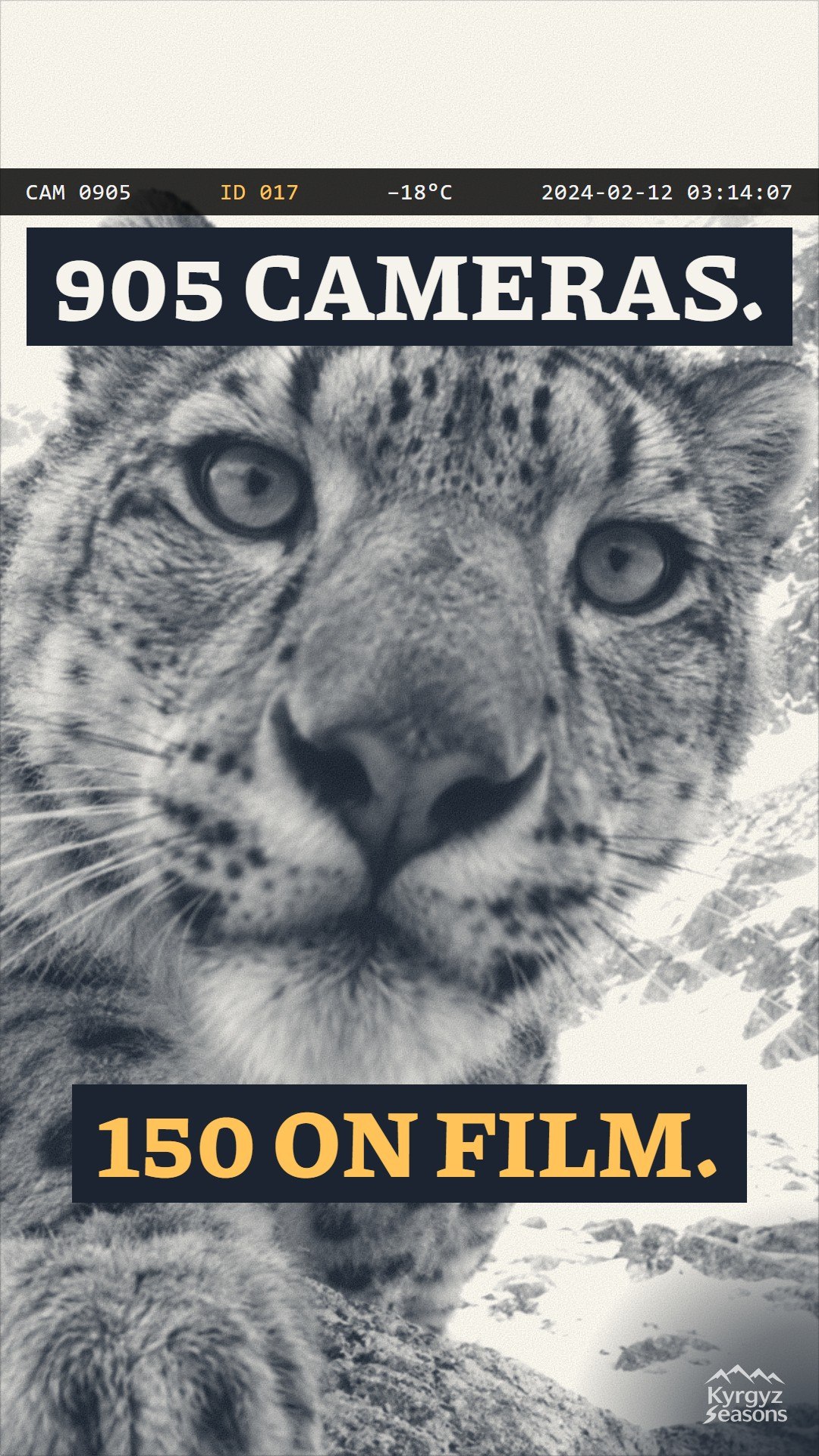 Watch the 44-second filmThe film’s duotone, grain and amber viewfinder become an illustrated field notebook. Film scenes are illustrations, not survey photographs.
Want to see it for yourself?
Routes, places and the best months to go — everything for planning a trip to Kyrgyzstan.
Sources
- Kubanychbekov et al., Snow Leopard Reports 5 (2026), 26–33.
- Young and Fiechter, Snow Leopard Trust field account, 2019.
- UNDP, snow leopard tourism in Kyrgyzstan, 6 February 2026.
- Sarychat-Eertash management plan, 2013–2018.
Pictures
- Film frames: Kyrgyz Seasons. Illustrated scenes; the displayed camera numbers, dates and animal IDs are part of the film design, not original survey records.
- Two real photographs of captive snow leopards at Stone Zoo, Massachusetts: Eric Kilby, 31 December 2015 and 3 November 2012, CC BY-SA 2.0, via Wikimedia Commons. Full photographs resized. Neither is a Kyrgyzstan camera-trap image.