


The Burials Didn’t Stop
The prayers stopped. The burials continued. Then a field covered the story.
Watch the film · 46 sThe walls returned in 1954.
The first thing to uncover is the name: Object IV. It identifies a particular church and cemetery at Ak-Beshim, the ancient city of Suyab. It does not mean every religious building found across the site.
In 1954, Leonid Kyzlasov’s expedition investigated the building. Valentina Kozenkova, then a fifth-year student at Moscow State University, was entrusted with the work. Her manuscript report later helped Valerii Kolchenko reconsider the architecture. The excavation was partial, and the surviving interpretation depends on both the earth and the archive.
The film turns this into a restorer’s window: a painted field is lifted to reveal a church. The gesture is a way of following discovery, not a claim that an intact painted building was hidden beneath the soil. On this page, you can move the same window. What appears is an illustration; the numbered source opens the research that constrains it.
A church also became a place of burial.
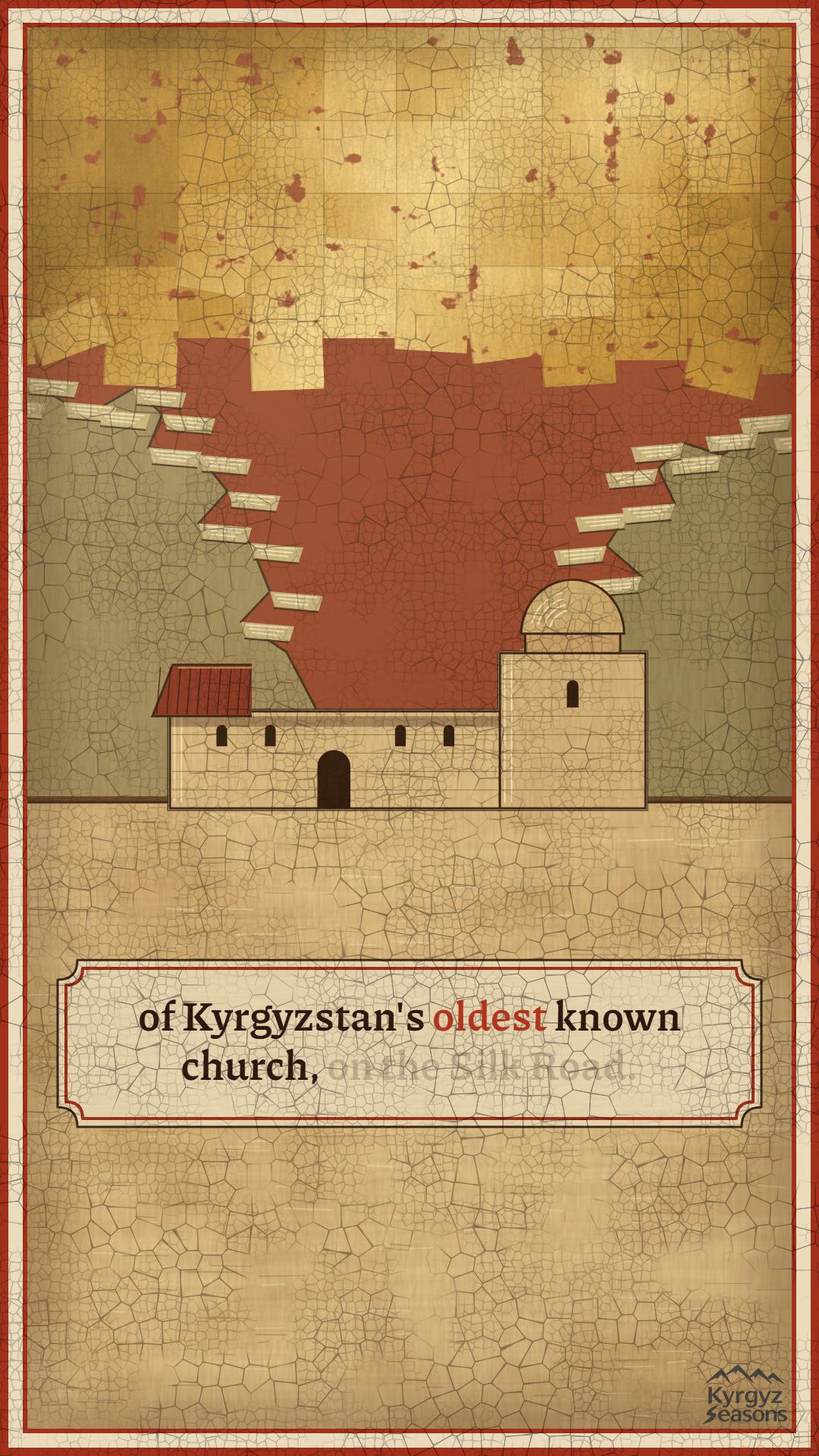
Clauson’s 1961 account, summarising Kyzlasov, identifies an eighth-century church and records burials in and near the space described as its courtyard. Some of the dead wore bronze pectoral crosses. Those objects bring the story closer to people, without giving us their names.
Anna Mikheeva’s later synthesis describes burials beside the walls without damaging them, and east of the altar room, while the church still functioned. Here, the living building and the burial place were not separate chapters.
Our small marks stand for that relationship. They are not a count of graves, a map of bodies or replicas of particular crosses. The difference matters: a diagram can explain an idea while leaving the dead their anonymity. We show the ground and the walls, not remains arranged for spectacle.
The prayers stopped. The burials didn’t.
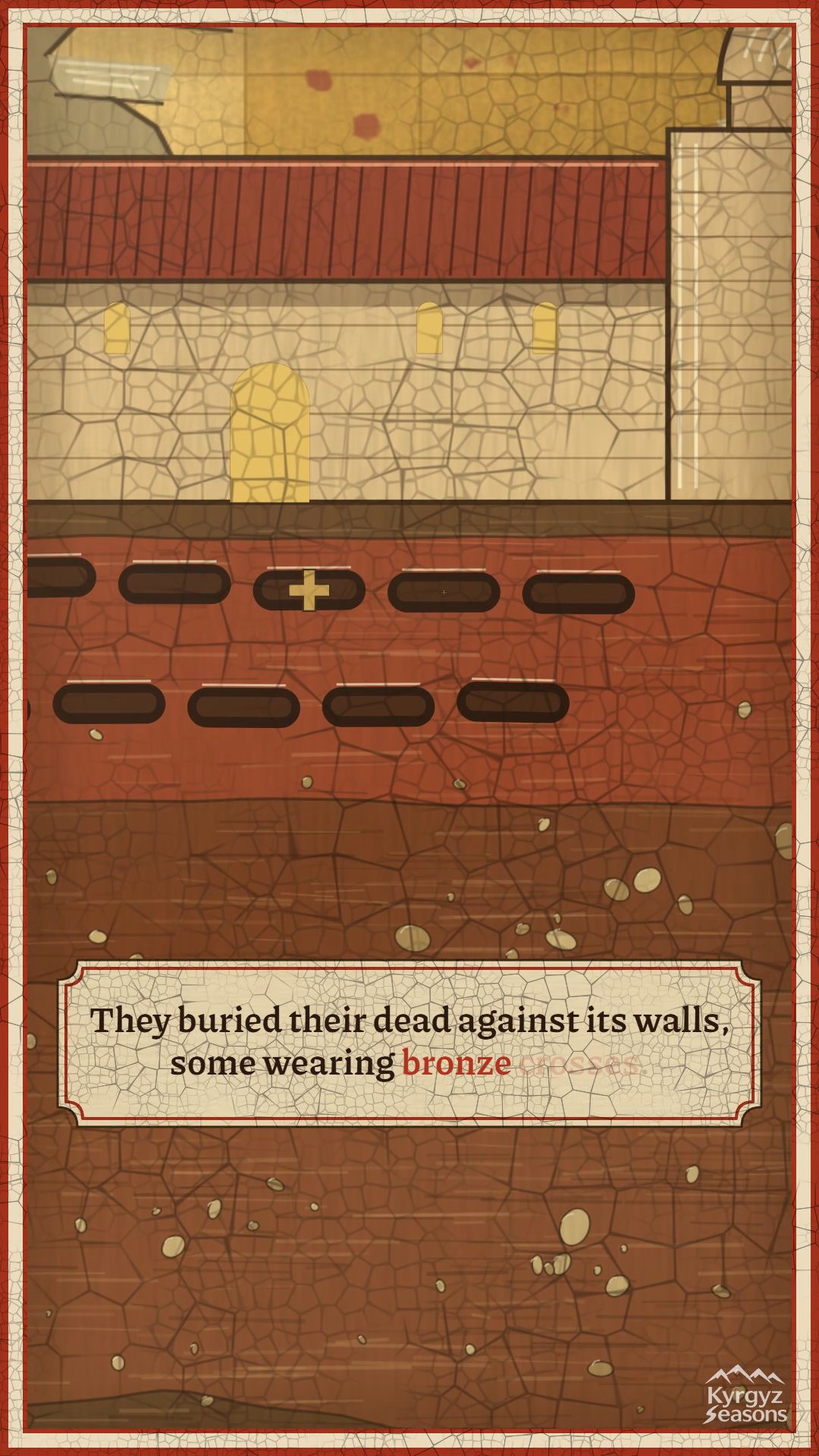
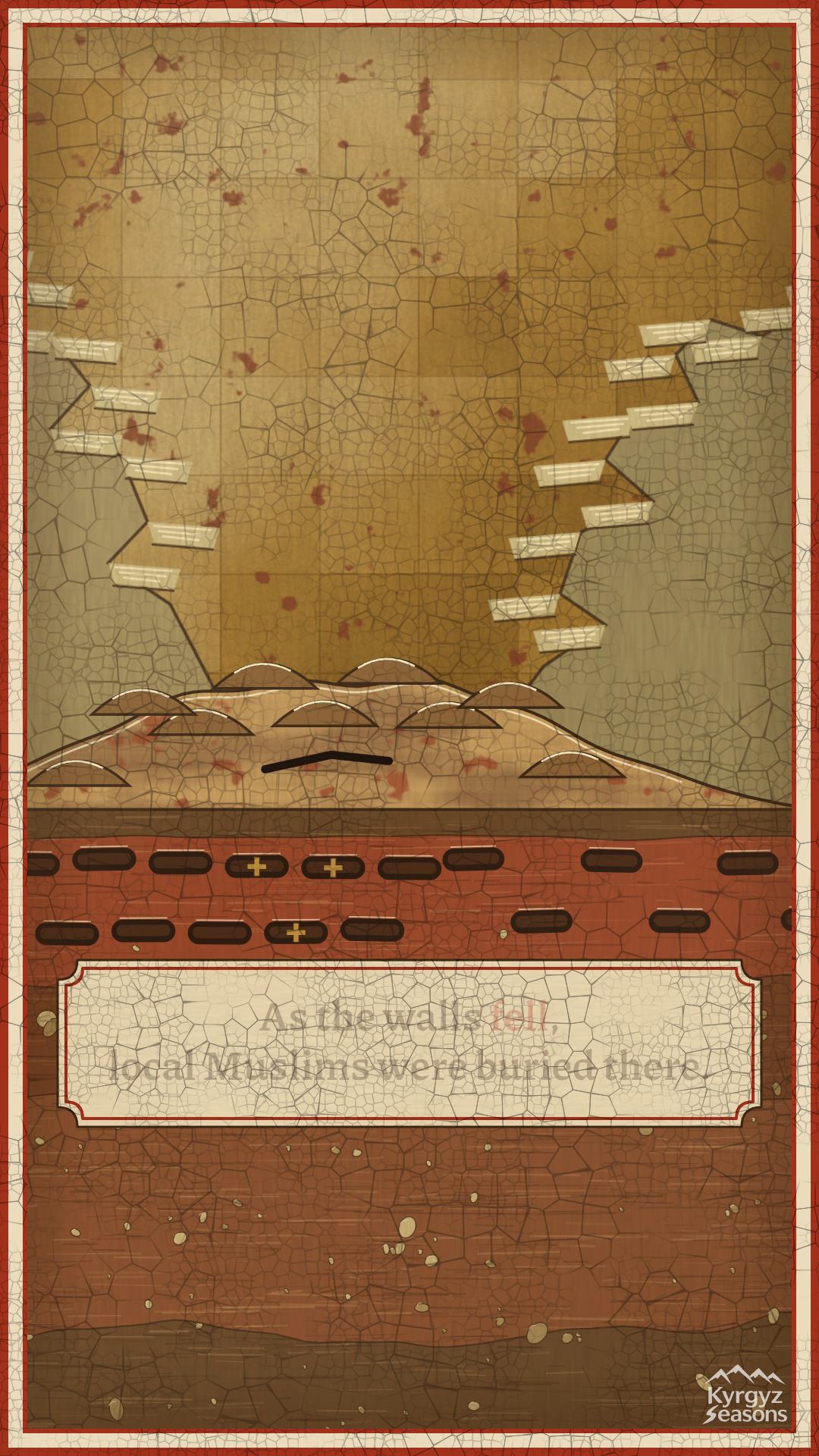
Mikheeva describes a change of use: burial continued after the church ceased its original function. As the building deteriorated, local Muslims were buried on its remains. This is the sequence behind the film’s turn: two faiths connected to one patch of ground across time.
A functioning church
Burials took place beside its walls. A building and a cemetery shared the space.
A burial ground outlasts worship
The sequence includes later Muslim burials. It does not date the last service or explain why it ended.
A later landscape
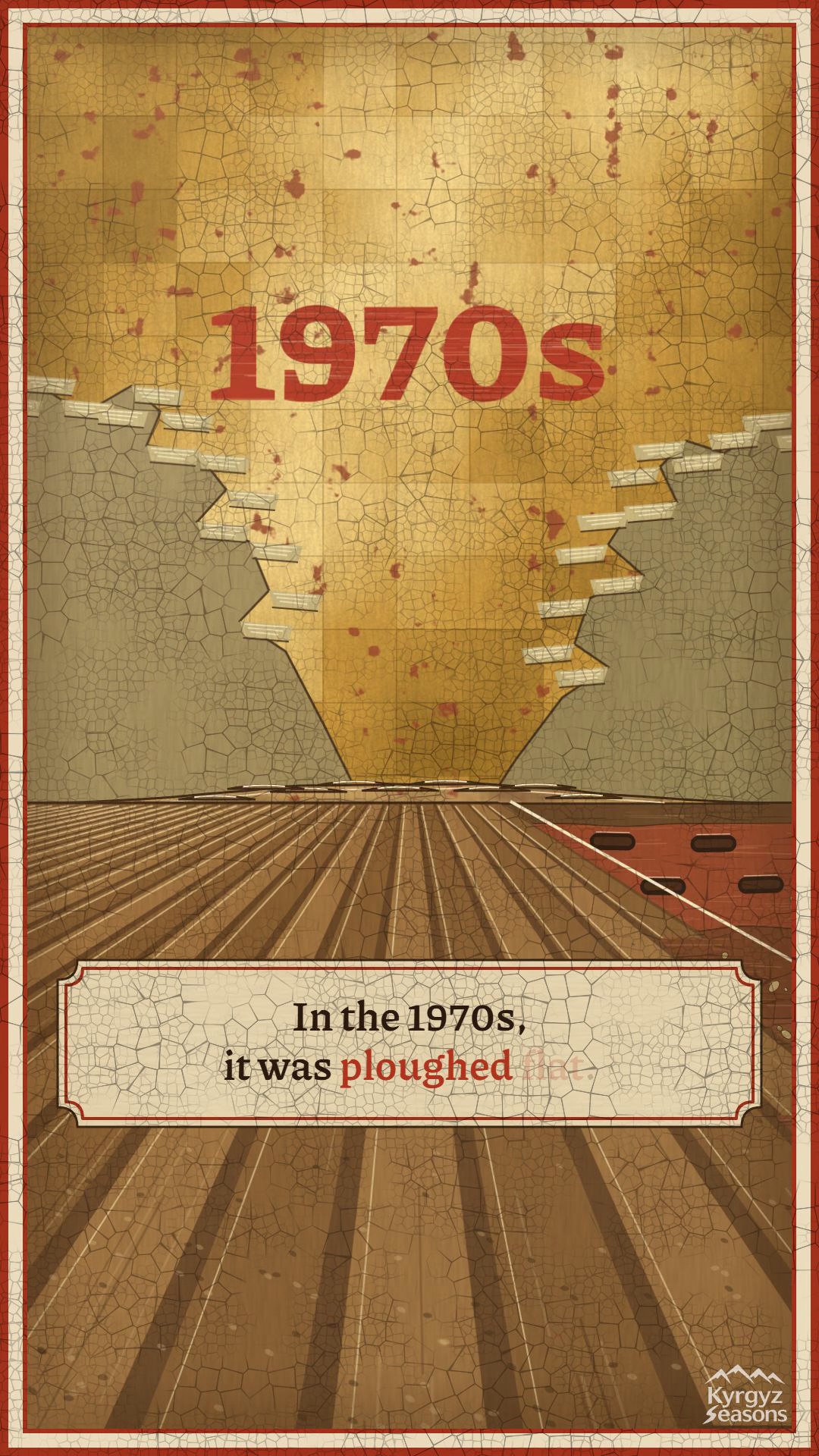
Kolchenko reports levelling and ploughing in the 1970s. His field description was published in 2019.
Read the layers without making them say too much. They do not provide a scene of two congregations praying together, an exact date of conversion or a named cause of abandonment. Continuing to bury and continuing to hold services are different claims. The account supports the first after the second had ended.
The archive outlasted the walls.
Kolchenko’s 2019 paper says Object IV was demolished and ploughed up in the 1970s. He describes the area as an arable field and discusses tile fragments found there. That is a dated scholarly account, not our inspection of a crop in 2026.
The film covers the building with brush-drawn furrows. It does not identify a person responsible, invent a particular crop or claim that the church walls are waiting for visitors above ground. Nor does it settle the disputed form of the roof: Kolchenko’s own title asks whether the structure was a chapel with a courtyard or a hall church.
A lost surface makes records more important, not less. A student’s report, a later architectural argument and a study of burial practices preserve different parts of the place. Their disagreements are worth carrying into a visit. An attractive reconstruction should help you ask better questions, rather than quietly replace the evidence.
Ak-Beshim is larger than this church.
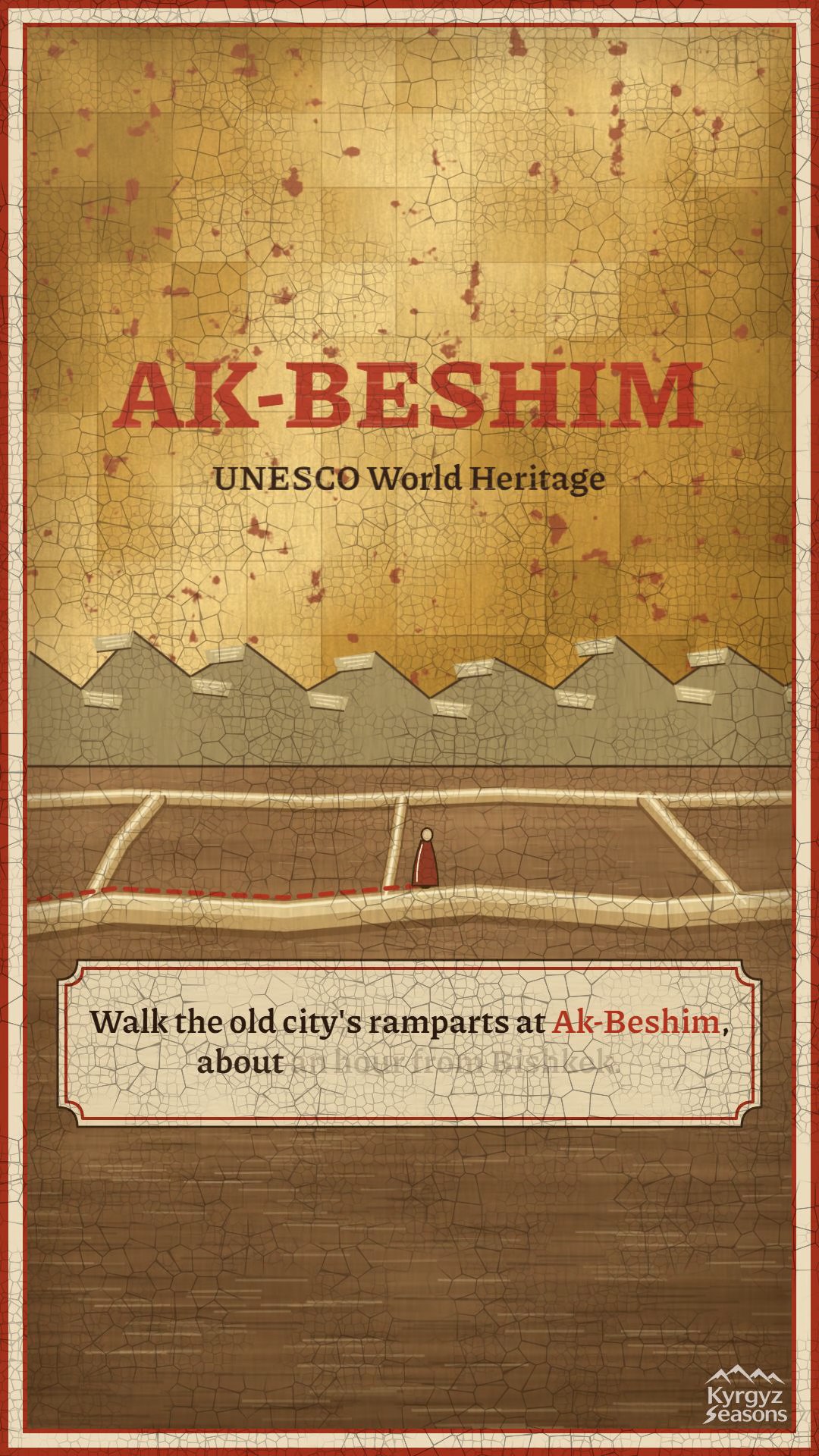
Suyab belongs to the Silk Roads World Heritage property inscribed in 2014. Archaeology has identified different religious buildings and periods across the settlement. Another exposed wall, another temple or another church complex must not become a convenient photograph of Object IV.
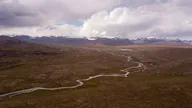
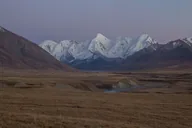
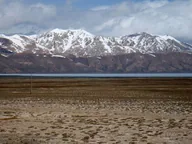
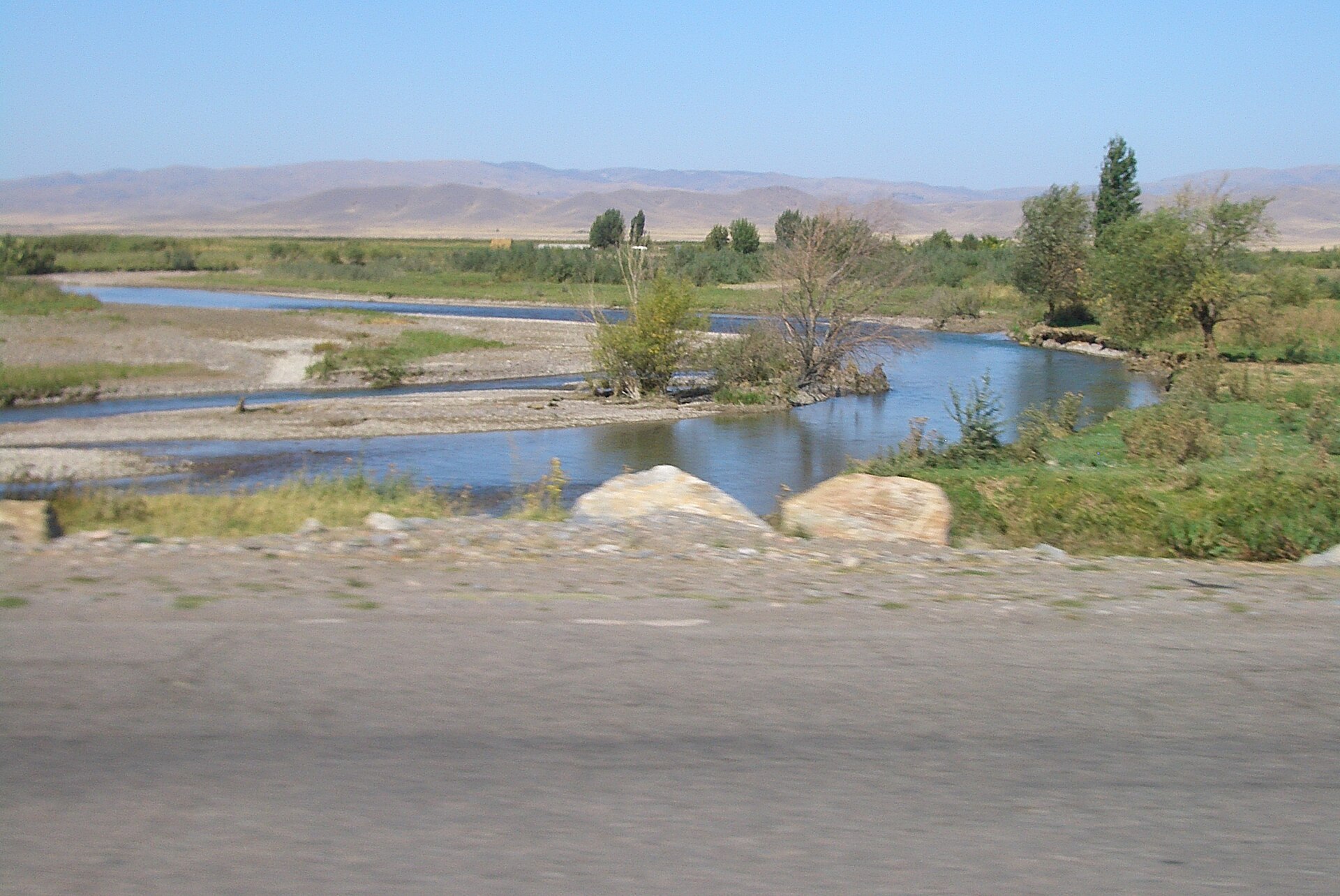
The real photograph below is labelled just as carefully. It is Vmenkov’s view of the Chuy Valley from the road between Milyanfan and Tokmok. It gives travel context, not the location of the church, and cannot show what remains at the precise excavation point today.
Use the site guide to plan your approach, and ask locally about access and ongoing work. Respect private ground and archaeological areas. We have not established current hours, fees or a marked visitor stop at Object IV, so we promise none. Go to Ak-Beshim to read a city, with room in that reading for a building you cannot simply point a camera at.
The record is part of the place
No standing walls does not mean no history. It means we have to read differently.
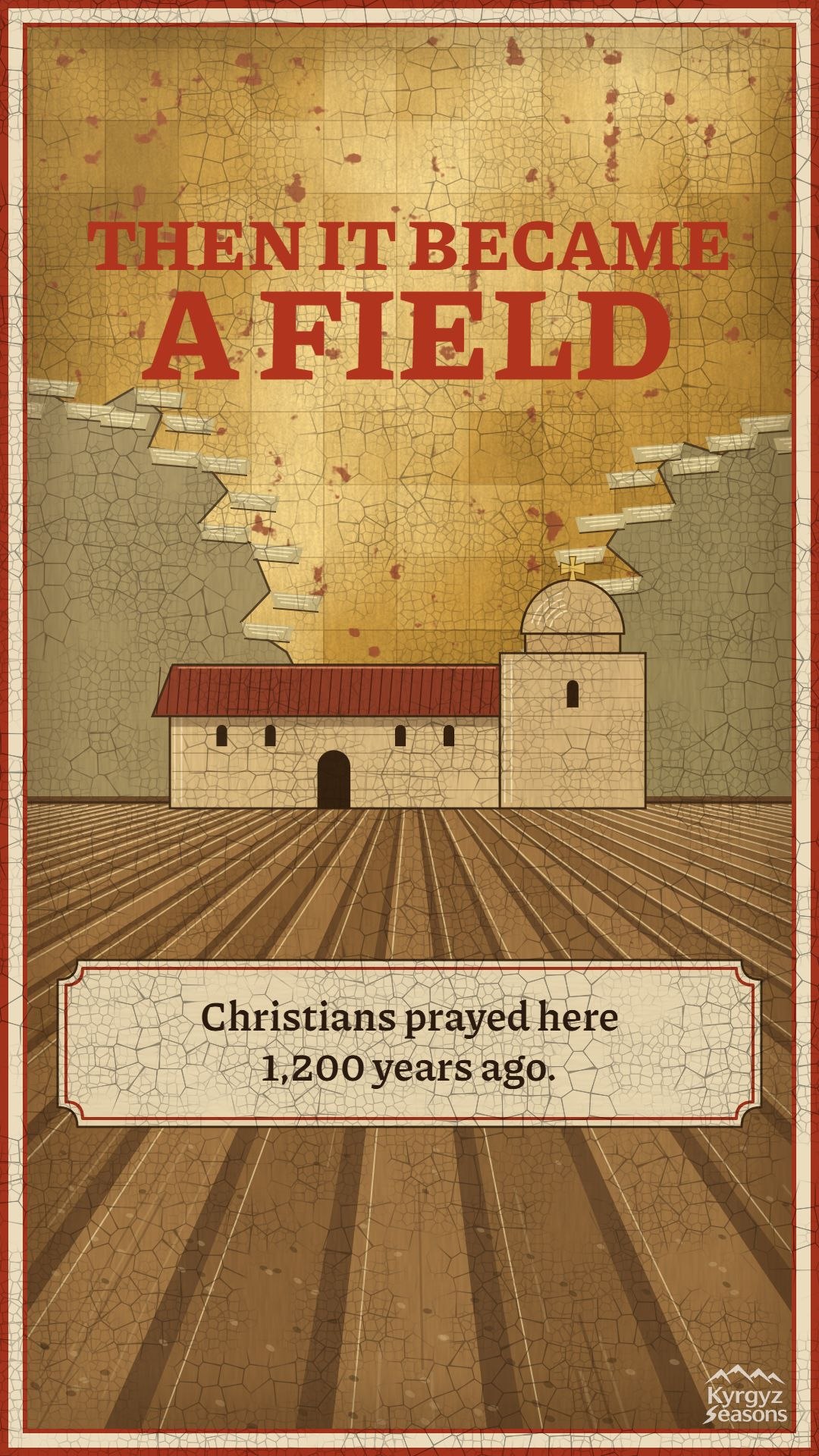 Watch the 46-second filmTempera, gesso and flat gold leaf from the film become a page to uncover. Buildings and burial diagrams are artistic interpretations, not excavation drawings.
Want to see it for yourself?
Routes, places and the best months to go — everything for planning a trip to Kyrgyzstan.
Sources
- Kolchenko, Object IV’s architecture, 2019, pp.188–190.
- Mikheeva, dissertation abstract, 2023.
- Clauson, Ak Beshim—Suyab, 1961.
- Semenov, Suyāb; UNESCO property 1442.
Pictures
- Film frames: Kyrgyz Seasons. The temple, people, grave positions and gold-ground scenes are artistic interpretations; no skeletons or actual burial photographs are shown.
- Chuy Valley photograph: Vmenkov, 14 September 2007, CC BY-SA 3.0, Wikimedia Commons. The view is from the road between Milyanfan and Tokmok, not Object IV. Full photograph resized. No openly licensed photograph of the vanished church was located; the page does not substitute another excavation for it.