
An empire, divided at a feast.
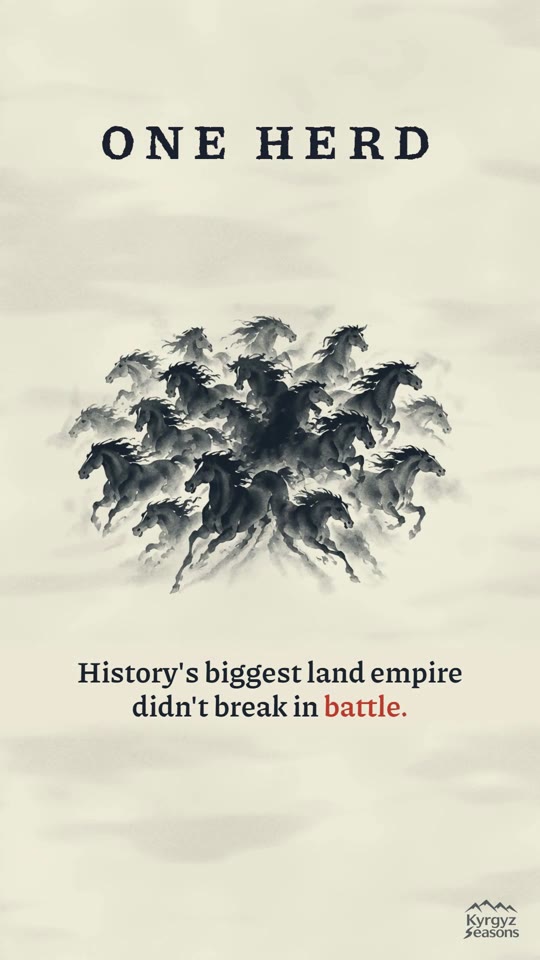
A week of feasting. A council on the eighth day. Three branches of a family deciding the middle of an empire, without the great khan. Follow the herd through the ink.
Watch the film · 49 sThe empire was vast.
The table was smaller.
Think of an empire ending and a battle usually comes to mind. On the Talas, the memorable scene is a feast. Princes of Genghis Khan’s family gathered, ate together for a week, then sat down to decide who would have what.
Our film draws the empire as a herd. One dark mass of horses breaks into separate streams across the paper. The horses are a metaphor, not a picture of the meeting. The real story concerns land, family claims and a ruler whose authority the men at the feast were willing to bypass.
It is often called the Talas kurultai. That name can make it sound like a gathering of the whole empire. It was not. Three branches of the ruling family were represented; another, the branch holding the great khan’s throne, was missing.
Seven days of feasting.
Then the eighth.
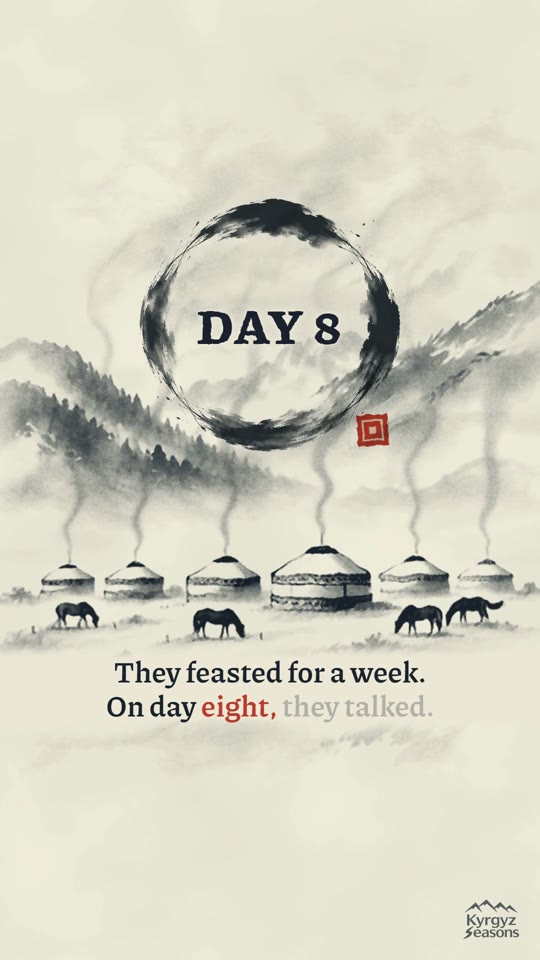
Rashid al-Din’s chronicle places the princes on the meadows of Talas and Kenjek in spring 1269. After a week of celebration, they held their council on the eighth day. The chronicle gives us that striking rhythm. It does not give us a seating plan, a guest count or the menu.
On the eighth day,
they talked.
That small detail slows the story down. These were relatives bargaining after conflict, not strangers drawing lines on an empty map. Their agreement would divide rights in a settled region already full of towns, farms and people.
The great khan
was not at this table.
Qaidu came from the house of Ögedei. Baraq, ruler of the Chagatai ulus, represented another branch. The house of Jochi was represented by Berkechar, acting for Möngke-Temür of the Golden Horde. These names belong to different branches of Genghis Khan’s family; “heirs” is more accurate here than “grandsons”.
The missing branch was Tolui’s: Kublai in the east and the Ilkhan Abaqa in Persia. Neither was represented at the meeting. That does not tell us whether anyone invited them. It tells us that the decisions were made without them.
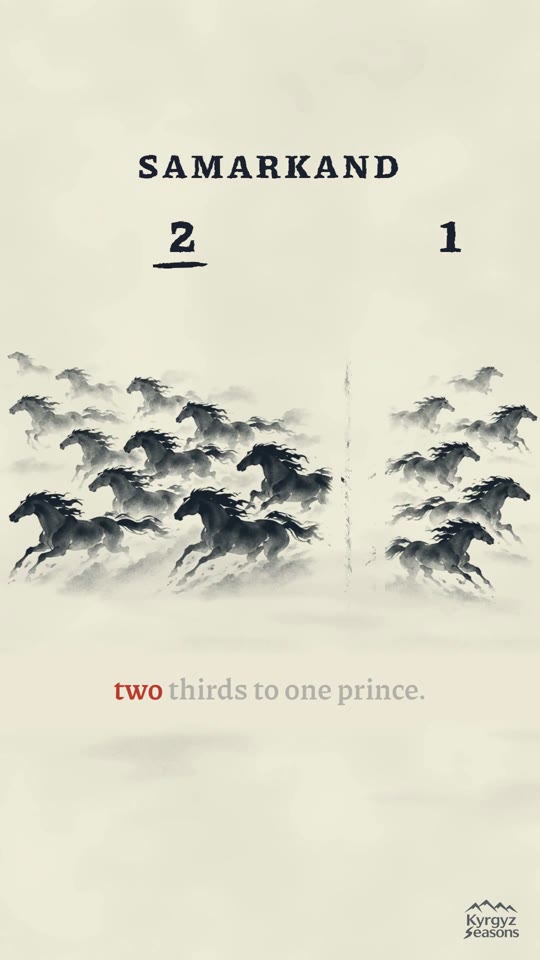
Two thirds to one.
A third to the others.
The bargain concerned Transoxiana, the region between the Amu Darya and Syr Darya, including Samarkand and Bukhara. Baraq received two thirds; the remaining third went to Qaidu and Möngke-Temür. The cities themselves remained under the administration of Masʿud Beg.
A visual metaphor for the shares, not a map or a count of horses.
The distinction matters. This was not a neat partition into modern nation-states, and the towns were not blank counters to hand across a table. The princes also agreed to keep their camps in mountains and steppes rather than in the cities.
A feast did not
break an intact empire.
By 1269 the family had already fought itself. Kublai and Ariq Böke contested the great khan’s throne from 1260 to 1264. War between Berke and Hülegü followed in 1262. Talas belongs to that longer break-up.
So our film says the cracks became borders. It is a compressed image for a change in power, not a claim that a single feast ended the empire. Historians have also warned against treating its history as one smooth decline towards an inevitable fall.
Nor was a new khan elected here. Calling it a kurultai does not turn the council into a coronation. Qaidu’s later rise at Taraz belongs to 1271, a separate episode.
The river is real.
The meeting place is uncertain.
The Talas runs from Kyrgyzstan into Kazakhstan. A name in a medieval account does not place a council on one side of today’s border. Rashid’s “Talas and Kenjek” has not supplied an agreed field where a visitor can stand.
There is a further complication: Wassaf’s account places the meeting near Samarkand, around 1267. Scholars discuss how that version relates to Rashid’s spring 1269 gathering on the Talas. We follow the Talas account while keeping the uncertainty visible. No tent in our film marks a recovered site.
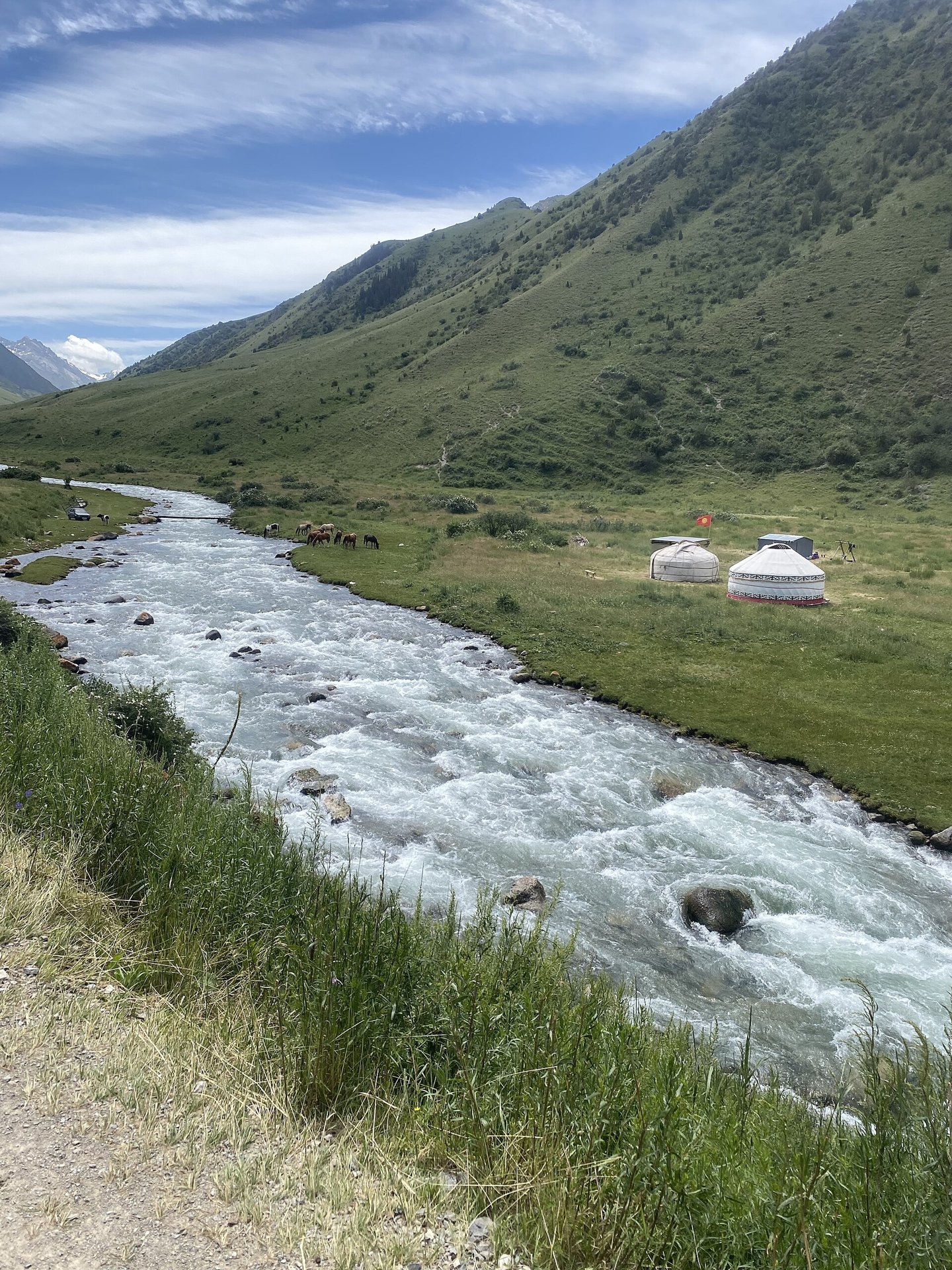

Go for the valley.
Leave room for the unknown.
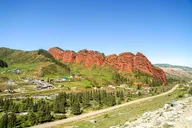
You can travel to the Kyrgyz part of the valley, use Talas as a base and head into Besh-Tash. The drive from Bishkek is about 290 km and roughly five hours via Too-Ashuu and Otmok; conditions can change that estimate.
Go to see a place, rather than to collect a certainty the sources do not offer. The film’s herd returns to a meadow. The real valley gives you a river and mountains. The absence of an exact pin need not make the journey smaller.
The Talas valley,
without a false pin.
“Drive five hours from Bishkek, and the meadows are still there.”From the film
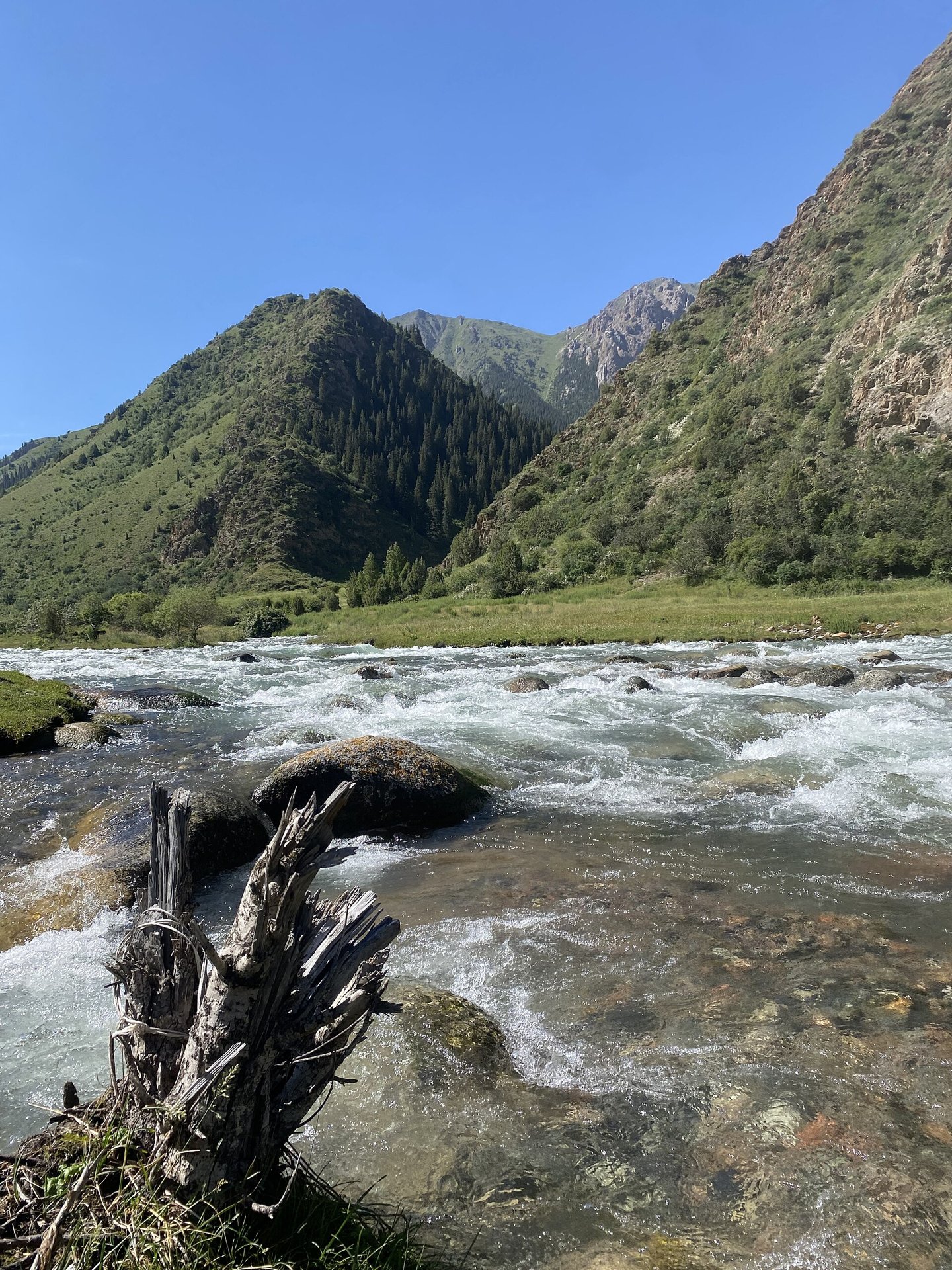

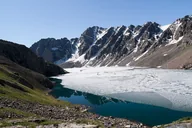
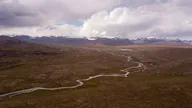
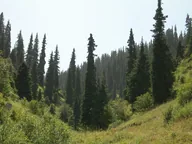
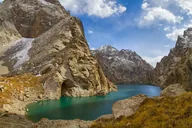
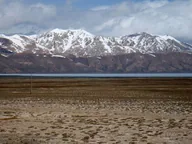
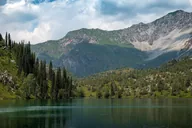
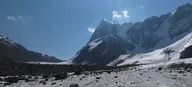
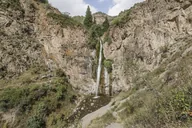
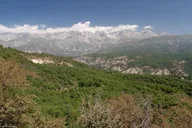
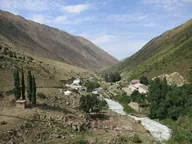
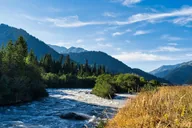
Talas is a practical base for exploring the valley and Besh-Tash. The river in this photograph is the Besh-Tash, not the main Talas river. Our film borrows this landscape for its ink scenes; neither the photograph nor the drawing identifies where the princes met.
The cracks were already there.
The meadows still are.
An empire cannot be explained by a single feast. A journey can begin with one.
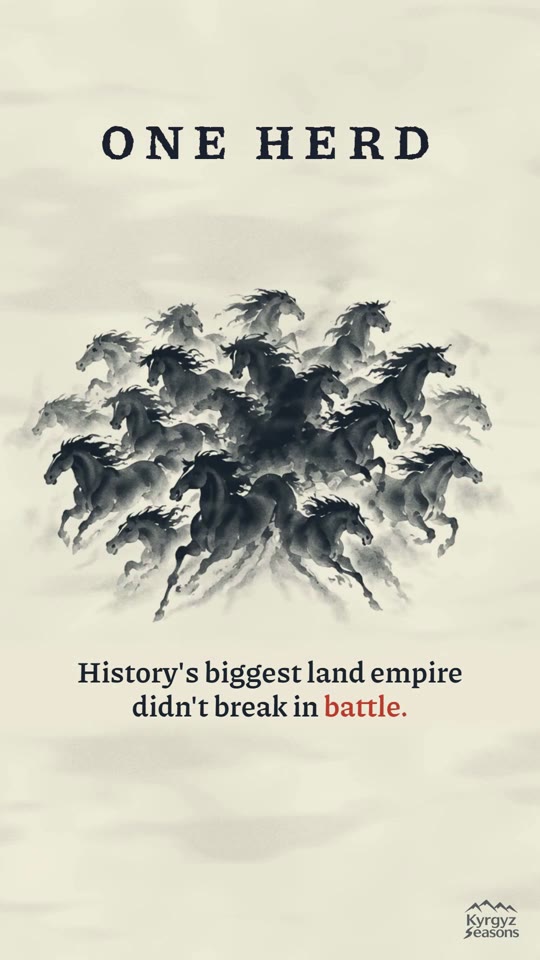 Watch the 49-second filmDivided at a Feast: the short film. A herd in black ink, rice paper and a single cinnabar seal. The horses are a metaphor; the sources are below.
Want to see it for yourself?
Routes, places and the best months to go — everything for planning a trip to Kyrgyzstan.
Sources
- Rashid al-Din, Jamiʿ al-tawarikh, Russian translation A. K. Arends, vol. III, 1946, pp. 70–71. The primary account of the Talas gathering, read through the citations in Abytov and Perzashkevich below.
- B. K. Abytov and O. V. Perzashkevich, 2026, Journal of the Belarusian State University. History, no. 2, pp. 66–73. Chronicle citations and historiographical discussion; claims of an all-Mongol assembly are not adopted.
- V. V. Barthold, Sochineniya, vol. 1, Moscow, 1963, pp. 582–583: the bargain, city administration and the limits of the council’s significance.
- Peter Jackson, “The Dissolution of the Mongol Empire”, Central Asiatic Journal 22 (1978), pp. 186–244.
- David Morgan, “The Decline and Fall of the Mongol Empire”, Journal of the Royal Asiatic Society 19(4), 2009, pp. 427–437.
- Michal Biran, Qaidu and the Rise of the Independent Mongol State in Central Asia, Curzon, 1997, chapter 2. The differing accounts of the meeting.
- A. Porsin, “The role of the Katwan and Talas Kurultai…”: scholarly discussion of sources and chronology.
- P. N. Petrov and A. M. Kamyshev, 2019, Golden Horde Review 7(2), pp. 266–282: numismatic evidence for Yangi-Taraz, not a verified council site.
- Kyrgyz Seasons: Talas — travel distance, approximate driving time and nearby places.
Pictures
- Besh-Tash valley and river — Dilnaz Akmatalieva, 3 July 2024, CC BY-SA 4.0.
- Besh-Tash river — Dilnaz Akmatalieva, 3 July 2024, CC BY-SA 4.0.
- Documentary photographs resized and JPEG-compressed; original colour retained. Film cover and four film frames: Kyrgyz Seasons. The ink horses, tents and circle are visual metaphors, not historical reconstructions or documentary photographs.