
Two Plain Words
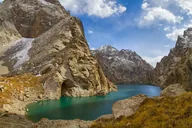
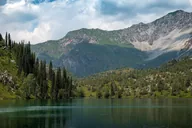
Dying in Karakol, he asked to lie on the shore of Issyk-Kul in his expedition clothes, under two plain words. He got the words. Then the wall filled up, tile by tile.
Watch the film · 45 sHis last wish
was a shore.
“His last wish: to be buried on Issyk-Kul, in his expedition clothes.”From the film
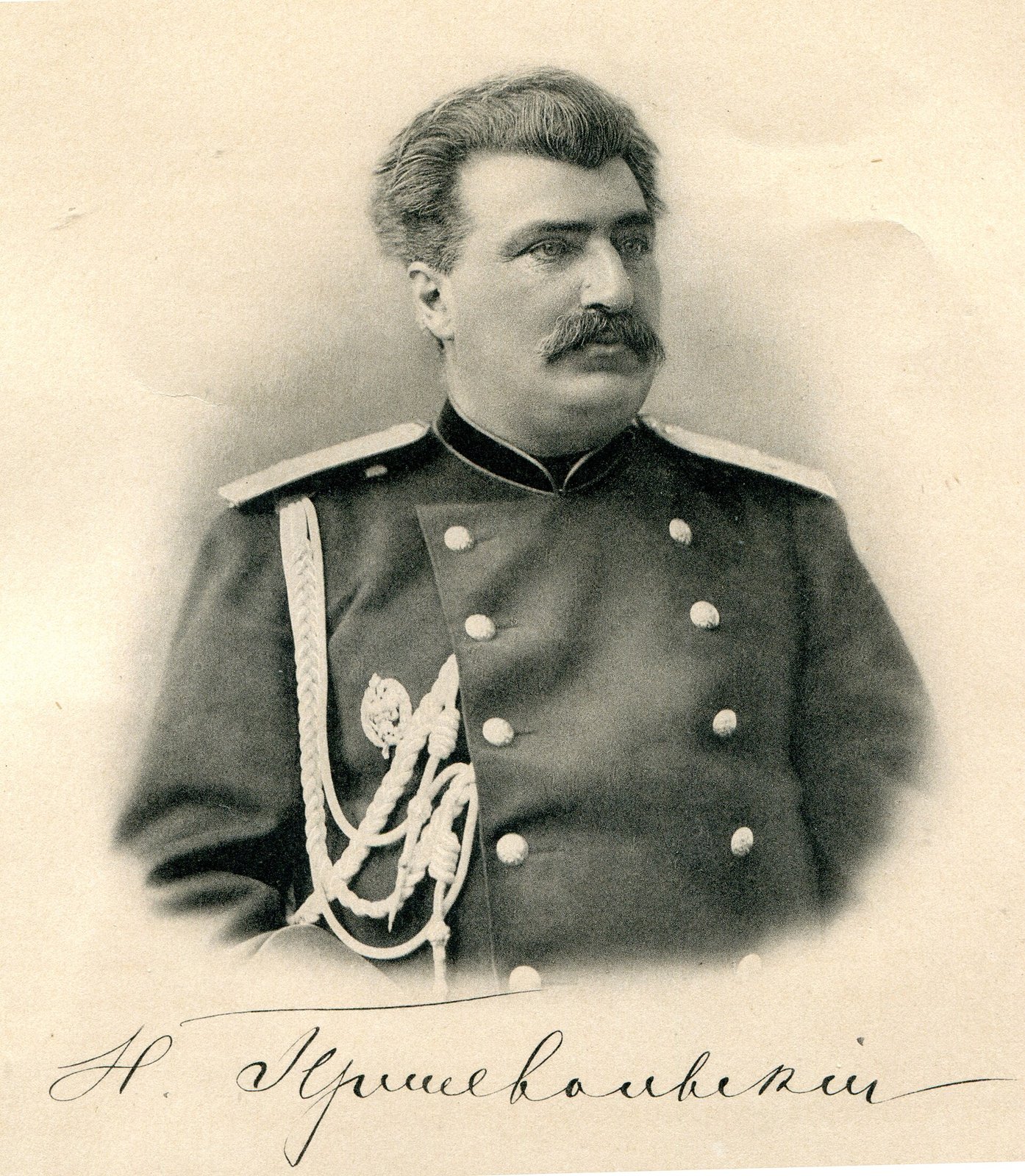
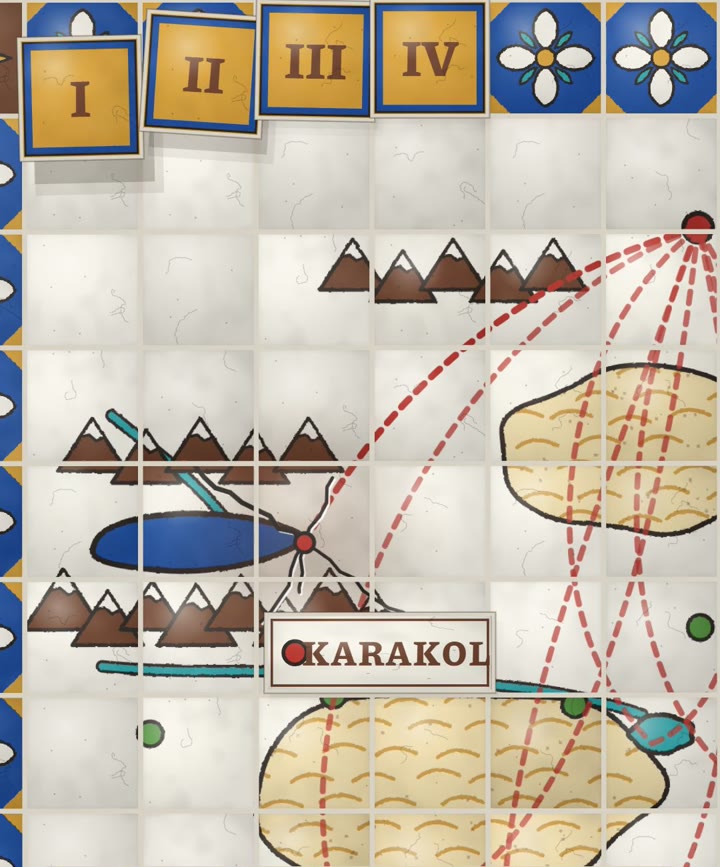
In early October 1888 Nikolai Przhevalsky came to Karakol, a small town at the eastern end of Issyk-Kul. He was 49 and about to start his fifth journey into Central Asia, with Tibet as its goal. He never left the town.
He fell ill within days. At first he refused to be treated; from 14 October he lay in a barrack of the town’s military infirmary. On the morning of 20 October by the Russian calendar of the day, 1 November by ours, he died.
Before he died he told his companions how he wanted to be buried: on the shore of Issyk-Kul, in his travelling clothes, with a plain inscription. His exact words come down in several versions, and we could not check them against the earliest letters from his bedside. All of the versions agree on those three things.

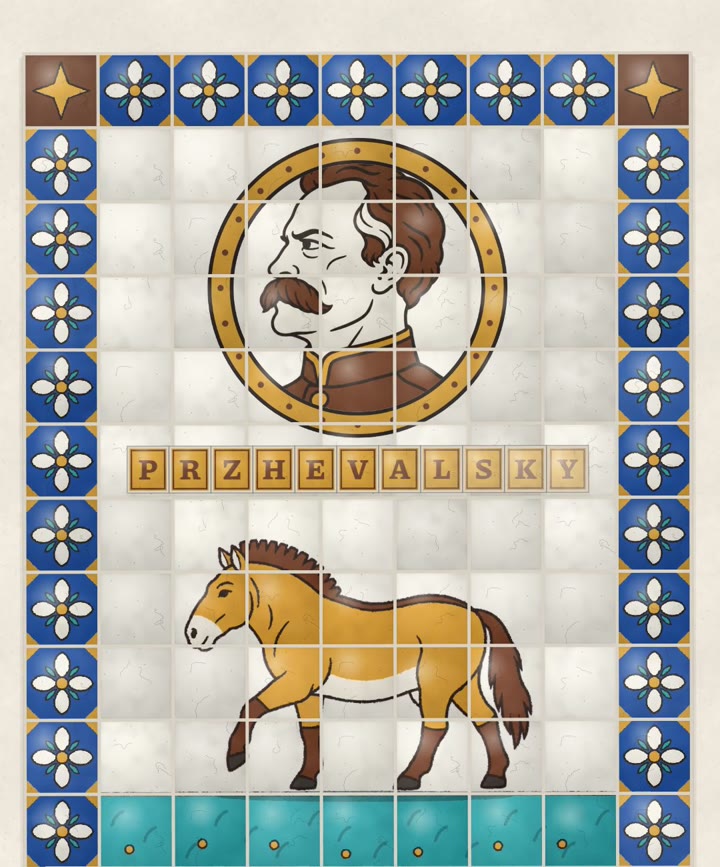
The wild horse
is named after him.
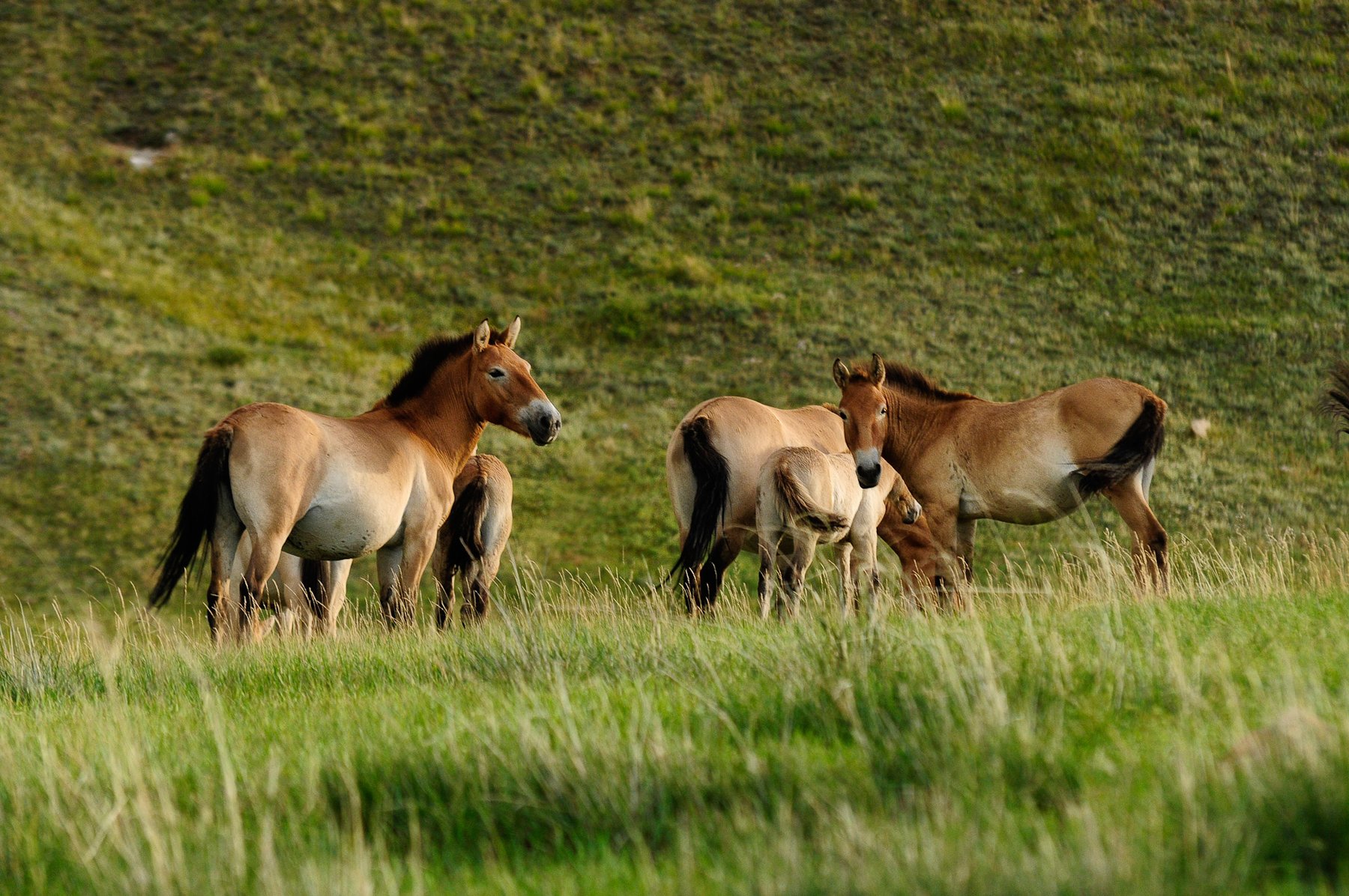
Most people meet his name on a horse: a stocky dun animal with a dark upright mane, the takhi of the Mongolian steppe. In the late 1870s, at Zaisan on the Russian–Chinese border, Przhevalsky was given the skull and hide of one. In 1881 the zoologist Ivan Polyakov described the animal from them as a new species, Equus przewalskii.
So he did not discover the horse. The people of the steppe had always known it. He carried the first specimens to the scientists, and the scientists put his name on it. The same happened again and again: his collections gave names to a gazelle, a nuthatch, a gerbil and more than eighty plants.

Four times out.
The fifth ended in Karakol.
“Four times he set out into Central Asia. On the fifth, a fever stopped him in Karakol.”From the film
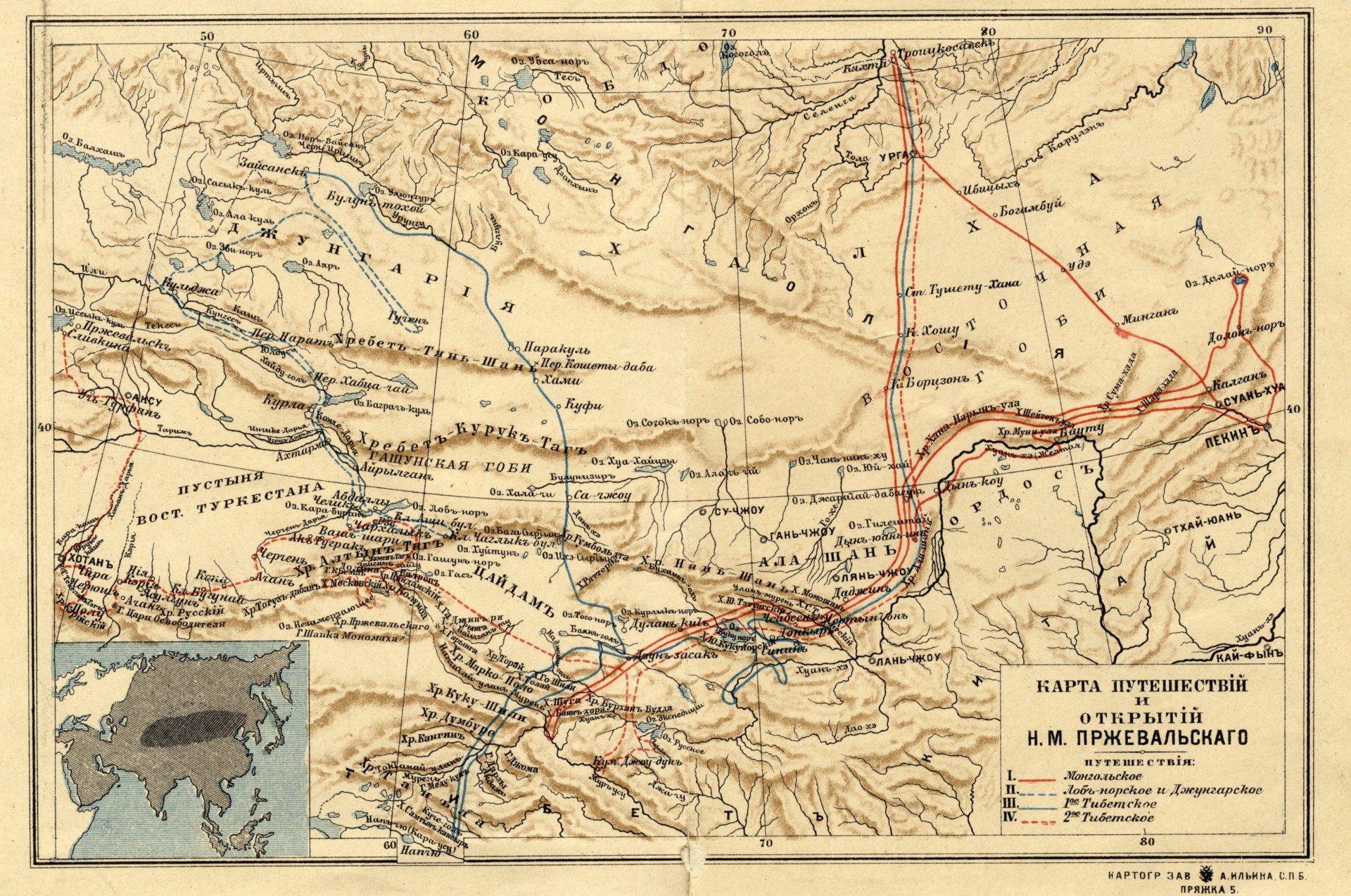
Between 1870 and 1885 he led four long expeditions into Central Asia: across the Gobi, over the Tian Shan to Lop Nur, through the Tsaidam and onto the Tibetan plateau. He never reached Lhasa, the city he wanted most. On the third journey Tibetan officials turned him back about 260 km short of it. Tap a tile to follow each one.
The fourth journey ended on the shore he would ask for. In 1885 the expedition came back by way of Khotan to Issyk-Kul. Three years later he returned to the same lake to begin the next one.
The fever was recorded as typhoid. That was the diagnosis of his doctors and companions, and nobody has confirmed it since. Where he caught it is disputed. The earliest accounts blame river water drunk during a pheasant hunt in the Chu valley near Pishpek, now Bishkek, on the way to Karakol; later writers name other rivers, or Karakol itself.

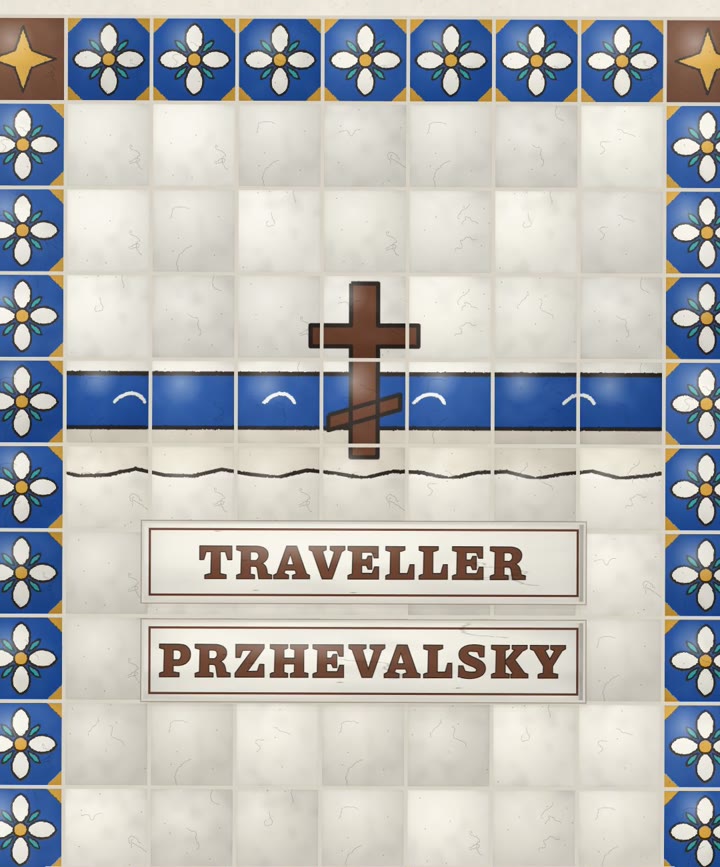
Two plain words:
Traveller Przhevalsky.
“For his grave, he wanted two plain words: Traveller Przhevalsky.”From the film
He asked for the shore, not for a spot on it. His companions chose one: a level place on the high eastern bank between the mouths of the Karakol and Karasuu rivers, about 12 km from the town.
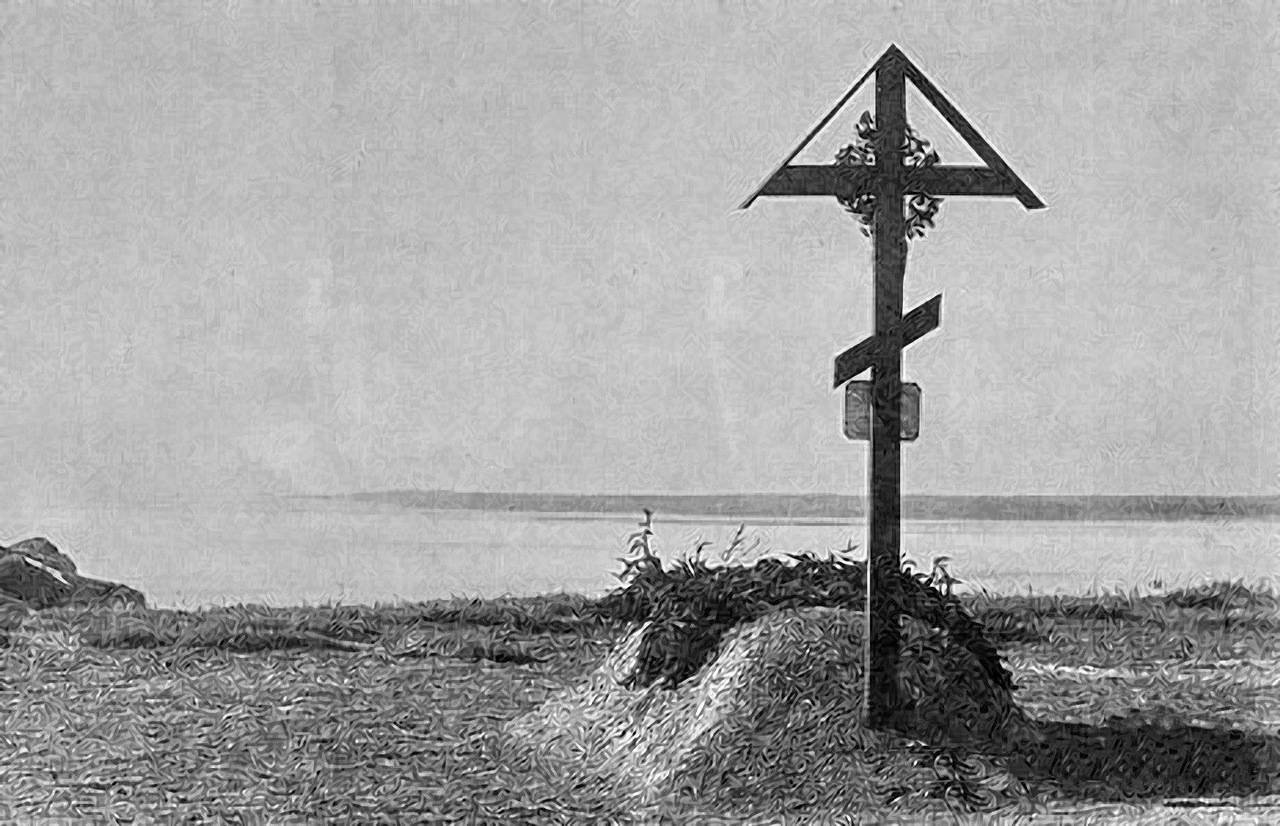
Soldiers and Cossacks spent two days digging the grave in the hard ground. He was laid in two coffins, one of wood and one of iron. Over the grave they put up a cross with the inscription he had asked for.

The grave is still there, on the edge of the bluff over the bay. The slab on it now carries a cross and, in Russian, the words he asked for, with his initials and the years 1839–1888.
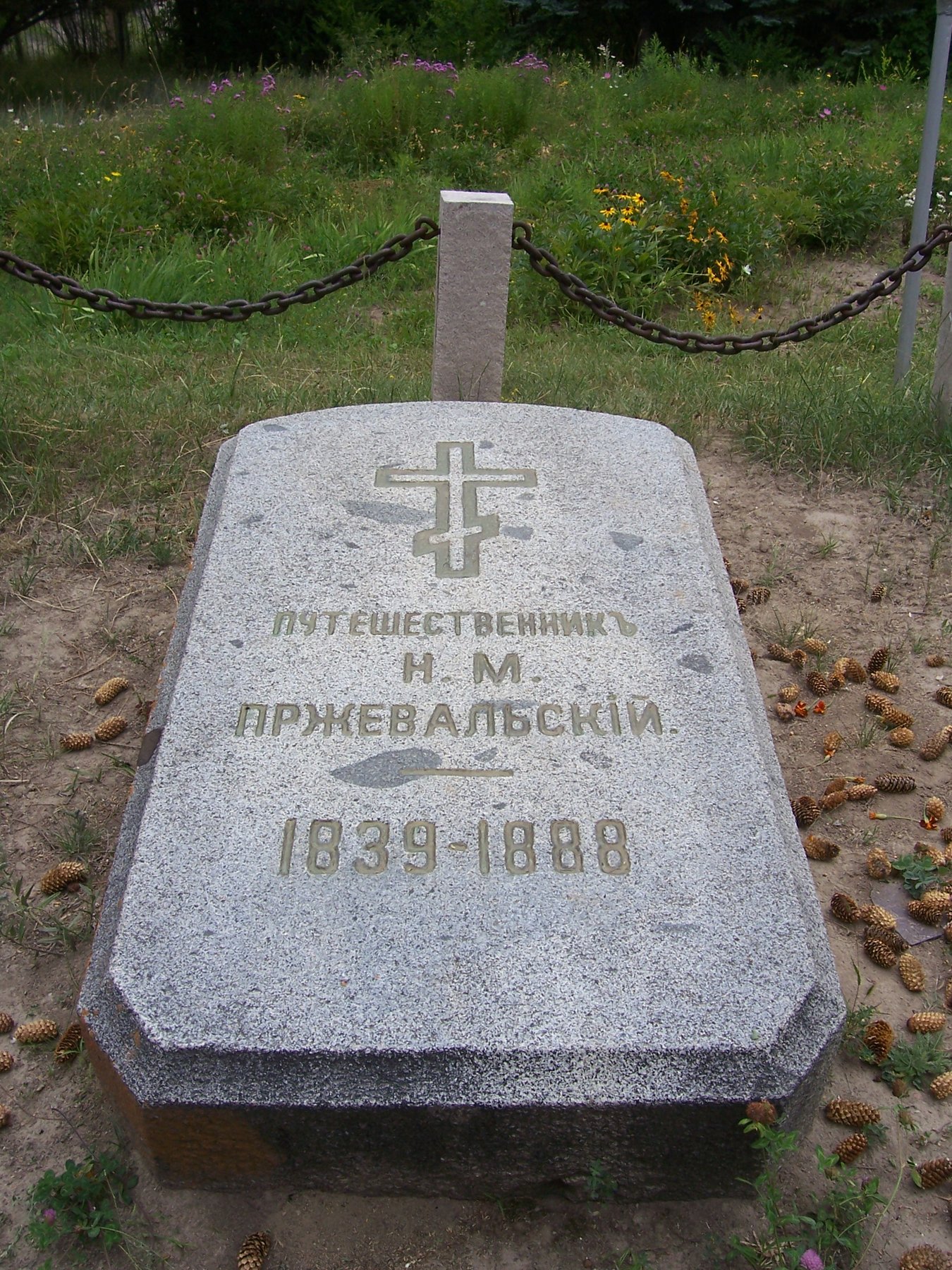

He got the words.
Then came the eagle.
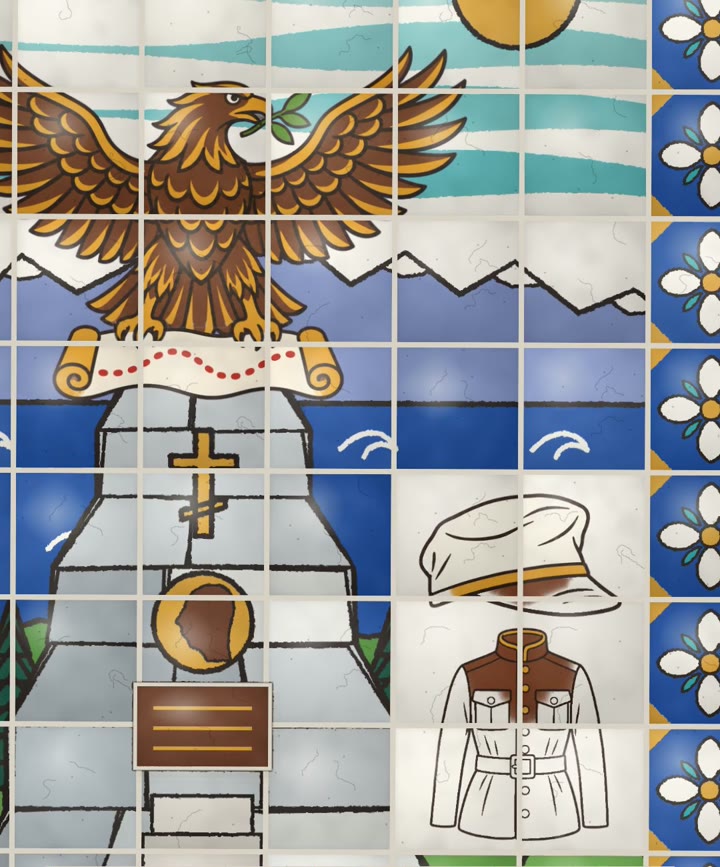
“He got them. Then came a granite rock and a bronze eagle, clutching a map of his routes.”From the film
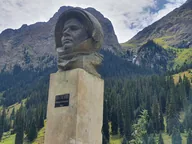
The plain cross did not stay alone for long. Three months after his death, in January 1889, the emperor approved a design for a monument by General Alexander Bilderling, a friend of the explorer. The sculptor Ivan Schröder modelled the eagle, and it was cast in bronze in St Petersburg. The monument was built in 1893 and unveiled on 26 June 1894.
Five months after his death, in March 1889, Karakol itself was renamed Przhevalsk by imperial decree. The name changed back and forth through the next century; since the early 1990s the town has been Karakol again. His name stays with the village by the grave, Pristan-Przhevalsk.
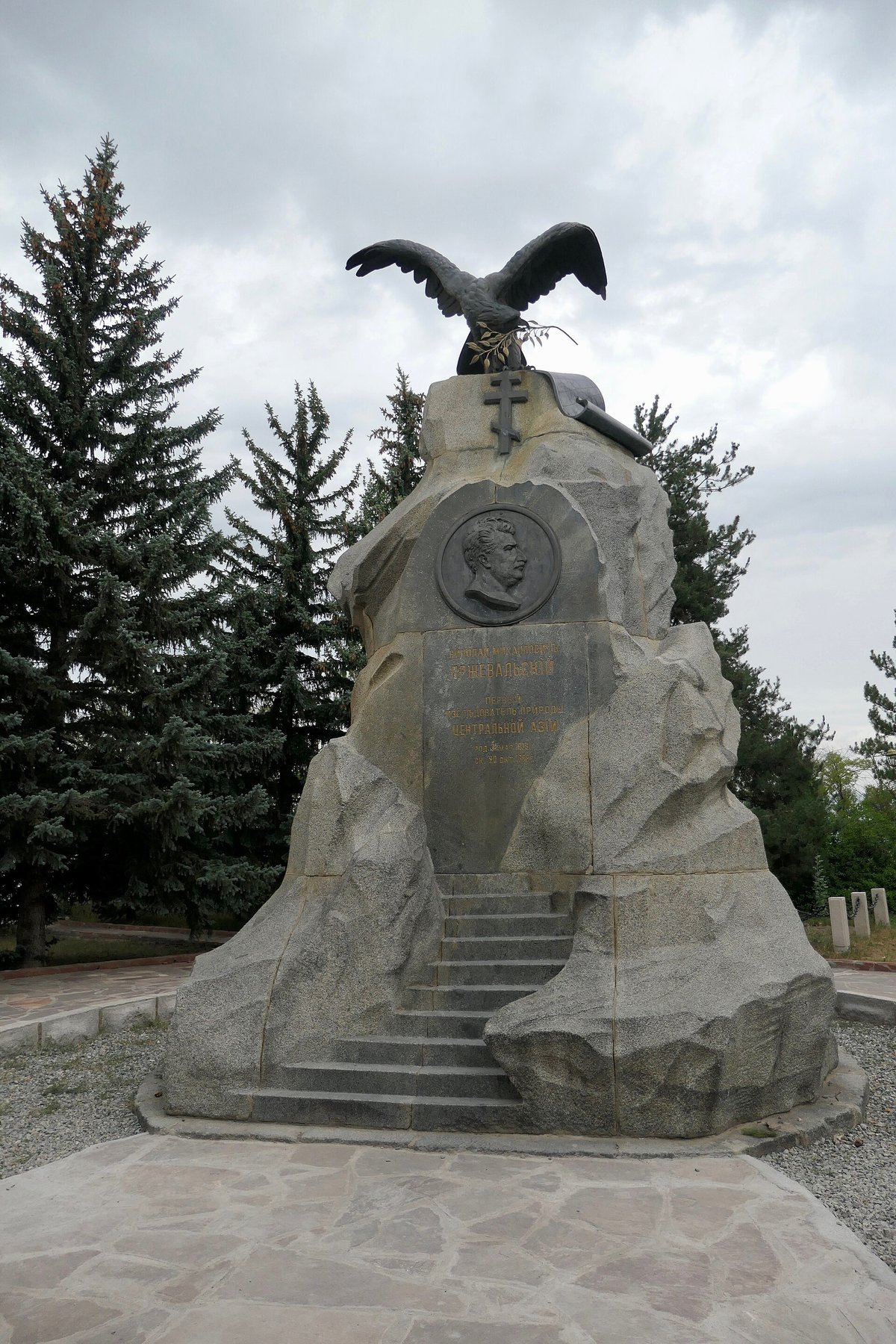

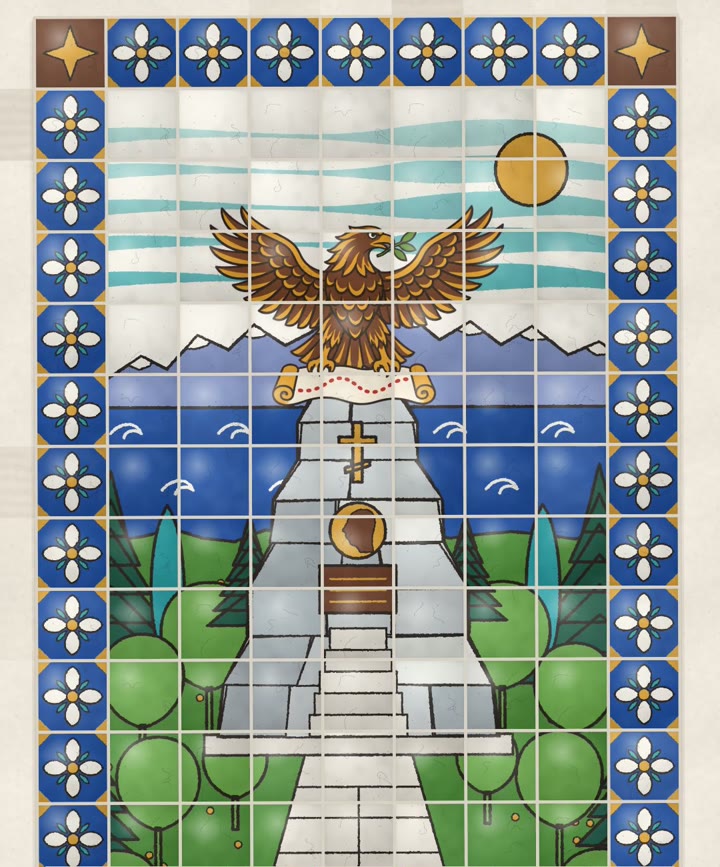
Go to the high shore above Karakol Bay.
“It stands on the shore just outside Karakol, by his grave and a museum of his journeys.”From the film
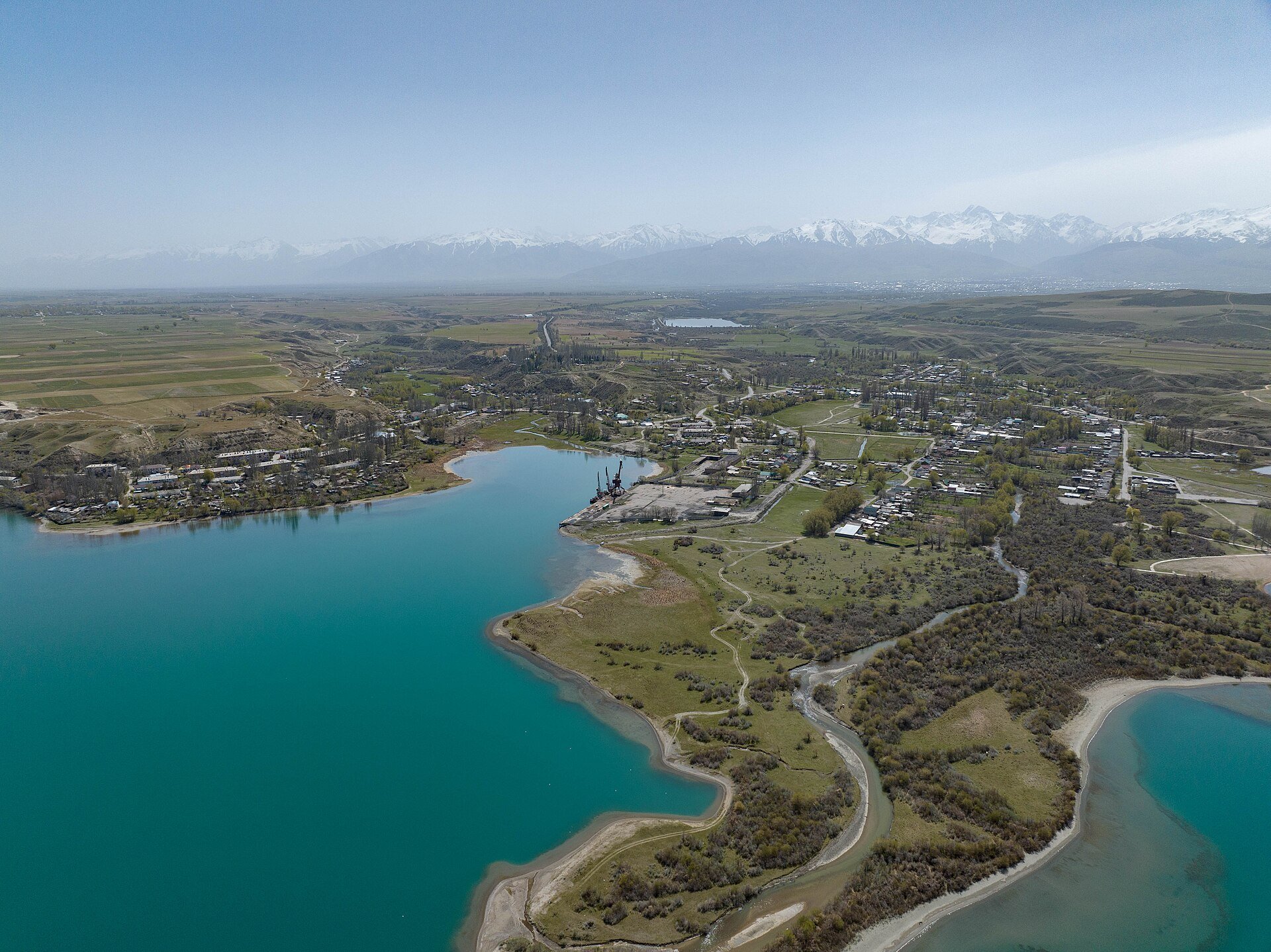

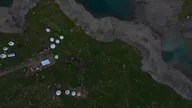
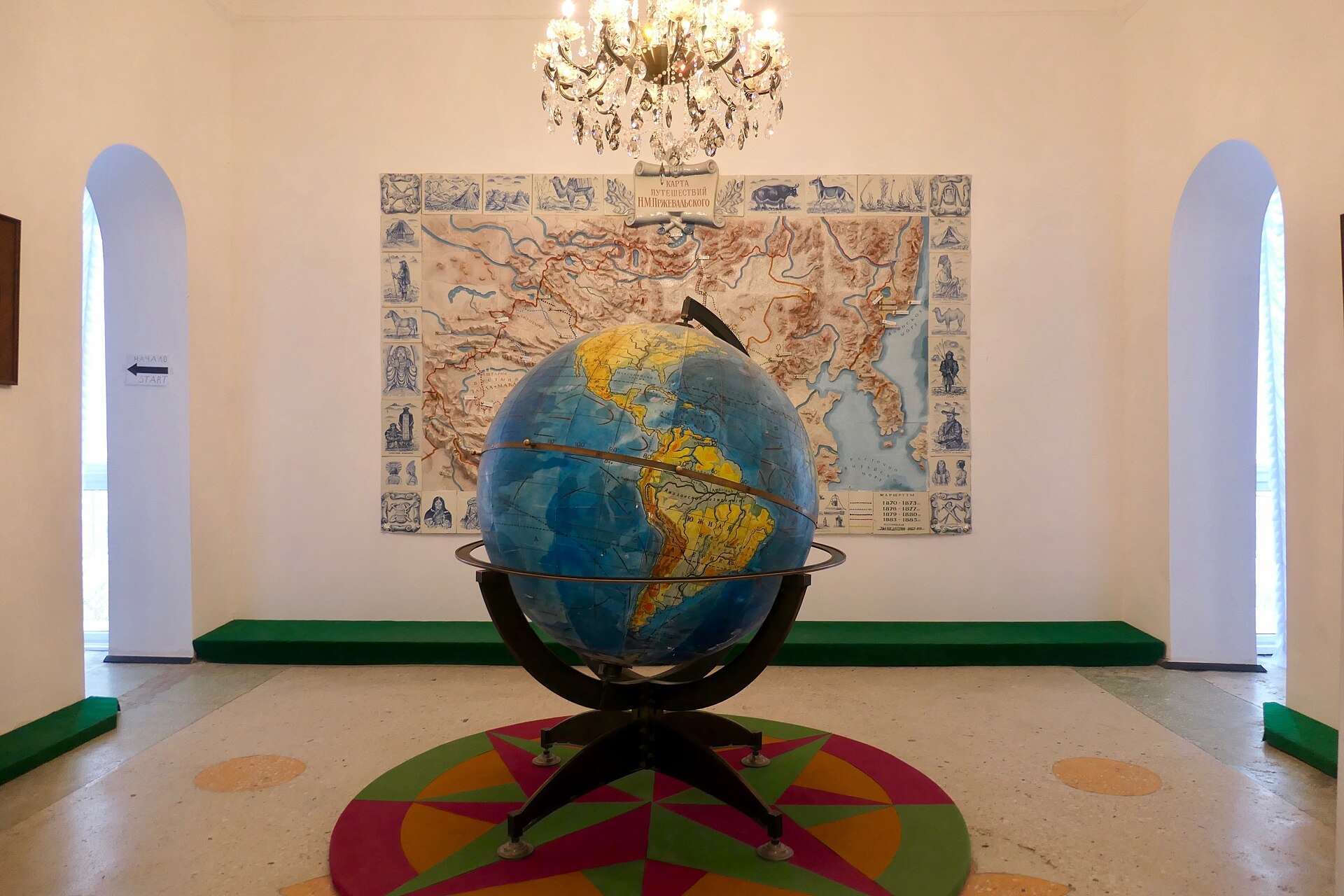
The memorial complex stands in a park of about nine hectares on the high shore of Karakol Bay, in the village of Pristan-Przhevalsk, north-west of the town. In one walk you pass the monument, the grave on the edge of the bluff, a small chapel and the memorial museum, opened on 29 April 1957 and enlarged in 1980. Its ten halls hold about 2,000 objects: maps, instruments, manuscripts, drawings and animals from his collections. In the entrance hall a big globe stands in front of a relief map of his journeys set in a frame of blue painted tiles. That wall is where the film began. The same park holds the grave, monument and museum of the Kyrgyz linguist Kusein Karasaev.

He never went home.
He stayed here, in his expedition clothes.
The rock and the eagle came later. The shore was the one thing he asked for.
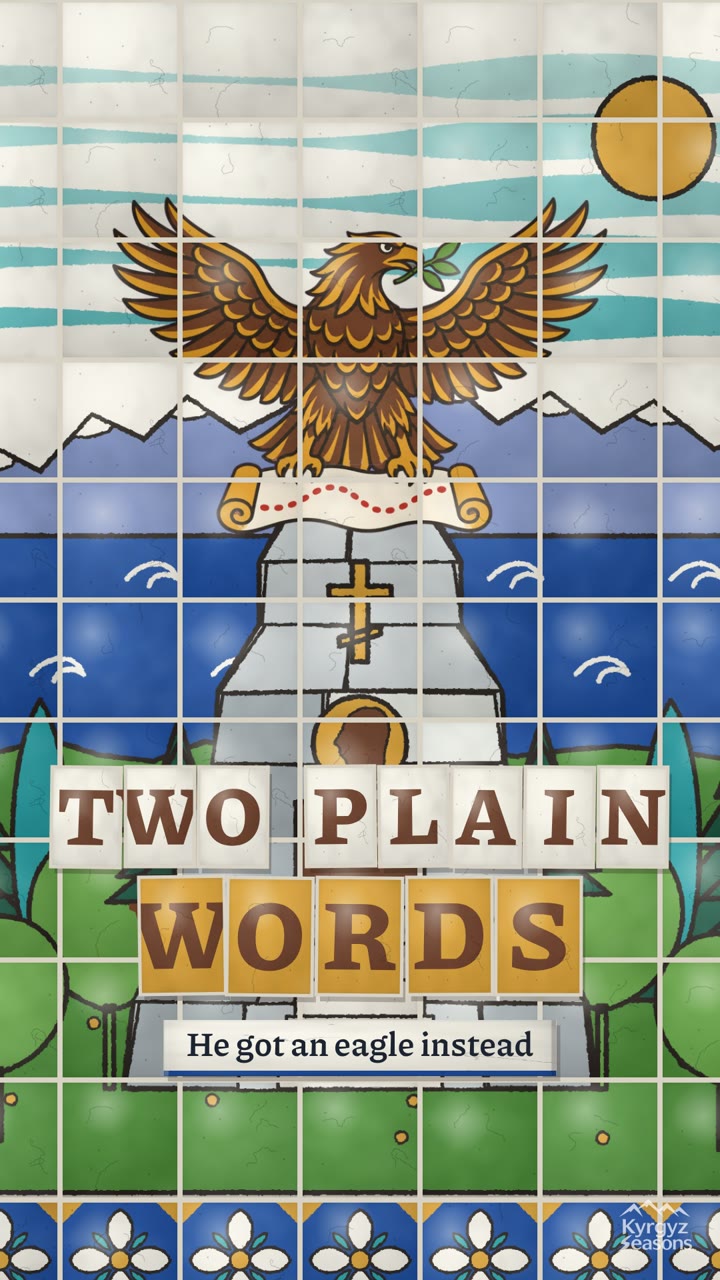 Watch the 45-second filmTwo Plain Words — the short film, laid tile by tile on one glazed wall: cobalt for the lake, ochre and brown for the bronze, a red dotted line for his routes.
Want to see it for yourself?
Routes, places and the best months to go — everything for planning a trip to Kyrgyzstan.
Sources
- Russian Biographical Dictionary, vol. 14 (1910), ‘Przhevalsky, Nikolai Mikhailovich’ — illness, death, the request and the inscription.
- A. Mikhailov, Informburo.kz, 27 October 2018 — the last weeks after Roborovsky, Semenov and Kozlov.
- P. P. Zakharov, ‘N. M. Przhevalsky. Part two’, Mountain.ru — the place and the digging of the grave.
- Karakol.name, ‘The last expedition’ and ‘The monument on the shore of Issyk-Kul’ — the infirmary, the grave, the monument.
- Nikolay Przhevalsky and Przewalski’s horse — the journeys, the horse, the species.
- The memorial complex and N. M. Przhevalsky, Russian Wikipedia — museum, park, renaming of the town.
- T. Dolgopolova, Nauka i Zhizn no. 5, 2004 and B. Pannier, RFE/RL, 2015 — the two stories we treat as legends.
- N. Przhevalsky, From Kulja, across the Tian Shan to Lob-Nor (1879) — the second journey.
- Przhevalsky Museum, Orexca, Nomadsland, A Social Nomad — the museum and the road.
- Kyrgyz Seasons: Przhevalsky Museum — the place on our site.
Pictures
- Portrait of N. M. Przhevalsky — V. Klasen, frontispiece of his book on the fourth journey, 1888. Public domain.
- Takhi, Hustai National Park — Zazaa Mongolia, 10 August 2013, CC BY-SA 4.0. Resized.
- Map of Przhevalsky’s journeys — from M. Engelhardt’s book, St Petersburg, 1891. Public domain. Resized.
- The grave in 1890 — unknown photographer. Public domain.
- The grave today — Paul Munhoven, 6 August 2011, CC BY-SA 3.0. Resized.
- The monument and the museum entrance hall — Bruno Rijsman, 9 August 2019, CC BY 2.0. Resized.
- Pristan-Przhevalsk from above — Nikolai Bulykin, 28 April 2023, CC BY-SA 4.0. Resized.
- Cover and six film frames: Kyrgyz Seasons, illustrations from the 2026 film. The tiled wall, the eagle and the rosettes on this page are drawn in code in the manner of the film; they are not copies of the museum’s tiles or of the monument.