
Traveller’s question
Safety and altitude in Kyrgyzstan: what to know before you go
Kyrgyzstan is on the whole a calm country to travel in, but the mountains here are the real thing: most of the most beautiful places lie above 2,500 m, mobile coverage drops out and help is far away. The main rules are simple: gain height gradually, take out insurance that knows about mountains, leave your route with someone close to you and do not set off on a trail without time in hand. Everything else, from water to taxis, is handled by ordinary caution. This page does not replace a doctor or official warnings: before you leave, check the details against the links in the sources.
Updated 13 October 2026
- +500 m a nightthe maximum gain in sleeping altitude above 3,000 m (CDC, WMS)
- 112the single emergency number; 102 police, 103 ambulance, 101 fire service
- Insurancewith evacuation and a ceiling above the highest point of your route
- from a weekallow for a border-zone permit; check the timing with the operator
Where you will sleep
The altitudes of our places
The risk depends first of all on the altitude where you sleep, not on the height you climbed to during the day. Guideposts for the places we write about.
| Place | Altitude | What to bear in mind |
|---|---|---|
| Karakol | about 1,750 m | A convenient base: you can spend your first days here before going higher. |
| Altyn-Arashan | about 2,600 m | Already a noticeable altitude: some people get a headache and poor sleep on the first night. |
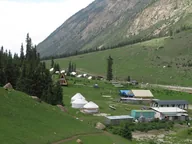
| Song-Kol | about 3,016 m | Sleeping in yurts above 3,000 m: it is better to break up a climb from the lowlands in a single day with a night lower down. |
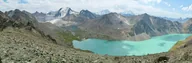
| Ala-Kol, lake | about 3,530 m | A jump from 2,600 to 3,530 m in one night exceeds the recommended 500 m: you need an intermediate night or a rest day. |
| Ala-Kol Pass | about 3,900 m | The highest point of the route: if you feel unwell, do not go up to the pass, turn back. |
| Tash Rabat | about 3,500 m | A day trip with a return to lower ground is easier to tolerate than a night at altitude. |
| Chatyr-Kol | about 3,530 m | An area by the border: a permit is required, see the section on border zones. |
The altitudes are approximate; check them on a map and with the route operator. The altitude figures are given for planning and do not replace a consultation with a doctor.
Health
Altitude sickness and acclimatisation
Acute mountain sickness (AMS) affects healthy and fit people: preparation and age do not protect you. The best prevention is a gradual gain in height. This does not replace a doctor.
- The height from which to start thinking about it
- The British service TravelHealthPro names altitude sickness as a risk in Kyrgyzstan from 2,500 m and advises against going in a single day from below 1,200 m to above 3,500 m. The American CDC and the Wilderness Medical Society regard the risk as low for sleeping below 2,800 m for people with no history of AMS. Above that, plan your ascent in advance.
- The rule for gaining height by days
- Do not climb in a single day from below 1,200 m to a sleeping altitude of 2,750 m or more. At 2,450–2,750 m it is better to spend 2–3 nights. Above 3,000 m raise your sleeping altitude by no more than 500 m a day, and for every 1,000 m of gain add an extra night in place. For the first 48 hours at altitude avoid alcohol and heavy exertion.
- What this looks like in practice
- You arrive in Bishkek, then Karakol (about 1,750 m), then Altyn-Arashan (about 2,600 m) with a night there, and only then Lake Ala-Kol. If the schedule is tight, ask the operator about an intermediate night and a rest day: on a route with a gain of 900 m in a night this is usually one of the safety conditions.
- A day trip is easier than a night
- The body copes least well with altitude during sleep. A trip up to altitude with a return to sleep lower down is usually gentler on your health than a night up high.
- Signs of AMS
- The main sign is a headache plus at least one of: loss of appetite, nausea, dizziness, unusual tiredness. It usually appears 2–12 hours after ascent, often after the first night, and feels like a hangover.
- What to do with mild symptoms
- Stop climbing, rest, drink water, do not go higher and do not go to sleep any higher until you feel better. If you do not feel better, or feel worse, descend: even 300 m down often helps noticeably.
- When an urgent descent is needed
- An unsteady gait, confusion or marked drowsiness (signs of cerebral oedema), or a cough, breathlessness at rest and a lack of air (pulmonary oedema) require an immediate descent and a call for help: 112. Do not leave the person alone and do not continue the route.
- Medicines
- Doctors sometimes prescribe acetazolamide for prevention, but it does not replace a gradual gain in height. Discuss the decision, dose and contraindications with a doctor in advance; do not take it “by eye” from fellow travellers.
- Who should talk to a doctor before the trip
- With heart or lung disease, sleep apnoea, sickle-cell trait, pregnancy or diabetes: the CDC advises consulting a doctor familiar with altitude medicine. Pregnant women are advised not to sleep above 3,050 m.
What to arrange in advance
Insurance for the mountains
Evacuation from a remote area is expensive, and many ordinary policies exclude mountains and horses.
- What the policy must cover
- Medical evacuation and repatriation, treatment and hospitalisation, your route and all activities: hiking, horse riding, skiing if they are in the plan. The FCDO and the US and Canadian government services directly advise a policy with evacuation.
- Altitude in the policy
- Check the maximum altitude covered. Take a margin above the highest point of your route: on our routes this is about 3,900 m (the Ala-Kol Pass), and some policies have a lower limit. If the terms say “not above N m”, compare the number with your route. check for your date
- Horse rides
- In some policies horse riding is an exclusion or a separate option. Ask the insurer in writing whether this covers one-day rides and horse treks with overnight stays. check for your date
- How to call
- Save the insurer’s 24-hour line and your policy number offline. The FCDO notes that insurers usually ask you to contact the tour operator first, so check in the policy whom to call first.
- Money on the spot
- The FCDO advises having funds available for treatment and repatriation: outside the big cities you may be asked to pay in cash.
If something happens
Emergency numbers and rescuers
Save the numbers in your phone before you leave. In the mountains mobile coverage may not work: tell your hosts and loved ones your route and the time you will be back.
- 112
- The unified dispatch service, round the clock. The Ministry of Emergency Situations of Kyrgyzstan also gives a dispatch telephone number, +996 312 32-38-12.
- 101 / 102 / 103
- 101 fire service, 102 police, 103 ambulance (FCDO, the Government of Canada).
- Mountain rescuers
- The FCDO notes that mountain rescue relies mainly on volunteers, equipment is limited, and in difficult terrain help may not be possible. The 24-hour number given by the FCDO is +996 312 651 404. Do not count on a quick helicopter.
- The Ministry of Emergency Situations and registering groups
- The Ministry of Emergency Situations of Kyrgyzstan requires tourist groups to report a trip 10 working days before it starts: the application is submitted online on the official page (the group’s composition, leader, contacts, detailed route). The regional office of the Ministry processes it in one working day and passes it to the rescue unit of the relevant area. The page also has a form for an individual tourist. For a self-guided trek, leave your route with your hosts as well.
- Tourist police
- The FCDO gives the tourist police of the Issyk-Kul region: +996 705 00 91 02 (call or WhatsApp, Russian and English).
- Your own embassy
- Save the number of your embassy or consulate in Bishkek in advance. Some countries, for example Canada, have only an honorary consul in Bishkek.
Permits
Border zones and permits
A permit is not needed everywhere, only for border areas. Arrange it through an operator, which is simpler.
- What it is and who issues it
- The permit for foreigners to enter a border zone is issued by the Border Service of the State Committee for National Security (GKNB) on the basis of the border-regime rules. According to the service description on the state portal, the application is submitted no later than 3 working days in advance, the permit is issued within 2 working days, and it is valid for the stated period but not more than a year. check for your date
- Realistic timing
- As a rule, a tourist needs a much longer margin. The permit is arranged through a tour operator: allow no less than a week. With operators it costs about 3,000 som (35–40 USD); check the timing and price with the operator. check for your date
- Where a permit is needed
- Border areas near the borders with China, Tajikistan and Kazakhstan. According to the tourist association’s list: in Issyk-Kul region, Engilchek, Khan Tengri, Sary-Jaz, Karkyra; in Naryn region, Lake Kol-Suu, Chatyr-Kol, Ak-Say; in Osh region, Achyk-Tash (Lenin), the Irkeshtam area; in Batken region, most of the mountains. check for your date
- Where it is usually not needed
- Ala-Kol, Altyn-Arashan, Song-Kol and Tash Rabat are not named in this list, but for Tash Rabat the exact regime has not been confirmed. Before the trip, ask the operator or CBT about your dates specifically. check for your date
- What to pass to the operator
- A clear scan of your passport, exact dates and the areas of the route. Carry the original paper permit with you: it may be checked at posts. check for your date
- The border with Tajikistan
- The US State Department (level 1, “exercise normal precautions”) advises vigilance in Batken region, especially in the Batken and Leilek districts: there have been border clashes there. Unexploded mines remain in remote border areas (US, Canada). Crossings may close, so follow the news.
Every day
Water, food and milk
Intestinal infections are the most common nuisance for travellers. Simple hygiene helps.
- From a stream
- Do not drink water from rivers and streams raw, even high in the mountains: there may be pastures above. The prevention is a filter or boiling (above 6,500 feet (about 2,000 m) the CDC advises boiling for 3 minutes after it comes to the boil, below that for 1 minute).
- In town and in a guesthouse
- There is no single answer for the whole country. If in doubt, take sealed or boiled water. It is best to ask your hosts whether the water is drinkable.
- Milk and dairy
- TravelHealthPro advises not to drink unpasteurised milk or eat dairy products made from raw milk. Decide about kymyz, ayran, kurut and cheeses on the jailoo for yourself, knowing this risk; be more careful if your immunity is weakened and in pregnancy.
- Food
- Wash your hands before eating, choose hot, freshly cooked food, wash fruit. The CDC and TravelHealthPro advise hepatitis A and B vaccinations before the trip.
- Swimming
- Do not swallow water in lakes and rivers; intestinal infections are possible in still water.
At altitude
Sun, weather and rivers
In the mountains the weather changes quickly, and the sun is stronger than it seems.
- Sun and ultraviolet
- The higher you are, the stronger the ultraviolet, and clouds and snow do not cancel it. High-SPF cream, protective glasses, a hat. The CDC and the FCDO separately warn of severe sunburn and heatstroke.
- Weather
- Snow is possible at altitude even in summer, and the weather changes quickly.
- Avalanches, landslides, rockfalls
- The FCDO and Canada describe them as frequent, especially in spring; they can close mountain roads. Follow the forecast and your hosts’ advice.
- Rivers and fords
- Mountain rivers rise in the second half of the day, when snow and ice melt, and there is less water in the morning. Do not cross a raging ford: find a bridge or wait until morning. This is a practical recommendation, not from the official warnings.
- Earthquakes
- The country is seismically active, and tremors are frequent. Find out where the exit is in the guesthouse and do not be alarmed by weak tremors.
Animals
Dogs on the jailoo and ticks
Both topics are rarely a problem, but they are worth knowing about.
- Shepherds’ dogs
- Sheepdogs on the jailoo guard the flocks and may rush at strangers. Do not run or turn your back; walk calmly, go around the flock and keep your hands to yourself. Ask your hosts to call the dogs off. This is a practical recommendation.
- Rabies
- The CDC writes that rabid dogs are common in Kyrgyzstan, and rabies vaccinations after a bite may be available only in large cities. After a bite or scratch, wash the wound with soap and water for about 15 minutes (Canada) and seek help immediately. Discuss the question of vaccination before the trip with a doctor.
- Ticks
- Tick-borne encephalitis is possible in certain areas; TravelHealthPro names the border districts of Chuy region, including Ala-Archa. The season runs from early spring to late autumn (Canada: April to November). Long sleeves, repellent, a check of your body and clothes in the evening.
- Crimean fever
- The CDC and Canada mention Crimean-Congo haemorrhagic fever as a tick-borne risk, but Canada rates it as low. There is no vaccine: protect yourself against bites.
On the way
Roads, driving and taxis
The road is the most likely cause of trouble, so allow plenty of time.
- Road conditions
- The FCDO and Canada agree: road quality is uneven, there is no lighting and rules are not always observed. Do not speed in the dark and avoid night journeys outside towns. In the mountains, take care on switchbacks and in thunderstorms.
- At the wheel
- You need liability insurance, a licence and usually an international driving permit. British photocard licences are valid for up to 30 days (FCDO). Pay fines through a terminal or a bank, not in cash to an inspector.
- Fuel
- Outside Bishkek and Osh there are few filling stations, and diesel is sometimes in short supply. Fill up in advance, and take water and food.
- Taxis
- Use a taxi through an app or one ordered in advance; street and shared taxis are advised against. Agree the price before the trip.
- Hitchhiking
- The FCDO advises not to pick up passengers or hitchhike: there have been cases of robbery.
- Fraud
- There are fake “policemen” who demand a fine on the spot: offer to go to the police station. Be careful with exchange offices and cash machines, and keep cash in separate places.
What not to do
Women travelling alone and local laws
There is no separate section for women on Kyrgyzstan in the official guidance (the FCDO refers to its general advice for women travellers): the same rules apply as everywhere.
- A woman on her own
- Ordinary caution applies: at night use a taxi through an app, do not accept drinks from strangers, do not show money. In villages, modest clothing is appropriate. On long mountain routes it is more sensible to go with an operator or a group.
- Photos and drones
- It is forbidden to photograph or film with a drone military, security and border installations, and also near border posts. Check the rules on bringing in and flying drones with the Kyrgyz embassy. If you are not sure, do not film.
- Alcohol
- Drinking in public places is prohibited, with a fine of about 1,000 som or arrest (FCDO). Sale to people under 18 is prohibited.
- Drugs and vapes
- Sentences for drugs are long. According to the FCDO, e-cigarettes and vapes may not be brought in, bought or sold: they are confiscated, and a fine and detention are possible.
- Documents with you
- Carry your passport or a notarised copy at all times (FCDO); Canada advises certified copies, with the originals left in a safe. Document checks happen.
- Rallies and posts
- Do not take part in rallies. Offensive posts about state symbols and customs can lead to a fine or detention.
Where to get treatment
Medical care in Bishkek, Karakol and Osh
The quality of care outside the large cities is limited. For serious problems the FCDO advises going to the large cities.
- Bishkek
- The widest choice of private clinics and specialists. The FCDO list marks clinics with English-speaking staff: list, updated 23.10.2025. The list is for reference, not a recommendation.
- Karakol
- The regional centre of Issyk-Kul: there are hospitals and clinics, but serious cases are generally taken to Bishkek. Check the language, opening hours and services by phone.
- Osh
- The second-largest city in the country. The FCDO list includes the Osh city hospital (emergency medicine, surgery, state-run). For serious cases and evacuation, consult your insurer; English is less common there.
- Medicines
- Pharmacies stock a lot, but not everything. Bring a supply of any regular medication, know the international name of the substance and keep the prescription.
- Ambulance
- 103 or 112. Tell your insurer about hospitalisation as early as possible.
Short answers
Frequently asked questions
Is altitude dangerous for children and older people?
Children and older people with chronic illnesses should see a doctor first. Anyone can get AMS, and children describe symptoms poorly, so plan nights above 2,500 m more carefully. The CDC advises pregnant women not to sleep above 3,050 m.
What is the highest point of our routes and what should I expect?
The Ala-Kol Pass, about 3,900 m. Expect breathlessness, quick tiredness and poor sleep above 3,000 m; this is normal. What is dangerous is a growing headache, confusion, and a cough with breathlessness at rest.
Do I need an altitude pill?
That is for a doctor to decide. Acetazolamide is regarded as prevention for a risk group, not a replacement for a gradual gain in height. Talk to a doctor a couple of weeks before the trip.
Do I need a permit for Ala-Kol and Song-Kol?
They are not in the tourist association’s list, whereas a permit is needed for Chatyr-Kol and Kol-Suu. For Tash Rabat the exact regime has not been confirmed, so check with the operator or CBT for your dates. check for your date
Can I go into the mountains alone?
Official advice (FCDO) is not to go alone, to use a reliable operator and to report your route. If you go on your own, take an offline map and leave your plan with your hosts.
Is tap water safe to drink?
There is no single answer for the whole country. In town take sealed or boiled water, in the mountains filter or boil it.
What should I do if a dog bites me?
Wash the wound with soap and water for about 15 minutes and go straight to a clinic in a large city: anti-rabies treatment may not be available everywhere. Tell your insurer.
Is registration with the Ministry of Emergency Situations necessary?
Yes, tourist groups must notify the Ministry 10 working days before the start of the route; the application is submitted online on the agency’s website. If you go with an operator, it usually does this itself. For an independent trip, leave your route with your hosts.